Claude AI New Features 2026: What’s Actually Changed and What Matters
Claude AI New Features 2026: What’s Actually Changed and What Matters
I’ve been using Claude since 2024, so I’ve had a front-row seat to its evolution over the past two years. When Anthropic announced their 2026 updates last month, I’ll admit I approached them with measured expectations—I’ve seen enough “revolutionary” AI updates that turned out to be incremental improvements dressed up with marketing language.
But after spending the last several weeks really putting these new features through their paces across different projects, I can say some of these changes are genuinely significant. Not all of them, mind you. Some are nice refinements that make things slightly smoother. A couple haven’t lived up to the initial hype. But several have legitimately changed how I work with Claude.
This is my honest assessment of what’s new in Claude in 2026, what actually matters in practice, and what’s still missing or problematic.
The Context Window Expansion: More Useful Than You’d Think
The headline feature that got the most attention was the expansion of Claude’s context window to 500,000 tokens—roughly 375,000 words, or about 750 pages of text.
When I first heard this, I thought it was impressive technically but questioned how often I’d realistically need to process that much text at once. Turns out, more often than I expected.
Last week I uploaded an entire codebase for a mid-sized application—about 200 files totaling roughly 100,000 tokens—and had a coherent conversation with Claude about architecture, potential refactoring opportunities, and where technical debt had accumulated. Previously, I’d have needed to work in chunks, losing the holistic view.
For a research project, I uploaded three full academic papers, a 50-page industry report, and my own notes, then asked Claude to synthesize insights across all of them while identifying contradictions and gaps. The ability to hold all that context simultaneously made the analysis substantially more valuable.
Where this matters most:
- Legal document analysis (multiple contracts or cases simultaneously)
- Academic research synthesis
- Large codebase understanding
- Business intelligence work across multiple reports
- Book-length manuscript editing
Where it doesn’t matter:
- Most everyday tasks that don’t involve massive documents
- Quick questions or simple drafting
- Situations where you’re working with concise information
The practical reality: most people won’t use anywhere near the 500K limit regularly, but having it available for those occasions when you need it is valuable. It’s like having a pickup truck—you don’t need the bed capacity every day, but when you need it, nothing else will do.

Extended Memory Across Conversations
This is the feature that’s changed my daily workflow most substantially, and it flew somewhat under the radar in the announcement.
Claude now maintains memory across separate conversations within a Project, not just within a single conversation thread. You can reference things discussed weeks ago in different conversations, and Claude maintains that context.
Practical example: I have a Project for client consulting work. Three weeks ago, I had a conversation where we discussed the client’s budget constraints and strategic priorities. Last week, different conversation, I discussed potential solution approaches. Yesterday, I started working on a proposal, and Claude referenced both previous conversations without me needing to re-explain anything.
The system asks for permission before storing memories: “Should I remember that your client’s budget for this project is $50K?” You can review and delete stored memories anytime, which addresses privacy concerns I had initially.
What works well:
- Continuity across long-term projects
- Not needing to re-explain context constantly
- Building up cumulative knowledge over time
What’s still imperfect:
- Sometimes Claude “remembers” things that are outdated but doesn’t realize they’ve changed
- The memory isn’t always perfectly organized—it can feel scattered
- You need to be intentional about what you want remembered versus what’s one-off context
I’ve started being explicit: “Remember this for future conversations” or “This is just for today’s context, don’t store it long-term.” That helps Claude distinguish between persistent knowledge and temporary context.
Collaborative Workspaces: Actually Useful for Teams
The new team collaboration features were something I was skeptical about. We didn’t need another collaboration platform—we have Slack, we have Google Docs, we have too many tools already.
But the implementation is smarter than I expected. Rather than trying to be a full collaboration platform, it’s focused specifically on collaborative AI interaction.
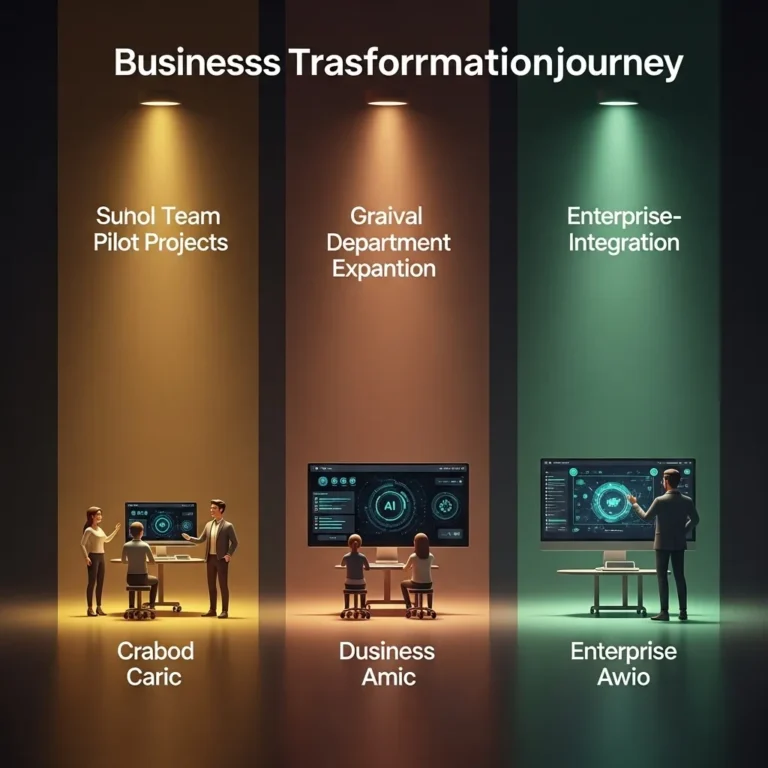
Here’s how it works: within a Claude Team or Enterprise account, you can create shared Projects that multiple team members access. You can see each other’s conversations (with privacy controls), build on each other’s work, and maintain shared context.
Real use case from my team:
We’re working on a content strategy project. One team member had a conversation with Claude about audience research and competitive analysis. Another built on that to develop content themes. I came in later and asked Claude to help structure a content calendar based on both previous conversations.
The continuity is powerful. We’re not just sharing documents—we’re building on a shared conversation and cumulative understanding with Claude.
Privacy and access controls are actually well-designed:
- Conversations can be private, shared with specific team members, or shared with the whole team
- Admins can see usage and set permissions
- You can separate projects so different teams don’t see each other’s work
Where this works:
- Content teams collaborating on campaigns
- Development teams working on shared codebases
- Research teams synthesizing information
- Consulting teams working on client projects
Where it’s awkward:
- Very small teams (2-3 people) where the overhead isn’t worth it
- Highly siloed organizations where sharing doesn’t align with culture
- Teams that already have smooth collaboration workflows that don’t need AI integration

Multi-Modal Capabilities: The Real Leap
Claude’s ability to work with images existed before, but the 2026 updates made this genuinely practical rather than just technically possible.
What’s new:
- Much better image analysis and understanding
- Can now work with multiple images simultaneously and compare them
- Improved at extracting text from images, even with poor quality or unusual layouts
- Can analyze charts, diagrams, and technical drawings with reasonable accuracy
- Upload limits increased to 20 images per conversation
I tested this extensively because I was skeptical. Here’s what actually works:
Analyzing design mockups: I uploaded three different design concepts for a website redesign and asked Claude to compare them, identify which best aligned with specific design principles, and suggest improvements. The analysis was surprisingly sophisticated—it understood visual hierarchy, color theory, and usability considerations.
Data visualization analysis: Uploaded several charts from a business presentation and asked Claude to identify what story the data was telling, what was misleading about how it was presented, and what additional context would be helpful. It caught things I’d missed.
Technical diagram understanding: Uploaded network architecture diagrams and asked Claude to explain them, identify potential single points of failure, and suggest improvements. The understanding was solid for standard diagrams, though it struggled with highly specialized notation.
Document scanning and extraction: Photographed handwritten notes and Claude extracted the text and organized it. Not perfect—handwriting recognition still has limits—but usable for decent handwriting.
What still doesn’t work well:
- Highly detailed or complex images with small text
- Specialized technical diagrams with non-standard symbols
- Truly terrible handwriting
- Subtle visual details that require human aesthetic judgment
The quality varies depending on image clarity and complexity, but it’s crossed the threshold into “actually useful” territory for many practical applications.
Code Execution and Testing Environment
This is completely new for Claude and represents a significant capability expansion.
Claude can now write code and execute it in a sandboxed environment to test whether it works, then refine based on results. This is similar to what ChatGPT’s Code Interpreter has done, but integrated into Claude’s conversational interface.
How it works in practice:
I asked Claude to help me analyze a dataset. Previously, Claude would write Python code and I’d run it locally, find errors, report back, iterate. Now Claude writes the code, runs it, sees the errors, fixes them, and shows me working results.
For data analysis, this is substantially faster. For learning to code, it’s excellent—you can see not just the code but the actual execution and results.
Limitations I’ve found:
- The execution environment has compute and time limits
- Can’t access external APIs or databases (for security)
- Limited to certain languages (Python works great, some others are more limited)
- Not suitable for production code—this is for exploration and analysis
Best uses:
- Data analysis and visualization
- Learning programming concepts
- Prototyping scripts and utilities
- Testing algorithms and approaches
Not appropriate for:
- Production code deployment
- Applications requiring external integrations
- Long-running processes
- Anything requiring substantial compute resources
I’ve found this most valuable for quick data analysis tasks that would have taken multiple back-and-forth iterations previously. The time savings is real.
Improved Accuracy and Reduced Hallucinations
This is harder to quantify, but Anthropic claims significant improvements in factual accuracy and reduction in confident errors (hallucinations).
Based on my extensive use over the past month, I’d say the improvements are noticeable but not transformative. Claude is more likely to express uncertainty when it’s not sure, and it seems to make fewer confident mistakes—but they still happen.
My testing approach: I’ve been deliberately asking questions where I know the correct answer across various domains (historical facts, technical specifications, current events within the training window, mathematical problems, code correctness).
What I’ve observed:
- Claude is noticeably better at saying “I’m not certain about this” rather than making things up
- For straightforward factual questions, accuracy seems higher
- For complex reasoning, results are more consistent
- Code generation has fewer subtle bugs
What hasn’t changed enough:
- You still need to verify important facts
- Complex calculations can still have errors
- Subtle technical mistakes still occur
- It can still confidently state outdated information
My rule hasn’t changed: verify anything that matters. Claude is more reliable than it was, but it’s not at “trust blindly” level—and probably never will be.

Citation and Source Tracking
This was quietly added and isn’t heavily promoted, but it’s valuable for research and fact-checking work.
When Claude provides information, you can now ask “What’s the basis for this information?” and it will explain what patterns in its training inform that response. It can’t cite specific sources (it doesn’t have access to its training data that way), but it can give you a sense of how confident it is and what domains of knowledge it’s drawing from.
For uploaded documents in a Project, Claude can now cite specific sections: “This is based on the third paragraph of the Johnson report you uploaded, which states…”
Practical value:
- Helps you assess reliability of information
- Allows you to verify claims against source documents
- Useful for academic and research work
- Helps identify when Claude is speculating versus recalling training
Limitations:
- Can’t cite original sources from its training data
- Sometimes the explanations are vague
- Doesn’t replace proper fact-checking
Interface and Usability Improvements
Several smaller but collectively significant interface improvements:
Conversation Organization: You can now tag and organize conversations, search across all conversations, and filter by project or date range. This seems minor but makes a huge difference when you have hundreds of conversations.
Response Export: Easy export of conversations or specific responses in multiple formats (Markdown, Word, PDF, plain text). Previously you were copy-pasting; now it’s one click.
Voice Input: Surprisingly good voice-to-text input on mobile and desktop. I was skeptical, but I’ve started using this while walking or when I want to think out loud rather than type.
Suggested Follow-ups: After responses, Claude now suggests relevant follow-up questions. Sometimes these are obvious, but often they surface angles I hadn’t considered.
Response Regeneration: You can ask Claude to regenerate a response with different emphases without starting over: “Regenerate that with more focus on X” or “Try again with a more technical approach.”
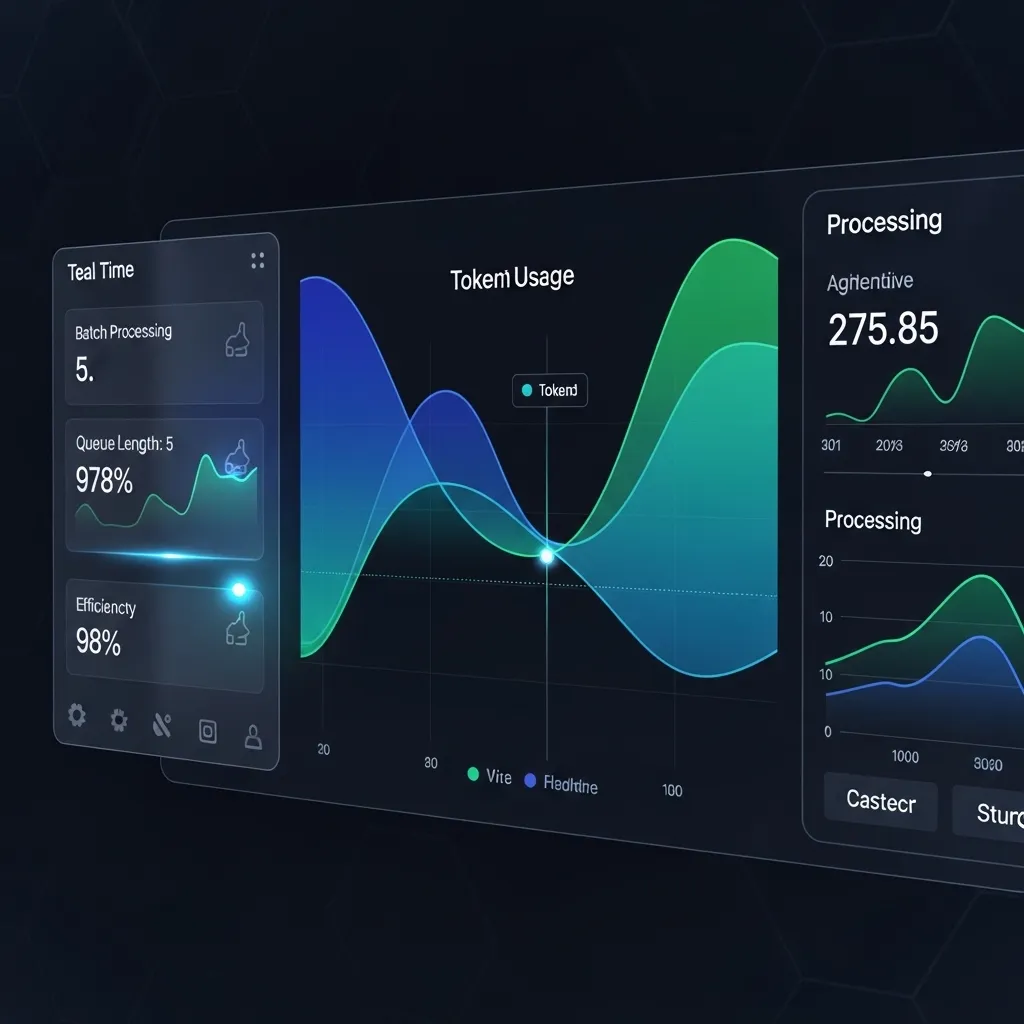
Token Usage Visibility: For Pro and Enterprise users, you can see token usage in real-time, helping you manage limits more effectively.
None of these individually transforms the experience, but collectively they smooth out friction points that used to be mildly annoying.
API and Integration Improvements
For developers and businesses integrating Claude into applications, several meaningful API improvements:
Batch Processing: You can now submit batches of requests for asynchronous processing at lower cost, useful for processing large volumes of documents or data.
Function Calling: Improved tool use and function calling, making it easier to integrate Claude with external tools and databases.
Streaming Improvements: Better streaming responses with more reliable token counting and error handling.
Webhooks: For Enterprise customers, webhook support for various events (conversation starts, ends, errors).
I’ve implemented several of these in production applications. The batch processing has been particularly valuable—we’re processing customer feedback at about 60% less cost than real-time API calls.
Pricing and Plan Changes
Pricing has evolved somewhat in 2026:
Free Tier: Still exists and is actually more generous—higher message limits that reset daily rather than monthly.
Claude Pro: Remains $20/month for individuals, with higher limits and priority access. You get access to all models including Opus.
Team Plan: New tier at $30/user/month for teams of 5+, includes collaboration features and shared projects.
Enterprise: Custom pricing, includes additional security, compliance features, and dedicated support.
The Team plan makes sense for businesses but feels expensive for small teams. We’re paying it because the collaboration features are valuable, but I can see smaller teams sticking with individual Pro accounts.

What’s Still Missing or Problematic
Let’s be honest about what hasn’t improved enough or remains limited:
Real-Time Information Access
Claude still doesn’t browse the web or access real-time information. For current events, stock prices, today’s weather, or any truly current data, you need to provide it.
Some competitors have web browsing built in. Anthropic’s approach is that you upload or provide relevant current information. This is more private but less convenient.
Specialized Domain Limitations
For highly specialized fields—advanced mathematics, cutting-edge research, niche technical domains—Claude is still a generalist. It’s gotten better, but it’s not a replacement for domain expertise.
I work with a biomedical researcher who initially tried using Claude for specialized literature review and found the understanding too shallow. It’s fine for general science but struggles with cutting-edge specialized work.
Collaboration Features Still Maturing
The team collaboration features are useful but feel like first-version implementations. Some obvious features are missing:
- No integrated commenting on specific parts of conversations
- Limited version control for shared projects
- Can’t see who’s currently active in a conversation
- Notifications are basic
These will probably improve, but right now it feels like a good foundation that needs refinement.
Mobile Experience
The mobile apps are functional but clearly secondary to the desktop experience. For quick questions they’re fine, but for substantial work, I still reach for my laptop.
Voice input helps, but the overall mobile experience feels like a smaller version of desktop rather than designed specifically for mobile use.
Privacy and Data Concerns
Anthropic has made privacy commitments and the terms are clearer than some competitors, but using any cloud AI service involves sharing data with that service.
For sensitive business information, confidential data, or regulated industries, this remains a consideration. The Enterprise tier offers additional protections, but you’re still sending data to Anthropic’s systems.
Some organizations in regulated industries still can’t use cloud AI services regardless of contractual terms. This hasn’t changed.
Comparison to Competitors
How does 2026 Claude stack up against alternatives?
Vs. ChatGPT:
- Claude: Better at nuanced reasoning, more careful about accuracy, stronger privacy positioning
- ChatGPT: Larger user base, more integrations, web browsing, generally faster responses
- Verdict: Different strengths; I use both for different purposes
Vs. Gemini:
- Claude: More thoughtful responses, better at complex reasoning
- Gemini: Tighter Google integration, better for multi-step research, strong multimodal capabilities
- Verdict: Gemini is compelling if you’re in Google’s ecosystem; Claude otherwise
Vs. Microsoft Copilot:
- Claude: Better for deep thinking and complex tasks
- Copilot: Excellent Microsoft 365 integration, better for productivity workflows in that ecosystem
- Verdict: Copilot for Microsoft-centric organizations; Claude for broader use
The reality in 2026 is that most power users don’t rely on a single AI tool. I have active subscriptions to Claude Pro and ChatGPT Plus, and I use different tools for different tasks based on their strengths.

Real-World Impact: Has It Changed My Workflow?
After a month with the 2026 features, what’s actually different in how I work?
Substantially changed:
- Research and analysis (the extended context and improved multimodal make a real difference)
- Team collaboration on AI-assisted work (the shared projects are genuinely useful)
- Data analysis (code execution saves significant time)
Moderately improved:
- Writing and content creation (better but not transformatively so)
- Coding assistance (incremental improvements)
- Learning new topics (more reliable information is valuable)
Barely affected:
- Quick questions and simple tasks (were already fine)
- Creative ideation (still requires heavy human input)
- Decision-making (AI informs but doesn’t replace judgment)
The changes are meaningful but evolutionary rather than revolutionary. Claude is noticeably better than it was a year ago, which matters when you use it daily. But it hasn’t fundamentally changed what AI is good at versus what still requires human expertise.
Who Should Care About These Updates?
High value for:
- Researchers working with large document sets
- Teams collaborating on AI-assisted work
- Data analysts doing exploratory analysis
- Developers working with large codebases
- Content teams producing volume at scale
Moderate value for:
- Individual knowledge workers using Claude regularly
- Businesses integrating AI into applications
- People learning complex subjects
Low value for:
- Casual users asking occasional questions
- People who don’t use AI tools regularly
- Those happy with free tier capabilities
If you’re a power user, the 2026 improvements are worth upgrading to Pro or Team tier for. If you’re a casual user, the free tier improvements are nice but probably don’t change much.
Looking Ahead: What’s Still Missing
Based on my wish list after using these features extensively:
I’d love to see:
- More sophisticated collaboration features (real commenting, better version control)
- Customizable system prompts or persistent instructions beyond Projects
- Better mobile experience designed for mobile-first workflows
- Integration marketplace (pre-built connections to common business tools)
- More granular privacy controls over what’s stored/remembered
I don’t expect soon but would be transformative:
- True real-time information access without sacrificing privacy
- Substantially longer context windows (millions of tokens)
- Multimodal output (generating images, not just analyzing them)
- Collaborative editing in real-time with multiple users and Claude
Practical Recommendations
If you’re deciding whether to upgrade or adopt the new features:
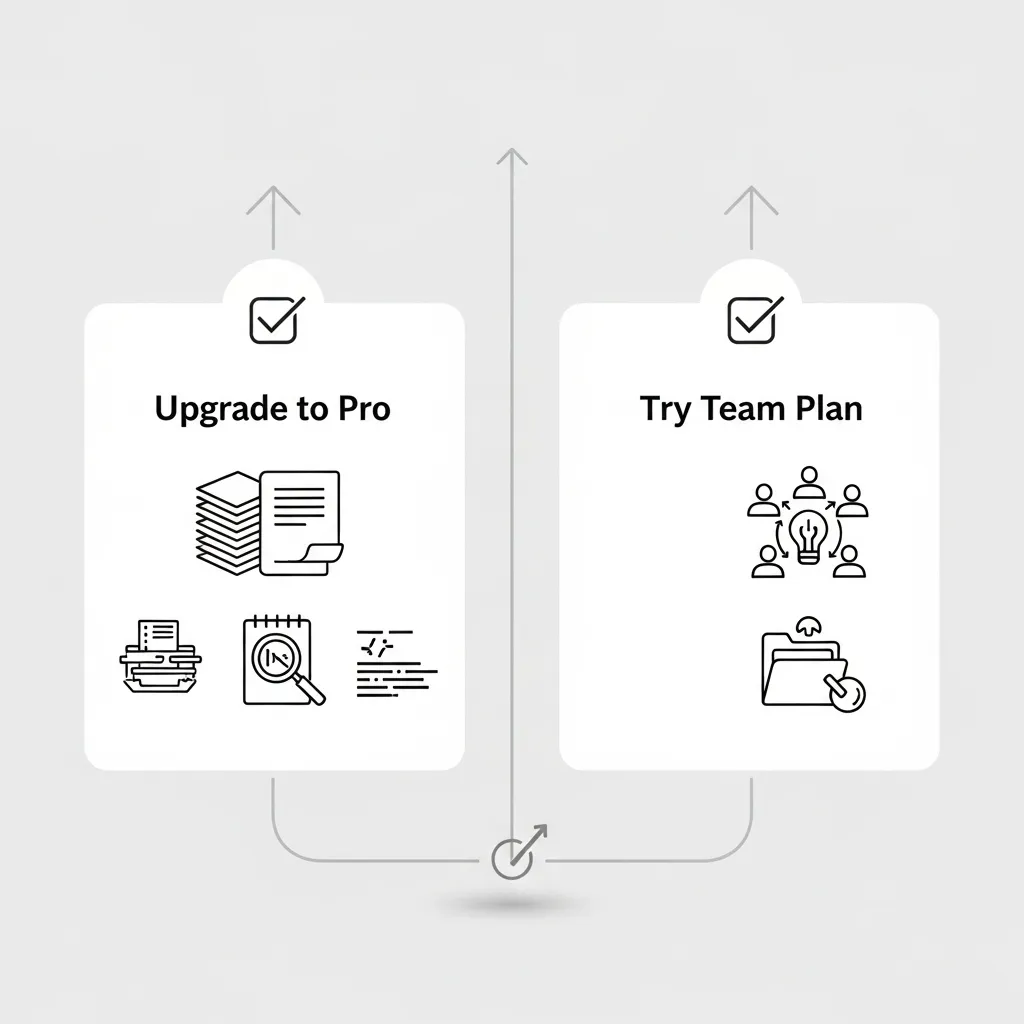
Upgrade to Pro if:
- You’re hitting free tier limits regularly
- You work with large documents or codebases
- You do significant research or analysis work
- The extended context would help your specific use cases
Try Team plan if:
- You have 3+ people collaborating on AI-assisted work
- Shared context across team members would be valuable
- You can justify $30/user/month in increased productivity
Stick with free tier if:
- You use Claude occasionally for quick questions
- You’re not hitting usage limits
- The advanced features don’t match your use cases
Skip Claude entirely if:
- You need real-time web information constantly
- You’re in a regulated industry with data restrictions
- You prefer other AI tools that better match your workflow
Final Assessment
The 2026 Claude updates represent genuine improvement—not revolutionary transformation, but meaningful evolution. The extended context window, cross-conversation memory, collaboration features, and improved multimodal capabilities combine to make Claude noticeably more useful than the 2024-2025 versions.
Some features feel like polished, mature implementations (extended context, improved accuracy). Others feel like solid first versions that will improve (collaboration, code execution). A few feel like nice-to-haves that don’t change much (some interface improvements).
After a month of intensive use, Claude remains my primary AI assistant for complex work, research, and analysis. The improvements reinforce that choice rather than making me reconsider it.
Is it perfect? No. Are there valid reasons to prefer competitors? Absolutely. But for my workflow—heavy on research, analysis, writing, and collaborative work—the 2026 Claude updates deliver meaningful value.
The question isn’t whether these features are useful. For most power users, they clearly are. The question is whether they’re useful enough for your specific needs to justify the cost and learning curve.
For me, the answer is yes. Your mileage, as always, may vary.