
How to Use AI for Content Creation: Real Workflows That Actually Work
How to Use AI for Content Creation: Real Workflows That Actually Work
I’ll be straight with you: when I first started experimenting with AI content tools in early 2023, I thought they’d make my job obsolete. I’m a freelance content writer who’d spent years building up clients, learning SEO, developing my voice—and suddenly ChatGPT could spit out a blog post in thirty seconds.
Three years later, I’m busier than ever. My income has actually increased. But how I work has fundamentally changed.
The panic was misplaced. AI didn’t replace content creators; it changed what content creation means. The writers and marketers I know who’ve thrived are the ones who figured out how to use AI as a collaborative tool rather than fighting it or letting it do everything.
Here’s what I’ve learned about actually using AI for content creation—the practical workflows, the mistakes I’ve made, the ethical lines I’ve drawn, and the results I’ve seen.
Why AI Content Creation Isn’t What You Think
Most people hear “AI content creation” and imagine hitting a button and getting a finished article. That’s not how it works—at least not if you want content that performs.
I ran an experiment last year. I published three blog posts on a client’s website:
- One written entirely by AI with minimal editing
- One written by me without any AI assistance
- One created through a collaborative process (me + AI)
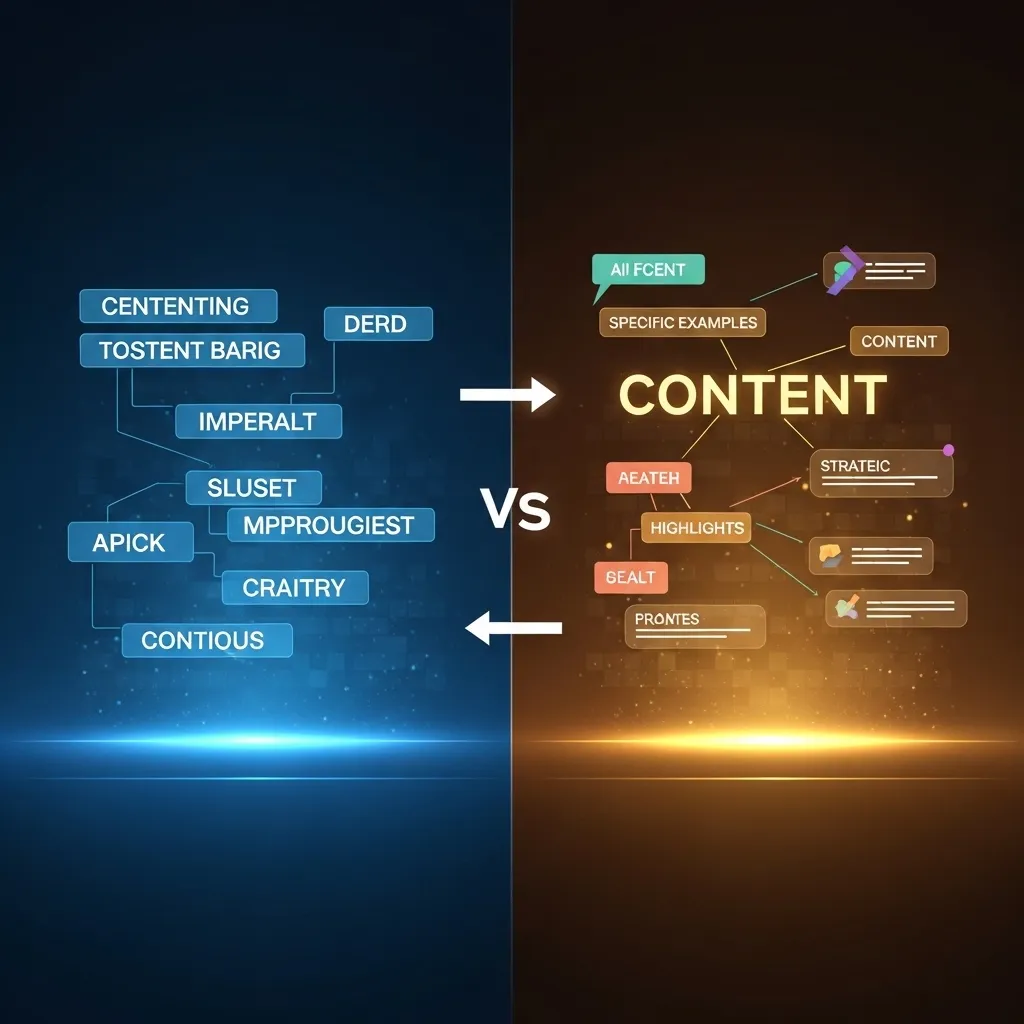
The purely AI piece got indexed but never ranked. It was technically correct but generic, lacking the specific insights and personality that make content worth reading. The fully human piece performed okay—ranked on page two for our target keyword.
The collaborative piece? Ranked in the top three within six weeks and generated actual conversions. It combined AI’s efficiency for research and structure with my industry knowledge, specific examples, and strategic optimization.
That experiment taught me that AI is best used within the content creation process, not as the entire process.
The AI Content Creation Tools I Actually Use (2026 Edition)
The landscape has consolidated and matured since the Wild West days of 2023. Here’s what’s in my regular toolkit:
ChatGPT (GPT-4 and GPT-5)
Still the workhorse. I use it daily for brainstorming, outlining, and research. The GPT-5 release in late 2025 significantly improved its ability to maintain context across long conversations and understand nuance.
What I use it for: generating topic angles, creating outlines, researching unfamiliar subjects, rephrasing awkward sentences.
What I don’t use it for: writing full drafts without heavy editing, technical content requiring current data, anything requiring genuine expertise I don’t have.
Claude (Anthropic)
Claude has become my go-to for long-form content because it handles extended context better. I can paste 10,000 words of background material and it actually remembers the details throughout the conversation.
I worked on a white paper about supply chain technology recently. I fed Claude the client’s previous reports, industry data, and my interview notes, then had it help structure the argument. The output needed substantial revision, but it saved me days of organization work.
Jasper and Copy.ai
These specialized content tools are better than they were in 2023, but I’ve honestly used them less as ChatGPT improved. They’re still useful for specific formats—ad copy, product descriptions, email sequences—where templates actually help.
A marketing manager I know runs a small e-commerce site. She uses Jasper for product descriptions because she needs 500+ descriptions that are unique but follow a similar structure. That’s a perfect AI use case.
Perplexity AI
This has become essential for research. It searches the web and provides sourced answers, which is invaluable when writing about current events or technical topics.
I was writing about 2026 cybersecurity trends last month. Perplexity helped me quickly find recent breach statistics, expert quotes, and emerging threats—all with sources I could verify. Cut my research time by 60%.
Midjourney and DALL-E 3
For visual content. I’m not a designer, but I create social media graphics and blog featured images using these tools. The quality has improved dramatically—Midjourney v7 finally handles text in images reliably.
Grammarly and ProWritingAid
The AI features in these editing tools have expanded beyond grammar. They now analyze tone, engagement, readability, and even suggest structural improvements. I run everything through Grammarly before sending to clients.
My Actual Content Creation Workflow
Here’s how I currently create a blog post from start to finish. This has evolved significantly through trial and error.
Step 1: Strategy and Research (Mostly Human)
I start by understanding the purpose. Who’s the audience? What action should they take? What keywords are we targeting? This is human work—AI can’t know your business goals or audience intimately.
Then I research. I use Perplexity and traditional Google searches to understand what already exists on the topic. I read competing content. I identify gaps.
Sometimes I’ll ask ChatGPT: “What are the main subtopics someone would want to know about [subject]?” This helps catch angles I might have missed, but I filter it through my knowledge of the audience.
Step 2: Outlining (Collaborative)
I create a rough outline myself, then ask AI to expand it. For example:
“I’m writing a blog post about remote team management for tech startups. My initial outline is:
- Challenges of remote teams
- Communication tools
- Building culture remotely
- Measuring productivity
Expand this into a detailed outline with 8-10 main sections, including specific subtopics under each.”
I take AI’s suggestions, remove the generic stuff, add my own specific angles, rearrange based on narrative flow. The final outline is maybe 40% AI suggestions, 60% my adjustments.
Step 3: Research and Expert Input (Human)
This is where AI falls short. I conduct interviews, pull from my experience, find specific data and examples. I gather stories, case studies, quotes—the material that makes content valuable.
AI can summarize information that exists online, but it can’t generate genuinely new insights. That has to come from expertise, whether mine or subject matter experts I interview.
Step 4: First Draft (Hybrid)
Here’s where my process has changed most. I don’t write section by section anymore. Instead:
I write the sections where I have strong opinions or specific expertise entirely myself. These are usually the introduction, conclusion, and any sections requiring judgment or nuanced argument.
For more straightforward sections—like explaining a standard process or providing background information—I’ll give AI my outline point and key facts, then have it draft a section. For example:
“Write 300 words explaining the difference between synchronous and asynchronous communication in remote teams. Include that asynchronous is better for deep work and across time zones, but synchronous is important for building relationships. Tone: conversational but professional.”
I then heavily edit that output, adding specific examples, adjusting the voice, fact-checking, and removing generic phrasing.
Step 5: Integration and Voice (Mostly Human)
The biggest tell that content is AI-generated is inconsistent voice. AI-written sections feel different from human-written ones.
I read the entire draft aloud, adjusting phrasing until it flows naturally. I add transitions. I inject personality—humor, stories, admissions of uncertainty. I make sure it sounds like something I would actually say.
This takes longer than you’d think. A 2,000-word article might take me 4-5 hours total, with 2-3 hours spent on this integration and refinement phase.
Step 6: Optimization and Editing (Collaborative)
I use Grammarly to catch awkward phrasing and grammatical errors. I run the content through SEO tools (I use Clearscope, though SurferSEO and Frase are also good) to ensure I’ve covered related keywords naturally.
Sometimes I’ll ask ChatGPT: “Suggest 5 alternative headlines for this article that are more engaging” or “This paragraph feels too long and complex—suggest a clearer way to express this.”
Final read-through is all me. I check facts, verify links, ensure accuracy.

Content Types Where AI Actually Helps
Not all content benefits equally from AI assistance. Here’s what I’ve found:
Works Well:
Listicles and How-To Guides: The structure is formulaic enough that AI can help with organization and basic explanations, which you then enhance with specifics.
Social Media Posts: AI is excellent at generating multiple variations quickly. I create 20 LinkedIn post drafts in 10 minutes, then pick the best three and refine them.
Email Newsletters: I outline the key points I want to cover, and AI helps with phrasing and structure. But the insights and personality are mine.
Product Descriptions: For e-commerce, AI can generate variations on a theme efficiently. Just make sure to edit for accuracy and brand voice.
Content Repurposing: Taking a long blog post and creating social snippets, email content, and scripts from it is where AI excels. I feed it the original and say “create 10 Twitter-length takeaways from this article.”
Works Poorly:
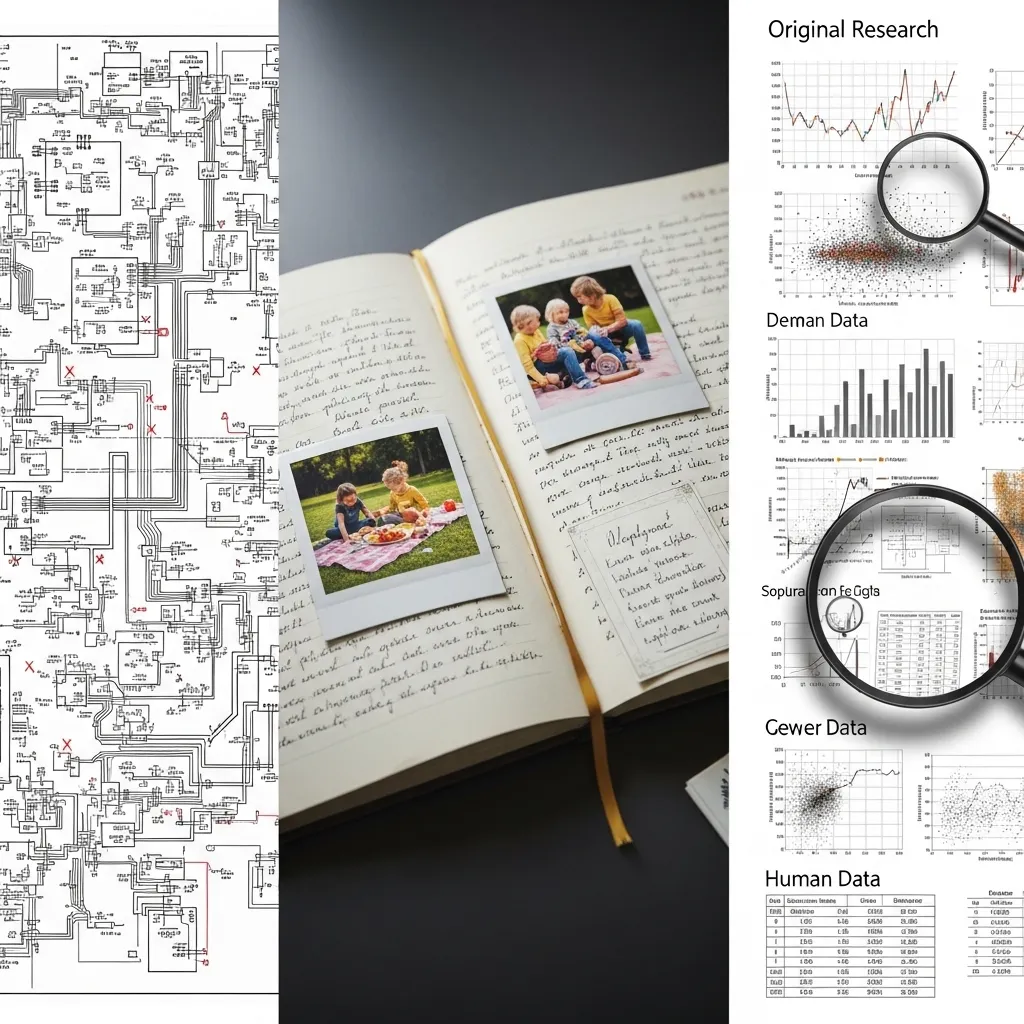
Opinion Pieces: AI has no genuine opinions. You can prompt it to argue a position, but the result feels hollow. Opinion content needs to be authentically yours.
Highly Technical Content: AI makes subtle technical errors that experts will notice. I learned this the hard way when a developer client found three inaccuracies in an API documentation piece I’d relied on AI for too heavily.
Personal Stories: Obviously. AI can’t tell your stories. It can help structure them, but the content has to be genuinely lived experience.
Original Research: AI can analyze data you provide and help identify patterns, but it can’t conduct studies or generate truly new information.
The Prompting Skills That Actually Matter
Everyone talks about “prompt engineering” like it’s magic. After thousands of prompts, here’s what I’ve learned actually matters:
Be Specific About Context and Audience
Bad prompt: “Write about email marketing.”
Better prompt: “Write a 400-word section for small business owners explaining why segmented email lists perform better than sending the same email to everyone. Include one concrete example. Tone: friendly and encouraging, not preachy.”
The second gives AI the context to generate something useful rather than generic.
Provide Examples
If you want a specific style, show AI an example. I’ll often paste a paragraph I’ve written and say “Match this tone and style when writing about [topic].”
This works remarkably well for maintaining voice consistency.
Iterate and Refine
I rarely use AI’s first output. The conversation might look like:
Me: “Create an outline for an article about podcast equipment for beginners.”
AI: [provides generic outline]
Me: “This is too technical. The audience is hobby podcasters with under $500 to spend. Focus more on what’s actually necessary versus nice-to-have.”
AI: [provides better outline]
Me: “Good. Now expand the section on microphones with specific recommendations in three price ranges.”
The final outline emerges through conversation, not a single perfect prompt.
Use Constraints
“Write 200 words, no more” or “Use three specific examples” or “Avoid jargon—explain like I’m explaining to my non-technical friend.”
Constraints prevent AI’s tendency to be wordy and vague.
Ask for Alternatives
“Give me five different angles for this topic” or “Suggest three alternative ways to structure this argument.”
AI is excellent at generating options. You pick the best.
The Quality Control Process
Here’s the uncomfortable truth: AI-generated content requires more editing than many people expect. I’ve seen content creators think they’ll save 80% of their time with AI. The reality is more like 30-40% time savings, and that’s if you maintain quality standards.
My quality checklist before publishing anything with AI assistance:
Fact-check everything. AI confidently states falsehoods. I verify statistics, quotes, dates, technical details—anything presented as fact.
Read aloud. If it sounds robotic or unnatural when spoken, it needs revision.
Check for generic statements. AI loves phrases like “it’s important to note” and “in today’s digital landscape.” I remove these.
Verify the logic. Sometimes AI’s arguments don’t actually make sense when you think about them. It can string together plausible-sounding sentences that don’t logically connect.
Add specificity. Where AI wrote something vague, I add concrete examples, numbers, names—details that signal genuine knowledge.
Ensure accurate representation. For technical topics, I have subject matter experts review. Always.

The Ethical Considerations I’ve Wrestled With
This isn’t straightforward, and I don’t have all the answers. But here are the ethical lines I’ve drawn:
Disclosure
I don’t explicitly label every piece created with AI assistance—that would be nearly everything at this point. But I don’t represent AI-generated content as fully original human writing either.
When clients ask about my process, I’m transparent: “I use AI tools for research, outlining, and drafting sections, but I write the final content and ensure accuracy and voice.”
Most clients care about results—does the content perform?—not the tools used to create it.
Originality
I never publish AI-generated content without significant modification. If it feels like I’m just hitting “generate” and pasting, I’m not adding enough value.
The question I ask: “Could someone else have generated essentially the same thing with the same prompt?” If yes, I need to add more of my own expertise and perspective.
Attribution and Sources
When AI helps me find information, I verify sources and cite them properly. I don’t cite AI itself as a source—that’s not how sources work.
Job Displacement
I think about this a lot. I’ve probably reduced the amount of entry-level content work available because I can produce more content myself now.
My rationalization: the jobs aren’t disappearing; they’re changing. The content creators who’ll thrive are those who develop expertise, strategic thinking, and quality control skills—things AI can’t replicate.
Is that self-serving? Maybe. But it’s what I observe happening.
Common Mistakes I’ve Made (So You Don’t Have To)
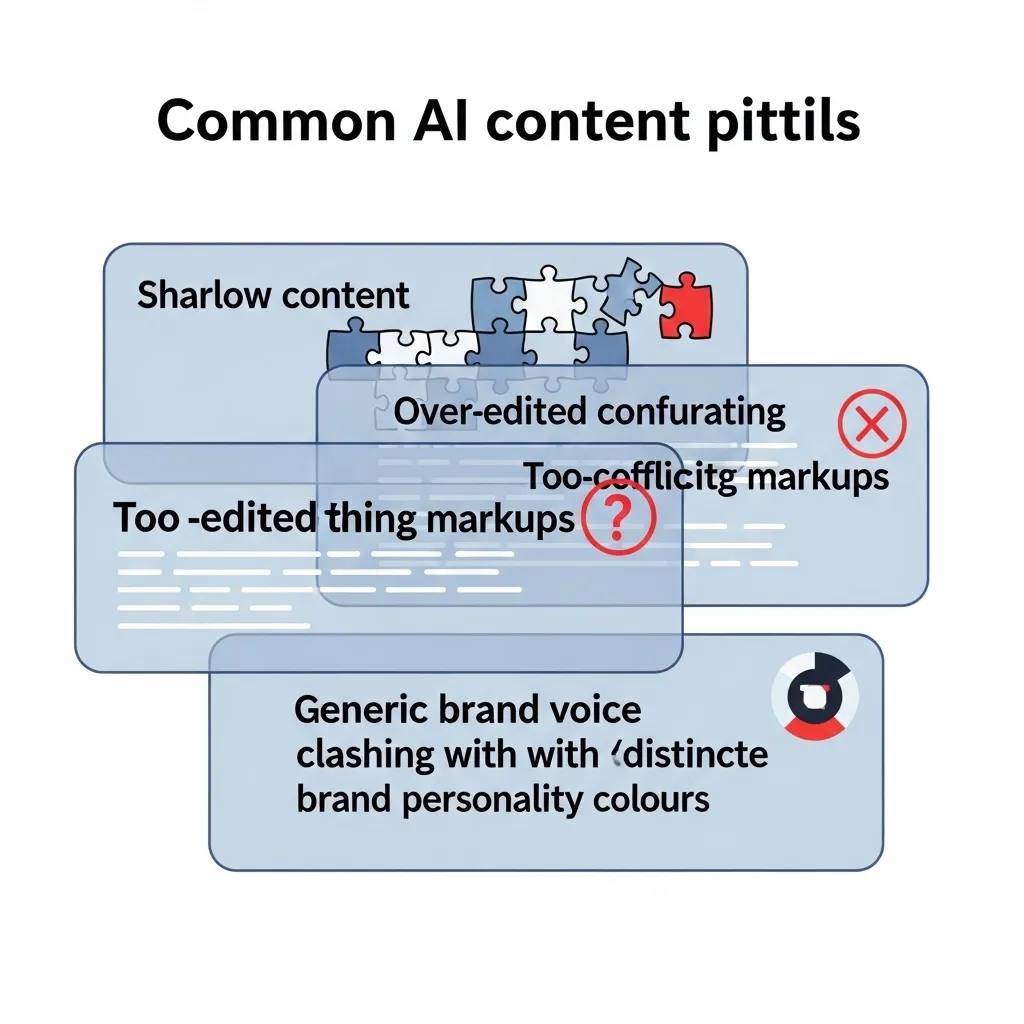
Trusting AI with current events. I once published a piece with statistics from “2024” that AI had completely fabricated. Now I verify everything with original sources.
Letting AI write introductions. AI introductions are consistently terrible—generic, full of obvious statements, lacking hooks. I always write intros myself now.
Using the same prompts repeatedly. I started generating content that all sounded similar. Varying your approach prevents this.
Skipping the human expertise phase. Early on, I tried writing about topics I didn’t understand, relying on AI to fill knowledge gaps. The content was shallow and sometimes wrong.
Over-editing AI content. Sometimes AI’s version is fine and I’d make it worse by overthinking revisions. Learning when to leave it alone took practice.
Ignoring brand voice guidelines. AI defaults to a generic professional tone. If your brand is casual, technical, humorous, or authoritative, you need to heavily adjust AI’s output.
The Performance Data
Numbers matter more than philosophy. Here’s what I’ve observed in my work and among colleagues:
SEO Performance: Properly refined AI-assisted content performs as well as fully human content in search rankings. The key is “properly refined”—adding expertise, examples, and optimization.
Engagement: Pure AI content gets lower engagement (time on page, comments, shares) than hybrid content. Readers can tell when something lacks genuine insight.
Conversion: Highly AI-dependent content converts poorly because it doesn’t address specific objections and concerns effectively. Hybrid content that incorporates real user research and expertise converts as well as traditional content.
Production Speed: I create about 40% more content in the same time compared to pre-AI. But I’m selective—more bad content quickly doesn’t help anyone.
Content Types I Create With AI (Real Examples)
Let me walk through a few actual projects to show how this works in practice:
Case Study: SaaS Blog Content
Client: B2B software company targeting HR managers
Goal: Weekly blog posts (1,500-2,000 words) targeting specific keywords
My process:
- Interview client’s product team and customers (human)
- Research keywords and competing content (hybrid)
- Create outline based on user questions and search intent (hybrid)
- Draft sections explaining concepts and processes (AI-assisted)
- Write sections requiring product-specific knowledge (human)
- Add customer quotes and specific examples (human)
- Edit for voice and flow (human)
- Optimize for SEO (hybrid)
Time investment: About 5-6 hours per post (compared to 8-10 hours pre-AI)
Results: 70% of posts rank in top 10 within three months, driving 30% increase in organic traffic
Case Study: Email Newsletter
Client: Personal finance coach with 15,000 subscribers
Goal: Weekly newsletter with tips, stories, and offers
My process:
- Outline key points based on client’s expertise and current events (human)
- Draft tips and explanations (AI-assisted)
- Write personal stories and anecdotes (human – these are from client interviews)
- Generate subject line variations (AI)
- Edit for client’s distinctive voice (human)
Time investment: 2-3 hours weekly (compared to 4-5 hours pre-AI)
Results: Open rates actually improved slightly (23% to 26%) since refining this hybrid approach—suggesting quality hasn’t suffered
Case Study: Social Media Content
Client: E-commerce brand selling outdoor gear
Goal: Daily Instagram captions, 3x weekly LinkedIn posts
My process:
- Identify themes for the week based on product launches and seasonal trends (human)
- Generate 20-30 caption variations for each theme (AI)
- Select best options and edit for brand voice (human)
- Add specific product details and CTAs (human)
- Create content calendar (hybrid)
Time investment: 4-5 hours per week (compared to 8-10 hours pre-AI)
Results: Engagement rate remained consistent while reducing time investment by 50%

The Future of AI Content Creation (From Where I’m Sitting)
Based on beta tools I’m testing and industry trends, here’s where this is heading:
More Personalization: AI tools are getting better at adapting to specific brand voices. I’m testing tools that learn from your existing content and replicate your style. It’s impressive but still requires oversight.
Better Integration: Rather than separate tools, AI is being built into the platforms we already use—content management systems, email platforms, social media schedulers.
Multimodal Content: Creating blog posts, videos, podcasts, and infographics from a single brief is becoming more feasible. I recently tested a tool that generated a video script, storyboard, and social posts from one article outline.
Real-Time Updates: AI that can update old content based on current information is emerging. Imagine your “best coffee makers” roundup automatically updating when new models are released.
Quality Detection: Platforms are getting better at identifying low-quality AI content. Google’s algorithms have adapted. The arms race between AI generation and AI detection continues.

My Honest Take After Three Years
AI hasn’t made content creation easier in the way I expected. It’s made it different.
I spend less time typing and more time thinking strategically. Less time researching basics and more time developing genuine expertise. Less time on structure and more time on storytelling and voice.
The content creators struggling are those trying to compete on volume of generic content. The ones thriving are those using AI to handle commodity work while focusing their human effort on what’s genuinely valuable—expertise, insight, originality, strategy.
I make more money now, but I work differently. I’ve had to develop new skills: prompting effectively, editing AI content, strategic thinking, quality control. My value isn’t in typing words anymore; it’s in knowing which words matter and why.
Is that better or worse? Honestly, I find it more interesting. The work requires more judgment and less rote production. But it’s also more cognitively demanding—you can’t zone out and just write anymore.
If you’re starting to use AI for content creation, expect a learning curve. Your first attempts will probably be obviously AI-generated. That’s okay. You’ll get better at integrating AI smoothly, adding your expertise, maintaining quality.
The key is staying honest about what AI can and can’t do. It’s a research assistant, brainstorming partner, and drafting tool. It’s not a replacement for expertise, creativity, or strategic thinking.
Use it like that, and it’s incredibly valuable.
Frequently Asked Questions
1. Can search engines tell if content is written by AI, and will it hurt my rankings?
This is more nuanced than simple yes/no. Google has stated they don’t penalize AI content specifically—they penalize low-quality content regardless of how it’s created. In practice, I’ve seen well-edited AI-assisted content rank just fine, while poorly done AI content doesn’t rank well. The issue isn’t the AI; it’s that pure AI content tends to be generic, lack depth, and not fully answer search intent. Search engines have definitely gotten better at identifying low-effort AI content since 2024, but if you’re adding genuine expertise, examples, and optimization, you’ll be fine. I rank AI-assisted content regularly without issues.
2. How much should I edit AI-generated content before publishing?
Much more than you probably think. I typically rewrite or heavily edit 40-60% of any AI-generated draft. The less you know about a topic, the more editing required, because you can’t catch AI’s subtle errors or generic statements. At minimum, you should: fact-check everything, read aloud for natural flow, add specific examples and details, adjust for your brand voice, remove generic phrases, verify logical coherence, and optimize for your specific goals. If you’re publishing with less than 30 minutes of editing on a 1,000-word piece, you’re probably publishing low-quality content. The editing is where the value-add happens.
3. What’s the best AI tool for content creation?
There’s no single “best” tool—it depends on your needs. For general content writing, ChatGPT (GPT-4 or GPT-5) or Claude are the most versatile and cost-effective. For long-form content, Claude handles extended context better. For SEO-focused blog content, specialized tools like Jasper or Frase integrate optimization features. For research, Perplexity AI is excellent. For social media, many platforms now have AI built in. Honestly, I’d start with ChatGPT Plus ($20/month as of 2026) and only add specialized tools once you’ve identified specific needs it doesn’t meet. Most people don’t need five different AI tools—they need to learn to use one or two really well.
4. Is it ethical to use AI-written content without disclosing it?
The ethics here are still being worked out, and opinions vary widely. My perspective: if you’re significantly editing, adding expertise, and ensuring quality, AI is a tool like any other—you don’t need to disclose using spell-check or a thesaurus. However, if you’re essentially just prompting AI and publishing with minimal changes, that feels less ethical, especially if you’re representing yourself as the creator. For client work, be transparent about your process. For publications with specific guidelines, follow them. The question I ask myself: “Am I adding significant value beyond what the AI provided?” If yes, I’m comfortable with the process. If no, I need to do more work or decline the project.
5. How can I make AI content sound more human and less generic?
This is the critical skill. First, add specificity—replace vague statements with concrete examples, numbers, names, and stories. Second, inject personality—use contractions, varied sentence lengths, occasional humor or admissions of uncertainty. Third, include things AI wouldn’t know—personal experiences, recent events, industry insider knowledge, specific case studies. Fourth, remove AI’s tell-tale phrases (I keep a list of overused AI expressions to search for and delete). Fifth, read everything aloud—if it sounds like a robot, it needs work. The best approach is writing certain sections yourself from scratch, especially introductions and conclusions, then blending AI-assisted sections with your voice. Think of AI as providing the skeleton; you add the muscle, skin, and personality.