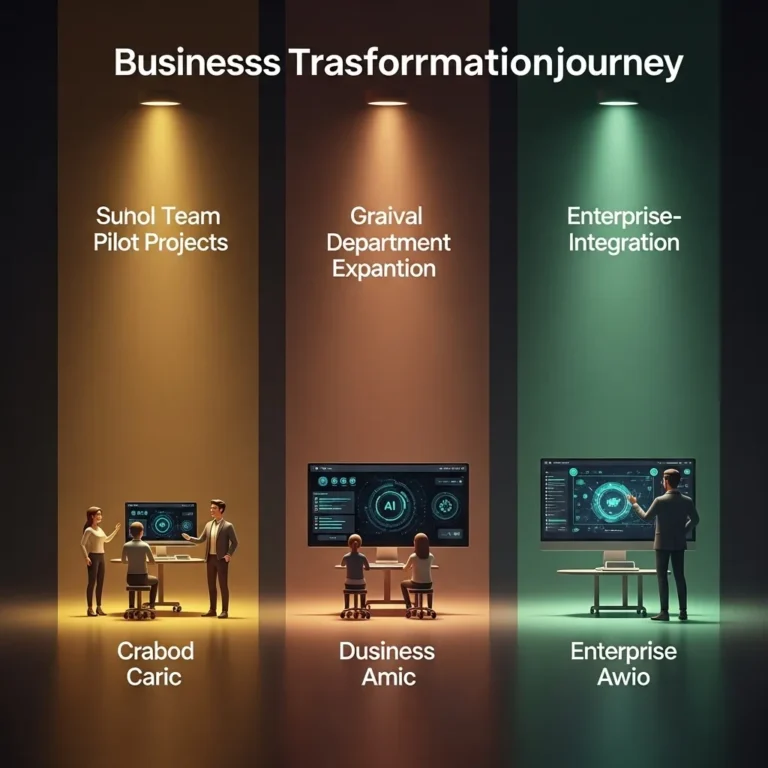
The Future of Agentic AI: Predictions From Someone Watching It Unfold
The Future of Agentic AI: Predictions From Someone Watching It Unfold
I’ve spent the better part of the last three years watching agentic AI evolve from an interesting research concept to something that’s genuinely reshaping how work gets done. And like anyone who’s been close to a rapidly developing technology, I get asked constantly: where is this all heading?
The truth is, making predictions about AI feels increasingly humbling. I remember confidently telling a client in early 2023 that truly autonomous AI agents were at least five years away from practical deployment. By mid-2024, we were implementing them. The pace of progress keeps surprising even those of us immersed in it.
But that said, there are patterns emerging. Trajectories becoming clearer. Some developments that seem almost inevitable, and others that are genuinely uncertain. After countless conversations with researchers, developers, business leaders implementing these systems, and observing what’s working and what’s not, I’ve developed some views on where we’re headed.
This isn’t going to be a breathless tour of a techno-utopian future where AI agents solve all our problems. Nor is it a doom-laden warning about AI overlords. The reality unfolding is more nuanced, more complicated, and frankly more interesting than either extreme.
The Near-Term Future (2026-2028): Consolidation and Maturation
We’re currently in what I’d call the “wild west” phase of agentic AI. Dozens of frameworks, competing approaches, limited standards, and every vendor claiming they’ve cracked the code. This won’t last.
Platform Convergence
Over the next two years, I expect significant consolidation. Not necessarily through acquisitions (though there’ll be some of that), but through the emergence of clear leaders and standard approaches. We’re already seeing it happen—certain architectural patterns are proving more reliable, specific orchestration frameworks are becoming go-to solutions.
By 2028, I think we’ll have 3-4 dominant platforms for building agentic AI systems, similar to how cloud infrastructure consolidated around AWS, Azure, and Google Cloud. These platforms will provide:
- Standardized agent architectures with proven reliability
- Pre-built integrations with major enterprise systems
- Robust monitoring and governance tools
- Industry-specific agent templates
- Clearer pricing models that make ROI calculations feasible
This consolidation will actually accelerate adoption. Right now, building agentic systems requires significant technical expertise and tolerance for experimentation. As platforms mature, the barrier to entry drops considerably.
The Rise of Agent Ecosystems
Here’s a prediction I’m fairly confident about: the future isn’t single agents doing everything. It’s specialized agents collaborating.
Think about how software development evolved. We moved from monolithic applications to microservices—smaller, specialized components that work together. Agentic AI is following a similar path.
I’m already seeing early versions of this. One client has separate agents for research, analysis, content generation, and compliance checking. They communicate through a shared context layer, handing off work and building on each other’s outputs. It’s messy right now—coordination is complex and failures cascade in unpredictable ways—but when it works, it’s remarkably powerful.
By 2027-2028, I expect robust agent collaboration frameworks will emerge. You’ll design workflows by selecting and configuring specialized agents rather than trying to build one super-agent that does everything.
This creates some interesting possibilities. Imagine a customer service ecosystem where:
- A triage agent handles initial contact and routes to specialists
- Technical agents handle product troubleshooting
- Billing agents manage account issues
- Escalation agents prepare comprehensive handoffs to humans
- A coordination agent ensures smooth transitions
Each agent gets really good at its specific domain. The coordination layer handles the orchestration.
Vertical Solutions Proliferate
Generic agentic AI platforms are useful, but the real value comes from encoding domain expertise. That’s why I predict an explosion of vertical solutions—agentic AI systems built specifically for particular industries or functions.
We’re seeing the early stages now. Purpose-built agents for:
- Legal contract review and analysis
- Medical coding and billing
- Financial compliance monitoring
- Software testing and QA
- HR operations and recruiting
- Supply chain optimization
These vertical solutions can encode industry-specific knowledge, comply with relevant regulations, and integrate with specialized tools that generic platforms don’t understand.
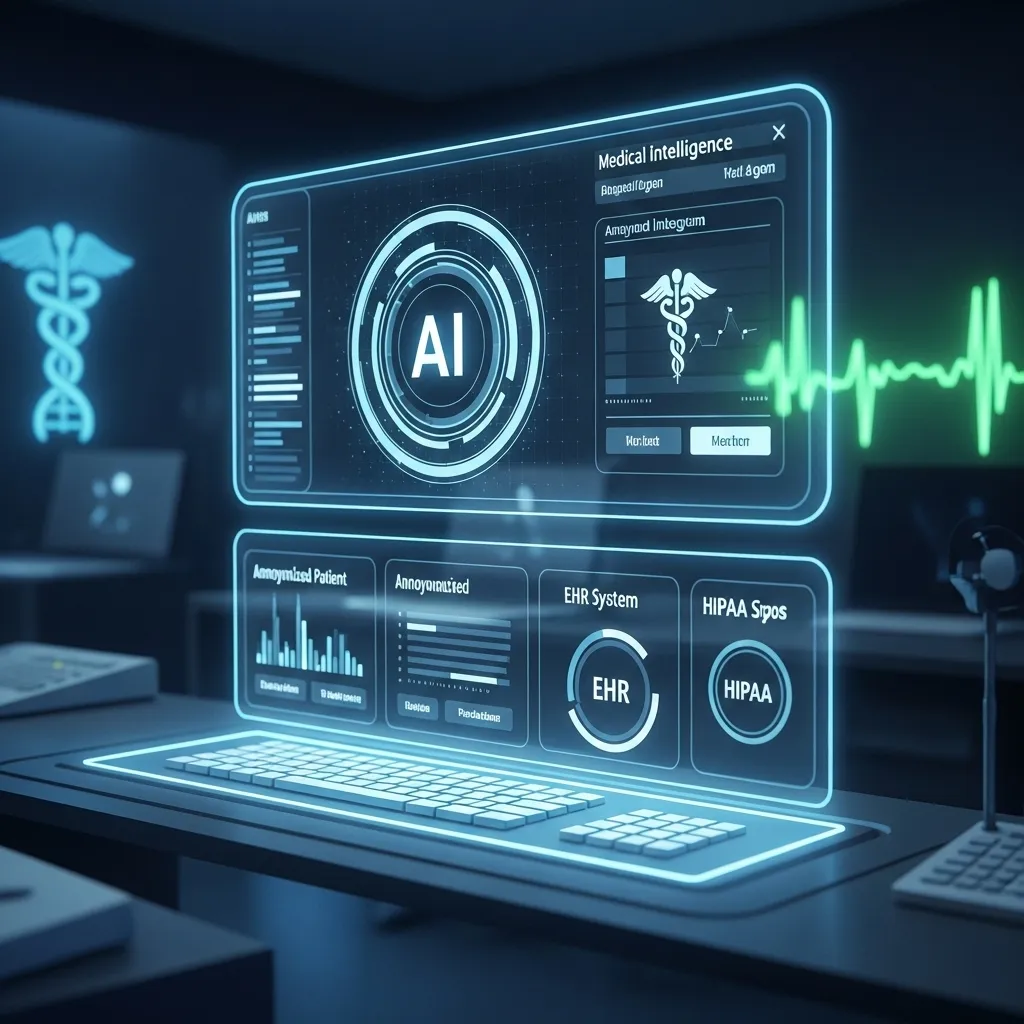
A healthcare-focused agentic platform, for example, understands HIPAA requirements, integrates with EHR systems, knows medical terminology, and operates within healthcare-specific workflows. That’s dramatically more valuable than a generic agent that requires extensive customization.
By 2028, I expect most industries will have established vertical agent platforms as the standard approach, with generic platforms serving mainly for custom internal processes.
The Medium-Term Future (2028-2031): Transformation and Integration
This is where things get really interesting—and honestly, where my predictions become less certain. But based on current trajectories and the organizations I’m working with, here’s what I think we’ll see.
Agents Become Infrastructure
Right now, deploying an agentic AI system is a project—something you plan, budget for, and implement with fanfare. By 2030, I believe agents will be infrastructure—an expected, almost invisible part of how systems work.
You won’t “implement an agent for customer service.” Your customer service platform will just have agent capabilities built in, the same way it has a database built in. You’ll configure and customize them, but they’ll be assumed components rather than novel additions.
This shift fundamentally changes adoption patterns. Instead of needing executive buy-in for an AI initiative, agents become part of routine system selection and configuration. IT teams will evaluate platforms partly based on the quality and flexibility of their embedded agent capabilities.
The Ambient Work Assistant
Here’s a development I’m watching closely because I think it could be transformative: the emergence of truly effective personal work agents.
We’ve had “AI assistants” for years—Siri, Alexa, various productivity bots. They’ve been underwhelming because they’re fundamentally reactive and narrow. You have to explicitly tell them what to do, and they can only help with specific, predefined tasks.
The agents emerging now are different. They can proactively observe your work patterns, understand your goals, and take initiative to help. This is still rough around the edges, but improving rapidly.
By 2029-2030, I think many knowledge workers will have personalized work agents that:
- Learn your role, responsibilities, and priorities
- Monitor relevant information sources and surface what matters
- Draft routine communications and documents
- Coordinate scheduling and meeting preparation
- Handle follow-up tasks and reminders
- Interface with organizational systems on your behalf
- Escalate to you only when your judgment is actually needed
I tested an early version of this last year. It was frustrating—too many false positives, too much noise, occasional baffling mistakes. But there were moments where it was genuinely helpful, handling things I would have forgotten or not had time for. As these systems improve, I think they’ll become indispensable.
The societal implications are significant. This could dramatically change productivity dynamics and what it means to be effective at knowledge work. It might also exacerbate inequality if these capabilities are only accessible to certain organizations or individuals.
Autonomous Business Processes
Right now, agentic AI handles workflows—sequences of tasks toward a defined goal. The next evolution is agents managing ongoing processes with minimal human oversight.
Consider supply chain management. Currently, even with advanced automation, humans set parameters, review decisions, and intervene regularly. Future agents will manage dynamic optimization—continuously adjusting inventory levels, supplier relationships, logistics routing, and demand forecasting based on real-time conditions.
Or consider content operations for a media company. Agents could manage the entire pipeline: identifying trending topics, commissioning freelancers, editing submissions, optimizing for SEO, scheduling publication, promoting on social channels, and analyzing performance—with editorial leadership providing strategic direction but not managing daily execution.
This is different from current automation because it’s adaptive and goal-oriented over extended time periods, not just executing predefined workflows. The agent is essentially operating the process, not just automating tasks within it.
We’ll start seeing this in narrow domains around 2027-2028, with broader adoption by 2030-2031. The regulatory and liability questions are significant, which will slow adoption in some sectors.
Enhanced Reasoning and Learning
The underlying AI capabilities keep advancing, and that creates new possibilities for what agents can do.
Current agentic systems (in 2026) can reason through moderately complex problems—maybe 5-10 steps of logical thinking, with some ability to plan and revise approaches. But they still struggle with truly complex reasoning, novel situations requiring creativity, and learning from limited examples.
Based on research trajectories, by 2029-2030 I expect we’ll see:
Dramatically improved multi-step reasoning: Agents reliably handling problems requiring 50+ steps of logical reasoning, planning, and execution. This opens up domains currently off-limits—complex research, strategic analysis, system design.
Better few-shot learning: Agents that can adapt to new situations and tasks with minimal examples. Currently, getting an agent to handle a new type of scenario requires significant prompt engineering or fine-tuning. Future systems will generalize much more effectively from limited exposure.
Cross-domain synthesis: Agents that can genuinely integrate knowledge from multiple domains to solve problems. Right now, even sophisticated agents tend to stay within domain boundaries. Breaking through this enables real innovation and creative problem-solving.
Long-horizon memory and context: Current systems have improved memory, but still struggle with really long-term context spanning weeks or months. Future agents will maintain coherent understanding over much longer timescales, enabling them to manage extended projects and relationships.
These aren’t speculative moonshots—they’re extensions of current research directions that are showing steady progress.

The Longer-Term Future (2031+): Speculation and Scenarios
Beyond about five years, predictions become increasingly speculative. Too many variables, too much uncertainty. But there are some developments I think are plausible—though I’m far less confident about timeline and specifics.
The Collaborative Economy
One possibility that fascinates me is the emergence of what I think of as the “collaborative economy”—economic activity increasingly mediated by agents working together.
Imagine: Your company’s procurement agent negotiates with suppliers’ sales agents, finding optimal terms without human involvement. Your investment agent coordinates with thousands of other agents in financial markets. Your project agent subcontracts work to freelancer agents, which coordinate with human specialists to deliver results.
Humans set high-level goals and provide oversight, but the day-to-day economic coordination happens agent-to-agent. This could dramatically reduce transaction costs and enable much more dynamic, optimized economic relationships.
It also raises fascinating questions. How do we ensure these agent interactions align with human values and intentions? What happens when agents develop emergent behaviors we didn’t anticipate? How do we regulate markets where most participants are AI agents?
I don’t know when or if this fully emerges, but we’re seeing early versions already. It could fundamentally reshape how economic activity is coordinated.
Scientific Discovery Acceleration
Another area where I think agents could be truly transformative: scientific research.
We’re already seeing agents assist with literature review, hypothesis generation, experiment design, and data analysis. But imagine agents that can autonomously explore research questions—designing and running simulations, identifying promising directions, synthesizing findings across disciplines, even proposing novel theoretical frameworks.
Research in materials science, drug discovery, climate modeling—anywhere you have complex search spaces and massive amounts of data—could accelerate dramatically. An agent might explore thousands of material compositions overnight, identifying promising candidates for experimental validation.
Some researchers I talk to think this could lead to a significant acceleration in scientific progress by the early 2030s. Others are more skeptical, pointing out that the deepest scientific insights often come from human intuition and creativity that AI still can’t replicate.
Honestly, I don’t know who’s right. But it’s worth watching because the implications would be profound.
The Governance Challenge
Here’s a development I’m quite confident will happen, though the specifics are unclear: serious governance and regulatory frameworks for agentic AI.
Right now (in 2026), we have scattered regulations—AI acts in various jurisdictions, industry-specific rules, lots of discussion but limited comprehensive frameworks. As agents become more autonomous and consequential, this won’t be adequate.
By the early 2030s, I expect we’ll see:
- Liability frameworks: Clear rules about who’s responsible when an agent makes a harmful decision or mistake
- Transparency requirements: Mandates for explainability and auditability of agent actions in certain domains
- Safety standards: Certification requirements for agents operating in critical areas (healthcare, finance, infrastructure)
- Rights and boundaries: Definitions of what agents can and can’t do autonomously without human approval
- International coordination: Some level of global framework given the borderless nature of AI systems
The details will be contentious and imperfect. Getting this balance right—enabling innovation while managing risks—will be one of the defining challenges of the next decade.
What Could Go Wrong: Alternative Scenarios
I’ve mostly outlined a relatively smooth evolution—agentic AI steadily improving and becoming more integrated into how we work. But that’s just one scenario. Here are some ways things could develop differently:
The Reliability Ceiling
What if agentic AI hits a reliability ceiling below what’s needed for truly autonomous operation?
Current systems are maybe 85-95% reliable depending on the task—much better than a year ago, but still requiring oversight and error correction. If that tops out at, say, 97%, agents remain useful tools but never achieve true autonomy for critical processes.
This scenario seems plausible to me. There might be fundamental limitations to how reliably these systems can operate in open-ended real-world situations. If so, the future looks more like “very good assistants” than “autonomous agents.”
The Security Crisis
Agentic AI systems represent significant security risks. They have access to multiple systems, can take autonomous actions, and might be vulnerable to manipulation or exploitation.
A major security incident—agents manipulated to exfiltrate data, execute fraudulent transactions, or disrupt critical systems—could severely set back adoption. Organizations might pull back, regulators might impose restrictive requirements, and trust could take years to rebuild.
I talk to security professionals who worry this is inevitable. The attack surface is large and novel. We might need a crisis to take security seriously enough.
The Capability Plateau
AI capabilities have been improving remarkably, but that might not continue indefinitely. We could hit diminishing returns on current approaches, requiring fundamental breakthroughs that might or might not come.
If model capabilities plateau around current levels (or improve only incrementally), many of my predictions would be too optimistic. Agents would improve through better engineering and integration, but not achieve the dramatic capability expansions I described.
Some researchers I respect think this is likely within the next few years. Others believe we’re nowhere near fundamental limits. It’s genuinely uncertain.
Societal Pushback
We could see significant social or political resistance to autonomous AI agents, leading to restrictions that limit deployment.
If job displacement becomes severe and concentrated, if highly publicized failures erode public trust, if agents are seen as benefiting corporations at workers’ expense—regulatory and social pressure could severely constrain where and how agents can be used.
I could imagine a future where agentic AI is tightly regulated in customer-facing roles, employment decisions, and public services, limiting adoption primarily to internal business processes.
Impacts on Work and Society
Predictions about technology are really predictions about how humans and organizations adapt. The societal implications of widespread agentic AI deserve serious consideration.
The Changing Nature of Work
I think we’re heading toward a fundamental redefinition of knowledge work. When agents can handle information gathering, routine analysis, coordination, and documentation, what’s left for humans?
The optimistic view: we focus on uniquely human capabilities—creative problem-solving, strategic thinking, relationship building, ethical judgment, and work requiring deep contextual understanding and emotional intelligence.
The pessimistic view: many current knowledge worker roles become obsolete, concentrated in fewer hands, with unclear paths for those displaced.
Reality will probably be messier than either extreme. Some roles will be eliminated. Many will be transformed—doing different work than today, enabled by agent capabilities. New roles will emerge around designing, managing, and improving agent systems.
But the transition won’t be smooth or equitable. People whose work is heavily automatable will face pressure to reskill or transition. Organizations will need to thoughtfully manage this or face both ethical problems and talent crises.
The Access and Equity Question
Who benefits from advanced agentic AI? Currently, it’s primarily large organizations with resources to invest in implementation. This could exacerbate inequality—big companies get more efficient while small businesses can’t keep up, knowledge workers with agent assistance dramatically outperform those without.
As platforms mature and costs decrease, access could democratize. A small business owner or individual professional might have agent capabilities comparable to what only enterprises can deploy today.
Which scenario prevails matters enormously. I’m hopeful but not certain that market dynamics will drive toward democratization.
Education and Skill Development
What should we teach students entering a world of capable AI agents?
The skills that retain value seem to be:
- Critical thinking and judgment
- Creative and strategic problem-solving
- Emotional intelligence and relationship building
- Ethical reasoning and values-based decision-making
- Understanding of AI capabilities and limitations
- Ability to work effectively with AI systems
Rote knowledge and routine analytical skills—historically emphasized in education—become less differentiating when agents can handle them.
We’re seeing some educational institutions adapt, but most haven’t really grappled with this shift. By the 2030s, I expect curriculum will look quite different, emphasizing collaboration with AI and uniquely human capabilities.
The Meaning and Purpose Question
Here’s something I think about but rarely see discussed: what happens to professional identity and sense of purpose when agents handle much of what made work feel meaningful?
If you became a lawyer because you enjoyed research and analysis, but agents now do that while you only handle exceptions and final reviews, does the work still feel fulfilling? If you were a project manager who found satisfaction in coordination and communication, but an agent now handles most of that, what’s left?
Some people will welcome this—freed from tedium to focus on high-level thinking. Others might feel diminished—reduced to rubber-stamping agent outputs.
Organizations that navigate this well will help people find new sources of meaning and contribution. Those that don’t will struggle with disengaged employees going through the motions.
This is less a prediction than a question I think we need to grapple with as these systems become more capable.

Timeline Uncertainties and Wild Cards
In all these predictions, I’m working from current trajectories and assuming relatively steady progress. But several factors could dramatically accelerate or decelerate developments:
Breakthrough in AI capabilities: A fundamental advance in reasoning, learning, or generalization could rapidly expand what’s possible. Or we could hit a wall requiring years of research to overcome.
Economic conditions: A recession or financial crisis could slash AI investment and slow deployment. Or economic pressure could accelerate automation adoption as companies seek efficiency.
Regulatory environment: Permissive regulations enable faster experimentation and deployment. Restrictive frameworks slow progress but potentially avoid serious harms.
Public incidents: A high-profile failure or misuse of agentic AI could shift public opinion and regulatory approach dramatically.
Geopolitical factors: Competition or cooperation between nations on AI development shapes trajectories. A “race to the bottom” on safety or an “AI arms race” would look very different than coordinated international governance.
Energy and compute constraints: Training and running advanced AI systems requires massive compute resources and energy. Physical constraints could limit what’s deployable at scale.
Any of these could reshape the landscape in ways that make my predictions look naive in retrospect.

What I’m Watching For
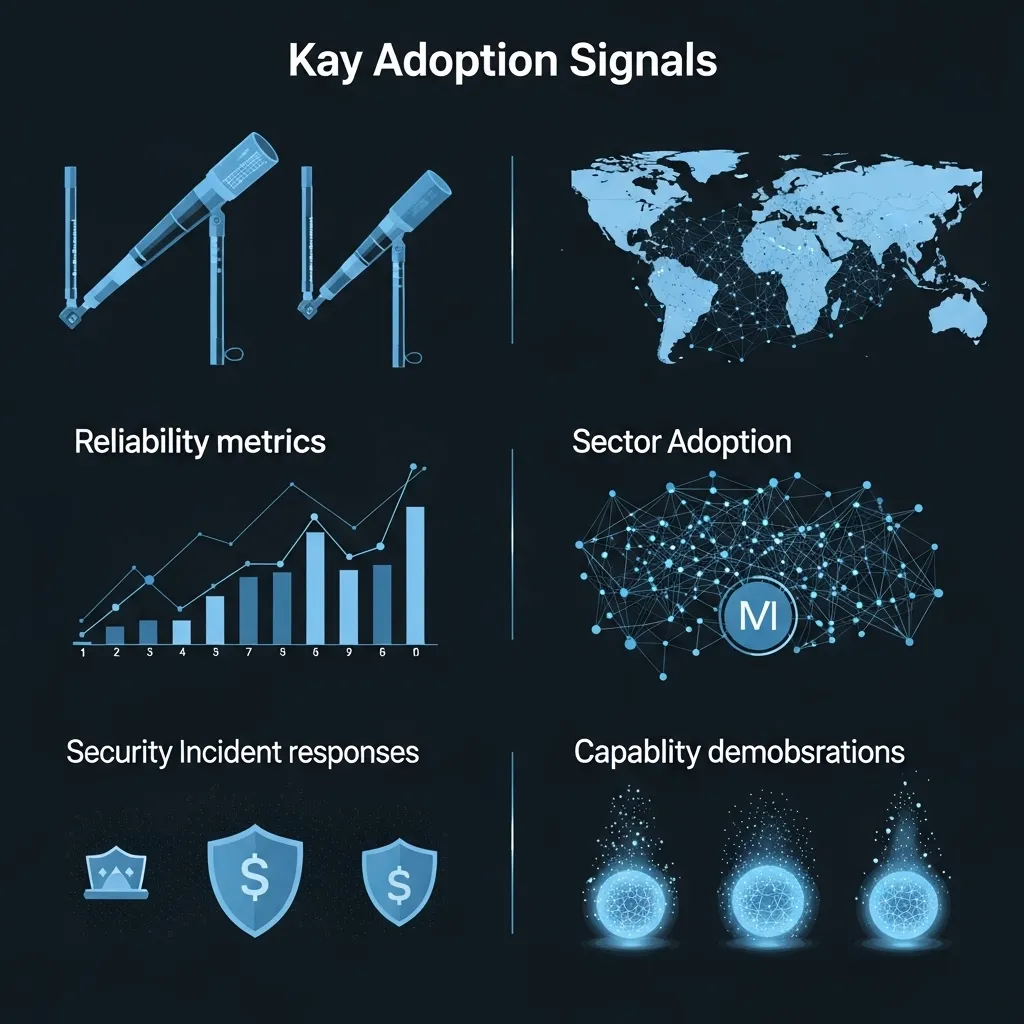
As I track how this space evolves, here are the signals I’m paying attention to as indicators of what’s actually unfolding:
Reliability metrics: Are agents consistently achieving 98%+ accuracy in real-world deployments? If yes, expect rapid expansion. If stuck at lower reliability, expect limited scope.
Enterprise adoption rates: Are mainstream companies (not just tech early adopters) deploying agents? How fast is that spreading? This tells us if we’re hitting mainstream value propositions.
Regulatory developments: How are governments actually regulating (not just talking about regulating) agentic AI? Permissive or restrictive? Coordinated or fragmented?
Labor market impacts: Are we seeing measurable job displacement? In which sectors? What happens to displaced workers? This determines societal response and political pressure.
Security incidents: How frequent and severe? How well handled? This shapes trust and risk tolerance.
Capability demonstrations: What can the best research systems do that they couldn’t a year ago? This indicates underlying technical trajectory.
Platform consolidation: Which platforms are winning adoption? How fast is consolidation happening? This tells us when the market is maturing.
Practical Implications: What You Should Do
Whether you’re a business leader, technologist, or individual professional, here’s what I’d recommend based on these predictions:
For Organizations:
- Start experimenting now with agentic AI in low-risk domains
- Build internal expertise rather than relying solely on vendors
- Develop governance frameworks before deploying widely
- Plan for workforce transition and reskilling
- Monitor the competitive landscape—waiting too long could be costly
For Technologists:
- Develop expertise in agent architectures and orchestration
- Understand both capabilities and limitations deeply
- Focus on safety, reliability, and explainability—these will differentiate you
- Build skills in evaluation and monitoring of agent systems
- Stay current—this field is evolving rapidly
For Individual Professionals:
- Experiment with agent-based tools relevant to your domain
- Develop skills that complement (not compete with) agent capabilities
- Stay adaptable—your role will likely evolve significantly
- Build understanding of how to work effectively with AI systems
- Focus on developing judgment, creativity, and relationship skills
For Everyone:
- Stay informed about developments and implications
- Engage in discussions about governance and ethics
- Push for responsible development and deployment
- Think about what kind of future you want to see and advocate for it
Concluding Thoughts
I’ve laid out a range of predictions here, from near-certain to highly speculative. If I’m honest about my confidence levels:
Very confident (80%+ probability by 2028):
- Platform consolidation around a few dominant solutions
- Vertical industry-specific agent platforms becoming standard
- Multi-agent collaboration frameworks maturing
- Agents becoming embedded infrastructure in many systems
Moderately confident (50-70% probability by 2031):
- Significant capability improvements in reasoning and learning
- Autonomous management of ongoing business processes in many domains
- Effective personal work agents becoming common
- Comprehensive governance frameworks emerging
- Measurable labor market impacts requiring societal response
Uncertain but plausible (20-50% probability by 2035):
- Transformative scientific discovery acceleration
- Emergence of agent-to-agent economic ecosystems
- Fundamental restructuring of knowledge work
- Dramatic democratization of access to advanced AI capabilities
What I’m most confident about is this: agentic AI represents a significant shift in automation capability that will reshape many aspects of how we work and organize economic activity. The specific timeline and details are uncertain, but the direction seems clear.
The systems are already useful today. They’ll become more capable, more reliable, and more integrated over the coming years. How quickly and how far—that depends on factors both technical and societal.
What excites me most isn’t the technology itself, but the possibilities it opens up. If we can automate routine coordination and analysis, what becomes possible? What problems could we solve? What creative endeavors could we pursue? What scientific questions could we explore?
And what concerns me most is whether we’ll navigate the transition thoughtfully—ensuring the benefits are broadly shared, managing the disruptions responsibly, and keeping human values and judgment central even as we deploy increasingly autonomous systems.
The future is being built right now through thousands of decisions—by researchers advancing capabilities, developers building systems, organizations choosing how to deploy them, and policymakers creating governance frameworks.
That future isn’t predetermined. We’re all shaping it through our choices and actions. My hope is that by thinking carefully about where we’re headed, we can make better decisions about how to get there.
Frequently Asked Questions
1. When will AI agents be smarter than humans?
This question gets asked a lot, but it’s based on a misconception about intelligence being a single dimension where you can say one thing is “smarter” than another. AI agents are already superhuman at specific tasks—processing vast amounts of data, mathematical calculations, pattern recognition in defined domains. But they’re still significantly behind humans in many areas: common sense reasoning, handling truly novel situations, creative synthesis across distant domains, understanding social context, and exercising ethical judgment. I don’t expect general-purpose AI that matches human intelligence across all dimensions within the next decade, and honestly, we might never see that. What we will see—and are already seeing—is agents becoming increasingly capable in specific domains and task areas. By 2030, agents will likely outperform most humans at many professional tasks while still falling short in areas requiring deep contextual understanding, creativity, and wisdom. Rather than asking when agents become “smarter,” the more useful question is: “What specific capabilities will agents develop, and how should we adapt our roles accordingly?”
2. Will agentic AI lead to mass unemployment?
This is the concern I hear most often, and it’s legitimate—but the reality is likely more nuanced than either the doomsayers or optimists suggest. Based on historical technology transitions and what I’m observing now, I expect significant job displacement in specific roles focused heavily on information gathering, routine analysis, coordination, and process execution. Customer service representatives, junior analysts, administrative coordinators, data entry specialists—these roles will shrink considerably by 2030. However, I also expect job transformation more than wholesale elimination. Many roles will change to focus on agent oversight, exception handling, strategic direction, and work requiring human judgment—rather than disappearing entirely. New roles will emerge around designing, implementing, managing, and improving agent systems. The bigger question is whether the pace of job creation matches displacement, and whether displaced workers can successfully transition. Historical precedent suggests economies adapt, but transitions can be painful and inequitable. I expect we’ll see labor market disruptions that require policy responses—potentially including education reform, social safety net adjustments, and possibly new frameworks like universal basic income in some jurisdictions. The outcome depends partly on how thoughtfully organizations and societies manage the transition.
3. How accurate and trustworthy will AI agents become?
This is the critical question for how widely and autonomously agents can be deployed. Current agentic systems (in 2026) achieve reliability around 85-95% depending on task complexity and domain—much better than a year ago, but still requiring human oversight. Based on research trajectories, I expect continuous improvement, potentially reaching 97-99% reliability in well-defined domains by 2029-2030. However, there might be a ceiling below 100% due to fundamental limitations in how these systems work—they’re statistical and probabilistic rather than deterministic. For domains where occasional errors are acceptable and catchable, this reliability level enables substantial autonomy. For critical decisions where errors could cause serious harm, even 99% might not be sufficient without human verification. Trust is a separate issue from accuracy—it’s about transparency, explainability, consistency, and accountability. I expect significant progress in making agent reasoning more transparent and auditable, which builds trust even when perfect accuracy isn’t achievable. Organizations deploying agents successfully will layer in validation checks, human oversight for high-stakes decisions, comprehensive monitoring, and clear accountability—not rely on blind trust in the technology.
4. What industries will be most transformed by agentic AI?
Based on what I’m seeing in deployments and where the technology aligns with needs, I expect the most dramatic transformations in knowledge-intensive industries with complex workflows. Professional services—law, consulting, accounting—will see significant changes as agents handle research, analysis, document preparation, and routine client interactions. Healthcare administration will transform as agents manage coding, billing, scheduling, and care coordination, though direct clinical care will change more slowly due to liability and regulatory considerations. Financial services—particularly in areas like compliance monitoring, fraud detection, trading operations, and customer service—are already being reshaped. Customer service across all industries will fundamentally change, with agents handling the majority of inquiries and humans focusing on complex or sensitive situations. Supply chain and logistics operations will become substantially more autonomous and dynamically optimized. Software development will see significant productivity gains from agents assisting with coding, testing, documentation, and DevOps. Industries least transformed will likely be those requiring physical presence, deep human relationships, creative artistry, or areas with strict regulatory constraints around automation. But honestly, I’ve been surprised by where agents find applications—I’d probably have gotten some of these wrong if you’d asked me three years ago. The pattern is that wherever you have complex information processing, multi-step decision-making, and coordination across systems, agents will find a role.
5. Should I be learning about agentic AI even if I’m not in a technical role?
Absolutely, yes. Here’s why: agentic AI is becoming infrastructure that affects work across nearly every role and industry. Even if you’re not building these systems, you’ll likely be working with them, overseeing their outputs, or having your role reshaped by them within the next few years. Understanding what agents can and can’t do, how to evaluate their outputs, how to provide useful direction and feedback, and how to identify when human judgment is needed—these are becoming essential workplace skills regardless of your specific role. Think of it like computer literacy in the 1990s—you didn’t need to be a programmer, but understanding how to work with computers became essential for most professional roles. The same is happening with AI agents. You don’t need to understand the technical internals of how large language models work or be able to code agent architectures. But developing conceptual understanding of capabilities and limitations, getting hands-on experience with agent-based tools in your domain, and thinking about how to effectively collaborate with these systems—that’s valuable professional development. I’d recommend: experimenting with publicly available agent-based tools relevant to your work, reading about implementations in your industry, thinking critically about which aspects of your work could be agent-assisted versus where human judgment is essential, and staying current on developments. The professionals who thrive over the next decade will be those who figure out how to amplify their capabilities by effectively working with AI agents, rather than competing with them or ignoring them.