Agentic AI Workflow Automation: How Autonomous Intelligence Is Reshaping Business Processes
Agentic AI Workflow Automation: How Autonomous Intelligence Is Reshaping Business Processes
I still remember sitting in a conference room three years ago, watching our team struggle through yet another discussion about automating our customer onboarding process. We had traditional RPA bots handling data entry, we’d set up elaborate if-then rules in our CRM, and we even had some machine learning models flagging potential issues. But nothing quite worked seamlessly. Every edge case required human intervention. Every unexpected scenario ground the process to a halt.
That was before agentic AI entered the picture.
What we’re witnessing now in 2026 isn’t just an incremental improvement in automation technology—it’s a fundamental shift in how systems can think, decide, and act. Agentic AI workflow automation represents a new paradigm where AI doesn’t just follow predefined scripts but actually reasons through problems, adapts to changing conditions, and orchestrates complex processes with minimal human oversight.
What Actually Makes AI “Agentic”?
Let me clear up some confusion right away. The term “agentic” gets thrown around a lot, sometimes as marketing fluff. But there’s a real distinction here that matters for practical implementation.
Traditional automation—even smart automation with machine learning—follows a fundamentally reactive model. You set rules, train models on specific tasks, and the system executes within those boundaries. If something falls outside the training data or the predefined workflow, it fails or escalates to a human.
Agentic AI, by contrast, operates with goal-oriented autonomy. You give it an objective, and it figures out the steps needed to achieve that objective. It can:
- Break down complex goals into subtasks
- Decide which tools or resources to use at each step
- Adapt its approach based on outcomes and feedback
- Handle exceptions and edge cases without explicit programming for each scenario
- Learn from interactions to improve future performance
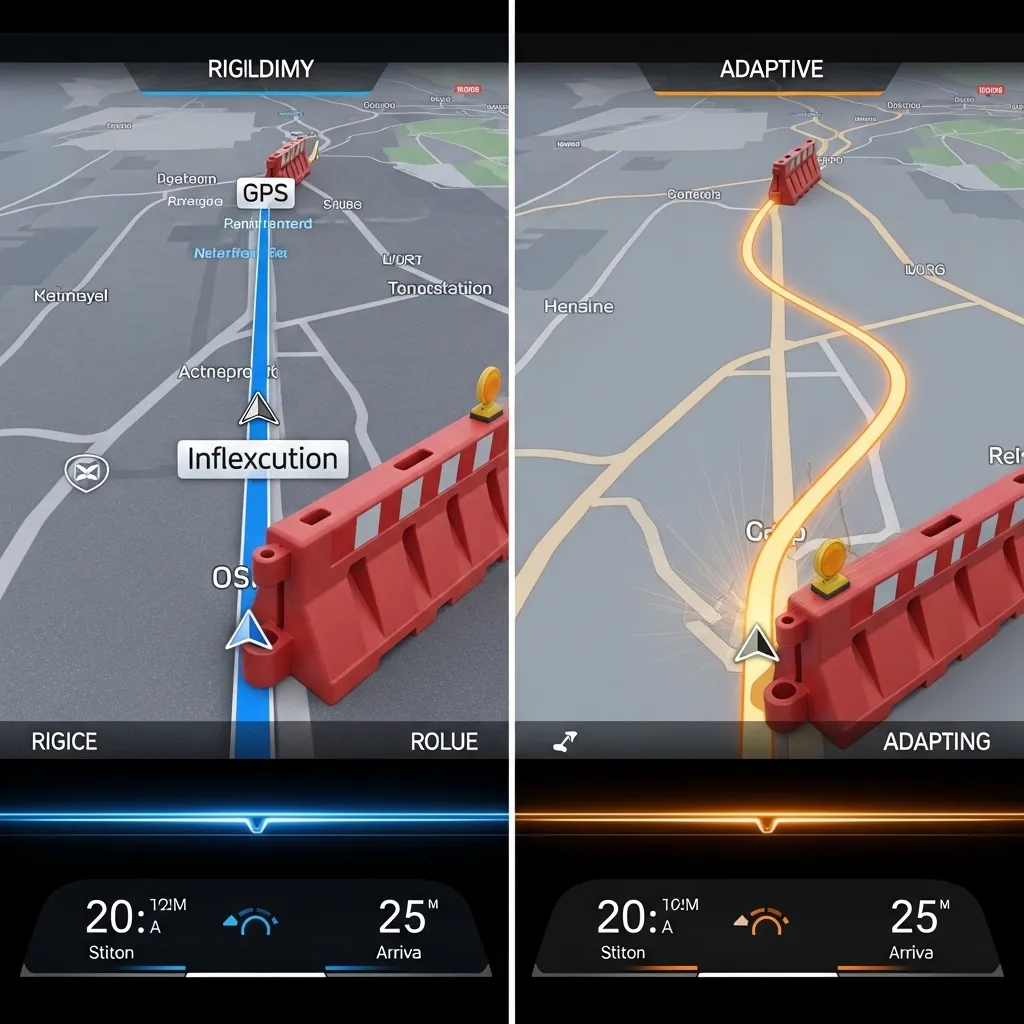
Think of it like the difference between giving someone detailed turn-by-turn directions versus giving them a destination and letting them navigate. Both get you there, but only one adapts when there’s road construction.
The Evolution I’ve Witnessed
I’ve been working in process automation since the early days of robotic process automation (RPA) around 2015. The journey from those early bots to what we’re deploying now has been fascinating—and occasionally frustrating.
Phase 1: Basic RPA (2015-2019)
These were essentially macros on steroids. Great for repetitive, rule-based tasks like copying data from emails to spreadsheets. But brittle. A website redesign could break your entire bot fleet.
Phase 2: Intelligent Automation (2019-2022)
We added AI capabilities—OCR for document processing, NLP for understanding text, machine learning for predictions. Suddenly automation could handle semi-structured data and make probabilistic decisions. But every use case still required significant custom development and training.
Phase 3: LLM-Enhanced Automation (2022-2024)
Large language models changed everything. Systems could suddenly understand context, generate human-quality text, and interpret ambiguous instructions. But they were still largely operating as sophisticated task executors within predefined workflows.
Phase 4: Agentic AI Workflows (2024-Present)
This is where we are now. Systems that can genuinely orchestrate multi-step processes, reason about trade-offs, and operate with significantly more autonomy. The shift happened when several technologies matured simultaneously: advanced reasoning models, reliable tool-use capabilities, better memory systems, and more robust safety guardrails.

How Agentic AI Workflows Actually Work
Let me walk you through a real implementation we deployed last year for a mid-sized insurance company. This example illustrates the practical mechanics better than abstract explanations.
The Business Problem:
Processing commercial insurance applications involved dozens of steps—document collection, risk assessment, underwriter review, pricing calculations, contract generation, and compliance checks. The process typically took 3-4 weeks and required handoffs between six different teams.
The Traditional Automation Approach:
Previously, they’d automated pieces: OCR to extract data from submitted documents, rules engines to calculate base pricing, templates for contract generation. But the workflow still required project managers to shepherd each application through the process, handling exceptions and coordinating between systems.
The Agentic AI Solution:
We implemented an agentic workflow with a single high-level goal: “Process this insurance application to the point of presenting a complete, compliant offer to the applicant, or clearly identify why an offer cannot be made.”
The agent orchestrates the entire process:
-
Document intake and analysis: It doesn’t just extract data—it identifies what’s missing, what’s unclear, and what additional information is needed. It generates specific, contextualized requests for clarification.
-
Research and information gathering: If the application involves an industry the underwriters haven’t dealt with recently, the agent searches internal databases and approved external sources to understand industry-specific risks.
-
Risk assessment coordination: It knows when to invoke specialized risk models, when to escalate to human underwriters, and how to synthesize outputs from multiple analytical tools.
-
Pricing optimization: Rather than applying fixed rules, it can run scenarios, consider market conditions, and even negotiate within approved parameters.
-
Exception handling: When something unusual appears—say, a property in a flood zone with conflicting boundary data—the agent doesn’t just stop. It investigates, gathers additional data, documents the issue, and determines whether it can resolve it or needs human expertise.
-
Communication management: Throughout the process, it keeps the applicant informed with natural, personalized updates—not robotic status messages.
The result? Average processing time dropped from 23 days to 4 days. Human involvement decreased by 70% for straightforward applications. But here’s the crucial part: quality and compliance actually improved because the agent’s consistency eliminated the small errors that crept in during manual handoffs.
Real-World Applications Across Industries
From what I’ve observed working with different organizations and tracking the industry, certain patterns of agentic workflow automation are proving particularly valuable:
Customer Service Operations
A financial services client implemented an agentic system for complex customer issues. Instead of rigid decision trees, the agent can:
- Access multiple data sources to understand customer history
- Perform calculations to verify billing issues
- Process refunds or adjustments within policy guidelines
- Escalate with detailed context when needed
- Follow up to ensure resolution
The system handles about 60% of what previously required senior customer service reps, freeing those experts to focus on genuinely complex situations requiring empathy and judgment.
Research and Due Diligence
Law firms and consulting companies are using agentic workflows for due diligence processes. Give the system a target company for M&A research, and it:
- Compiles public filings and documents
- Identifies potential legal issues or risks
- Summarizes competitive positioning
- Flags inconsistencies or concerns
- Generates preliminary analysis documents
What used to take a team of junior analysts a week now takes a few hours, though senior review is still essential.
Supply Chain Coordination
A manufacturing company deployed agentic automation for supply chain disruption management. When a supplier issue occurs, the agent:
- Assesses impact on production schedules
- Identifies alternative suppliers from approved vendor lists
- Runs cost-benefit analyses of different responses
- Initiates procurement processes for approved alternatives
- Communicates with affected stakeholders
- Updates forecasts and schedules
The human procurement team focuses on strategic relationships and major decisions while the agent handles the orchestration of routine disruptions.
Software Development Workflows
Some development teams are experimenting with agentic systems that manage parts of the development lifecycle:
- Taking feature requests and breaking them into implementation tasks
- Generating code components
- Running tests and interpreting results
- Fixing simple bugs
- Updating documentation
- Coordinating deployment processes
This is still nascent, and honestly, results are mixed. It works well for routine feature additions but struggles with architectural decisions and novel problem-solving.

The Benefits Beyond Just Efficiency
Yes, agentic AI workflow automation saves time and reduces costs—that’s table stakes. But the deeper benefits I’ve seen are more interesting:
Consistency at Scale
Every instance of the workflow executes with the same thoroughness and attention. Fatigue, distraction, and variations in individual expertise don’t create gaps in quality.
Institutional Knowledge Capture
When you design an agentic workflow, you’re essentially codifying how your best people approach complex processes. That knowledge doesn’t walk out the door when someone leaves.
24/7 Operations Without Burnout
Critical processes don’t wait for business hours. Agentic systems can operate continuously without the health and sustainability issues that plague human on-call rotations.
Better Human Work
This is the benefit that surprised me most. When you remove the grinding workflow coordination tasks, people can focus on work that actually requires human capabilities: building relationships, creative problem-solving, ethical judgment, strategic thinking.
I’ve seen this firsthand with teams before and after implementing agentic automation. The job satisfaction improvements are significant when people spend their days solving interesting problems instead of chasing status updates.
Continuous Improvement
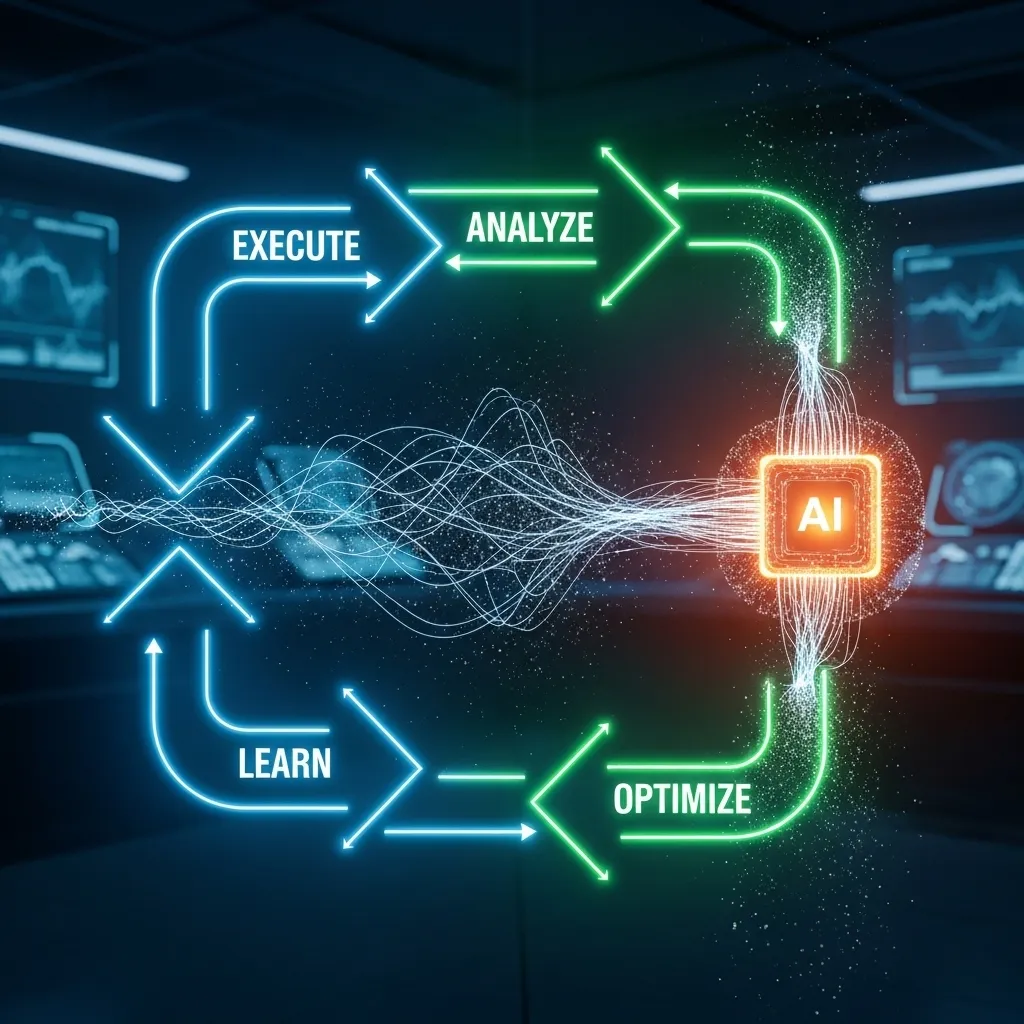
Unlike static automation, agentic systems can identify patterns in their own performance—where they struggle, where they frequently need to escalate, what approaches work best. This creates a feedback loop for ongoing optimization.
The Challenges and Limitations (Yes, There Are Plenty)
I’d be doing you a disservice if I painted this as a silver bullet. Implementing agentic AI workflow automation comes with real challenges, and I’ve seen several implementations struggle or fail.
The Black Box Problem
When an agent makes dozens of decisions across a multi-step process, understanding exactly why it reached a particular outcome can be difficult. This is improving—reasoning transparency has gotten significantly better over the past year—but it’s still an issue.
For a client in healthcare, this was a dealbreaker for certain clinical decision workflows. They needed to be able to audit and explain every decision point for regulatory compliance. The agentic system, while effective, didn’t provide sufficient explainability for their risk tolerance.
Cost and Resource Requirements
Running sophisticated agentic workflows isn’t cheap. The computational costs add up quickly, especially for processes that require multiple reasoning steps and tool invocations.
One client estimated their agentic customer service agent cost about $1.20 per interaction in compute costs, compared to about $0.05 for their previous rule-based chatbot. It was still cheaper than the $15-25 cost of human handling, but the economics only worked at sufficient scale.
Reliability and Error Handling
Agentic systems are more reliable than early LLM applications, but they’re not perfect. They can hallucinate, misinterpret instructions, or get stuck in loops. Building robust error handling and fallback mechanisms is essential but complex.
I worked with a team whose agentic procurement agent occasionally made strange vendor recommendations because it misinterpreted certain data patterns. We spent weeks implementing validation checks and human-in-the-loop reviews for edge cases.
Security and Access Control
When you give an AI agent the ability to act autonomously across multiple systems, you’re essentially creating a very powerful service account. The security implications are significant.
What actions can it take? What data can it access? How do you prevent prompt injection attacks that might manipulate the agent’s behavior? How do you audit its actions?
These aren’t insurmountable problems, but they require careful security architecture. A financial services client spent three months just on the security review and controls before deploying their first agentic workflow in production.
The Human Trust Factor
Perhaps the hardest challenge isn’t technical—it’s organizational. People need to trust the system enough to let it operate with meaningful autonomy.
I’ve seen implementations fail not because the technology didn’t work, but because teams kept second-guessing the agent, adding manual review steps that eliminated the benefits, or refusing to give it the access and permissions it needed to be effective.
Building this trust requires transparency, gradual expansion of capabilities, clear performance metrics, and excellent incident response when things go wrong.
Implementation Considerations From the Trenches
If you’re considering deploying agentic AI workflow automation, here are the lessons I’ve learned through trial and error:
Start With Clear, Measurable Goals
“Automate customer service” is too vague. “Reduce average resolution time for account balance inquiries from 8 minutes to under 2 minutes while maintaining 95% accuracy” gives you something to work with.
Choose the Right First Process
Look for workflows that are:
- High-volume enough to justify the investment
- Complex enough that traditional automation struggles
- Not so critical that failures are catastrophic
- Well-documented with clear success criteria
- Supported by stakeholders who understand the technology’s limitations
Our most successful first implementations have been in areas like research synthesis, data enrichment, and routine customer inquiries—important but not life-or-death.
Design for Human-AI Collaboration
The best implementations I’ve seen don’t try to eliminate humans—they redesign the workflow so humans and AI agents each do what they’re best at.
For instance, in that insurance example I mentioned earlier, underwriters now spend their time on genuinely complex risk assessments and relationship management. The agent handles the orchestration and routine analysis, but escalates with detailed context when human judgment is needed.
Build Comprehensive Monitoring
You need visibility into:
- Performance metrics (speed, accuracy, completion rates)
- Cost per execution
- Escalation patterns
- Error types and frequencies
- User satisfaction
One client built a dashboard that tracks every agent execution in real-time, with automatic alerts for anomalies. It seems like overkill until you catch an issue that would have impacted hundreds of customers.
Invest in Governance and Oversight
Who owns the agent’s performance? Who can modify its goals or constraints? How do you handle requests to expand its capabilities? What’s the change management process?
These governance questions need answers before you deploy, not after you run into problems.
Plan for Evolution
Your first implementation won’t be perfect. Plan for iterative improvement based on performance data and user feedback. The teams that succeed treat agentic automation as an ongoing capability to develop, not a one-time project to complete.

The Future I See Coming
Based on current trajectories and conversations with people building these systems, here’s where I think we’re headed over the next few years:
Multi-Agent Collaboration
Instead of single agents handling end-to-end workflows, we’ll see specialist agents collaborating—a research agent working with an analysis agent working with a writing agent, each with deep expertise in their domain.
Early experiments with this are promising but coordination complexity is still a challenge.
Proactive Process Optimization
Agents won’t just execute workflows—they’ll suggest improvements. “I notice that 40% of the time I have to wait for data from System X. If we restructured the workflow to request that data earlier, we could reduce completion time by 20%.”
Industry-Specific Agent Platforms
Rather than building everything custom, we’re seeing the emergence of pre-built agentic platforms for specific industries—healthcare operations, legal workflows, financial services processes. These encode domain expertise and compliance requirements, making implementation more accessible.
Better Reasoning and Planning
The underlying AI models are getting significantly better at multi-step reasoning and planning. What requires careful prompt engineering and workflow design today will likely be more natural and reliable in 18-24 months.
Regulatory Frameworks
As these systems become more prevalent, regulatory guidance will solidify. We’re already seeing early frameworks around AI agent accountability, transparency requirements, and human oversight mandates. This will actually help by providing clearer guidelines for compliant implementation.

What This Means for Your Work
Whether you’re an executive considering investment, a technologist evaluating tools, or a process owner thinking about your team’s future, here’s my honest take:
Agentic AI workflow automation is neither the overhyped bubble some critics claim nor the silver bullet some vendors promise. It’s a genuinely useful evolution in automation capability that’s most valuable for specific types of complex, multi-step processes.
The organizations I see succeeding are those that:
- Approach it pragmatically with clear use cases
- Invest in proper implementation and governance
- Design for human-AI collaboration rather than wholesale replacement
- Build internal expertise rather than relying entirely on vendors
- Measure results honestly and iterate based on data
If you’re still coordinating complex workflows primarily through human effort and email chains, there’s probably opportunity here. If you’ve already automated the straightforward stuff and are stuck on the complex edge cases and exceptions, agentic approaches might be the answer.
But if you’re expecting to flip a switch and have AI run your business autonomously—well, we’re not there yet, and honestly, I’m not sure we should want to be.
The magic happens when you use this technology to amplify human capability, not replace human judgment.
Wrapping Up
Agentic AI workflow automation represents a meaningful shift in what’s possible with automated business processes. After years of working with various automation technologies, I can say this feels different—more flexible, more capable, more able to handle real-world complexity.
But it’s still early days. The technology is maturing rapidly, best practices are still emerging, and every implementation teaches us something new about what works and what doesn’t.
The organizations that will benefit most are those approaching it as a learning journey rather than a quick fix. Start small, measure carefully, build expertise, and expand thoughtfully.
And keep the human element central. The goal isn’t to remove people from workflows—it’s to remove the tedium and friction that prevents people from doing their best work.
That’s a future worth building toward.

Frequently Asked Questions
1. What’s the difference between agentic AI workflow automation and regular workflow automation?
Traditional workflow automation executes predefined sequences of actions based on rules and triggers you set up in advance. If X happens, do Y. Agentic AI automation works toward goals with much more flexibility—you define the objective, and the AI determines the best sequence of actions to achieve it, adapting its approach based on circumstances it encounters. Think of traditional automation like following a recipe exactly, while agentic AI is more like telling a chef what you want to eat and letting them figure out how to make it. The agentic approach handles exceptions and variations much more gracefully because it can reason about what to do rather than just follow pre-programmed paths.
2. How much does it cost to implement agentic AI workflow automation?
The costs vary enormously based on complexity, scale, and approach. If you’re using a platform like some of the emerging agentic automation services, you might start with subscription costs in the range of $5,000-$50,000 annually plus usage-based fees. Custom implementations typically require significant upfront investment—I’ve seen projects range from $100,000 for relatively straightforward workflows to over $1 million for complex, enterprise-wide deployments. Ongoing costs include compute resources (which can be substantial—think $0.50-$5.00 per workflow execution depending on complexity), maintenance, monitoring, and continuous improvement. The ROI calculation needs to consider both direct labor savings and qualitative benefits like improved consistency and speed. Most successful implementations I’ve seen achieve payback within 12-18 months for high-volume processes.
3. Is agentic AI reliable enough for business-critical processes?
This is the right question to ask, and the answer is: it depends on your risk tolerance and how you design the implementation. Agentic AI systems in 2026 are significantly more reliable than even a year ago, but they’re not 100% perfect. For business-critical processes, I strongly recommend a layered approach—design the workflow with validation checkpoints, implement human-in-the-loop reviews for high-stakes decisions, build comprehensive monitoring, and create fallback procedures for when the agent encounters situations it can’t handle. Some organizations successfully use agentic automation for critical processes like compliance checking and financial reconciliation, but they’ve invested heavily in safety mechanisms and oversight. For truly life-or-death scenarios—medical treatment decisions, safety-critical systems—I’d still recommend keeping humans firmly in control with AI as a support tool rather than the primary decision-maker.
4. What skills does my team need to implement and manage agentic AI workflows?
You’ll need a combination of skills that might not all exist in one person. On the technical side, understanding of how LLMs and agentic systems work is important—not necessarily deep AI/ML expertise, but enough to understand capabilities and limitations. Integration skills are critical since these agents need to connect to your existing systems and data sources. You’ll also need people who deeply understand your business processes and can translate them into goals and constraints the agent can work with. Change management and training capabilities are essential for user adoption. Finally, ongoing monitoring and optimization require analytical skills to interpret performance data and identify improvement opportunities. Many organizations start by partnering with consultants or vendors who have implementation experience, while simultaneously building internal expertise. The most successful long-term approaches I’ve seen involve creating cross-functional teams that combine business process experts, technical talent, and change management capabilities.
5. Will agentic AI automation eliminate jobs in my organization?
The honest answer based on what I’ve observed: it will change jobs more than eliminate them, though the impact varies significantly by role and industry. Roles focused primarily on routine workflow coordination, data shuttling between systems, and status tracking are most vulnerable to significant automation. However, most implementations I’ve been involved with have redeployed people rather than laid them off—shifting them to higher-value work that requires human judgment, relationship building, complex problem-solving, and strategic thinking. The customer service team doesn’t disappear; they handle the complex, sensitive interactions while the agent manages routine inquiries. The operations coordinators become process designers and exception handlers. I won’t pretend there’s no job displacement—some roles genuinely become unnecessary—but organizations that approach this thoughtfully create transition paths and reskilling opportunities. The bigger risk, frankly, is to organizations that don’t adapt at all and find themselves unable to compete with more efficient operations elsewhere. The transition is real and requires careful, ethical management, but it’s not the job apocalypse some fear.