Agentic AI Use Cases for Business: Real-World Applications That Are Actually Working
Agentic AI Use Cases for Business: Real-World Applications That Are Actually Working
Last March, I watched a medium-sized insurance company cut their claims processing time from three days to four hours. Not by hiring more staff or completely redesigning their workflow, but by implementing an agentic AI system that could autonomously review claims documentation, cross-reference policy details, verify information across multiple databases, flag potential fraud, and prepare preliminary assessments—all without human intervention until the final approval stage.
That moment clarified something for me: we’ve moved past the phase of wondering whether agentic AI has business applications. The question now is which applications actually deliver value and which are just expensive experiments that sound impressive in board presentations.
I’ve spent the last eighteen months helping businesses across industries implement agentic AI systems. Some projects exceeded expectations. Others fell flat despite significant investment. The difference usually wasn’t the technology—it was understanding where agentic capabilities genuinely solve business problems versus where they’re overkill or poorly suited.
This article digs into the use cases where agentic AI is proving its worth in real business environments, complete with the messy details, unexpected challenges, and honest ROI calculations that rarely make it into vendor case studies.
Customer Service and Support: The Most Mature Use Case
If you’re looking for the safest, most proven application of agentic AI in business, customer service is probably it. Not the simple chatbot variety we’ve had for years, but genuinely autonomous service agents that can resolve complex, multi-step customer issues.
I worked with an e-commerce company in late 2025 that deployed an agentic customer service system. Here’s what made it different from their previous chatbot: when a customer had an issue with a delayed order, the agent didn’t just look up tracking information. It accessed the shipping carrier’s API to get detailed status updates, checked the warehouse management system to verify when the item actually shipped, cross-referenced the customer’s order history to see if delays had happened before, calculated appropriate compensation based on the customer’s loyalty tier and the severity of the delay, initiated a refund or re-ship if needed, and sent a personalized follow-up email with specific updates.
The entire interaction happened without any human customer service representative touching it, yet it resolved 73% of these complex delay inquiries completely—a dramatic jump from the 31% resolution rate their previous chatbot achieved.
What made it work? The agentic system could:
Maintain conversation context across multiple messages, even when customers came back hours later with additional questions. It remembered what had already been discussed and didn’t ask customers to repeat themselves.
Access and use multiple tools: shipping APIs, order databases, payment processors, email systems, knowledge bases. The agent decided which tools it needed and called them in the appropriate sequence.
Handle exceptions: When it encountered something outside normal parameters—say, an order that showed as delivered but the customer insisted they never received it—the system could escalate to a human with a complete summary of the investigation it had already conducted, saving the human agent significant time.
Learn from outcomes: The system tracked which resolutions led to satisfied customers and which prompted escalations or complaints, using that data to refine its approach over time.
The financial impact was significant. Customer service headcount didn’t decrease—the company was growing too fast for that—but the humans shifted to handling only the most complex or sensitive cases. Response times dropped from an average of 4 hours to under 10 minutes. Customer satisfaction scores improved by 18 percentage points.
But here’s the reality check: implementation took six months and considerable tuning. The agent initially made errors that cost real money—issuing refunds when it shouldn’t have, or conversely, being too rigid and frustrating customers. We built extensive guardrails around financial transactions, requiring human approval for refunds above $100. Even now, the system still escalates about 27% of inquiries, and occasionally it does something baffling that requires manual intervention.

Research and Competitive Intelligence: Where Agentic AI Excels
One of the highest-value applications I’ve seen is using agentic systems for research and competitive intelligence. These tasks involve gathering information from numerous sources, synthesizing it, and producing structured insights—exactly what agentic AI handles well.
A pharmaceutical company I consulted for built an agent to monitor clinical trial registrations, scientific publications, patent filings, and FDA announcements related to their therapeutic areas. Every morning, the research team received a digest of relevant developments with analysis of potential implications for their pipeline.
The agent would:
- Search multiple databases (ClinicalTrials.gov, PubMed, patent offices, regulatory filings)
- Filter results for relevance based on specific compounds, disease areas, and competitors
- Extract key information from documents (trial endpoints, patient populations, results)
- Identify patterns (a competitor initiating multiple trials for similar indications)
- Generate structured summaries with source citations
- Flag high-priority items requiring immediate attention
What previously required a team of analysts spending hours daily on manual searches now happened autonomously overnight. The analysts shifted their time to deeper analysis and strategic thinking rather than information gathering.
The ROI calculation was straightforward: the system cost about $4,000 monthly (including AI API costs, data subscriptions, and cloud infrastructure), while it replaced roughly 80 hours of analyst time per month—work that would cost $8,000-$12,000 in fully-loaded labor costs. The system paid for itself in the first month, and the value extended beyond cost savings to the comprehensiveness and consistency of coverage.
A venture capital firm implemented something similar for deal sourcing and due diligence. Their agent monitored startup funding announcements, analyzed company websites and product launches, tracked key hires, and compiled preliminary research on companies matching their investment criteria. When a promising company appeared, the agent had already gathered and organized the basic information their analysts needed to evaluate whether to reach out.
These research applications work particularly well because:
The failure mode is acceptable: If the agent misses something or makes an error in a research summary, a human reviewer catches it before any consequential decision gets made. Compare this to customer-facing applications where mistakes directly impact customer experience.
The value compounds: Research agents get more valuable over time as they build memory of past findings, learn what information matters most, and develop better filtering heuristics.
They augment rather than replace: These systems make skilled workers more effective rather than attempting to replace them entirely, which improves adoption and reduces resistance.
Sales and Lead Qualification: Mixed but Promising Results
Sales is an area where I’ve seen both impressive successes and notable failures with agentic AI. The technology works well for specific parts of the sales process but struggles with others.
Lead qualification and initial outreach are proving effective. A B2B software company implemented an agent that:
- Monitored trigger events (company funding rounds, executive changes, expansion announcements)
- Researched companies that fit their ideal customer profile
- Analyzed whether the company’s tech stack and challenges aligned with their solution
- Drafted personalized outreach emails
- Sent initial messages and handled early-stage responses
- Scheduled discovery calls with qualified prospects
The system generated 40% more qualified meetings than manual prospecting, largely because it could monitor far more potential leads and respond faster to trigger events. When a company announced a funding round on Tuesday morning, the agent had researched them and sent a relevant, personalized email by Tuesday afternoon—while human sales reps were still clearing their inbox.
However, the company learned quickly that the agent needed careful guardrails. Early iterations sent messages that were too generic despite attempts at personalization, or occasionally made incorrect assumptions about a prospect’s needs. They implemented a human review step for all outbound messages until the system proved reliable, then gradually increased autonomy for low-value prospects while keeping human oversight for high-value targets.
Where agentic AI struggles in sales is genuine relationship building and complex negotiation. One company tried deploying an agent to handle sales calls using voice AI. It was technically impressive—it could discuss product features, answer questions, and handle objections. But conversion rates were poor compared to human reps. Prospects found the interactions felt hollow, and the agent couldn’t pick up on subtle cues about what actually mattered to the buyer or when to adjust its approach.
The lesson: agentic AI works well for information-intensive, process-driven sales activities (research, qualification, follow-up) but less well for the empathetic, adaptive parts of sales that require genuine human connection.
A middle ground that’s working well is augmented selling—agents support human sales reps rather than replacing them. During sales calls, an agent can:
- Pull up relevant information in real-time as questions arise
- Take notes and generate meeting summaries
- Draft follow-up emails with action items
- Update the CRM with detailed information
- Suggest next steps based on the conversation
This application has been less controversial than autonomous sales agents, with better adoption from sales teams who see it as genuinely helpful rather than threatening.

Financial Analysis and Reporting: High Accuracy, High Value
Financial departments are finding compelling use cases for agentic AI, particularly in analysis and reporting tasks that require gathering data from multiple systems and producing structured outputs.
A mid-sized manufacturing company built an agent for monthly financial close processes. The agent:
- Extracted data from their ERP, accounting system, and departmental spreadsheets
- Performed variance analysis comparing actuals to budget and forecast
- Identified unusual transactions or anomalies requiring investigation
- Generated draft commentary explaining key variances
- Prepared board-ready financial presentations
What previously took the finance team about five days each month now takes about two days—three days of work automated, with the remaining time spent reviewing the agent’s output, investigating flagged anomalies, and adding strategic context the agent couldn’t provide.
The accuracy has been remarkable. After an initial tuning period where we caught several calculation errors, the agent now makes fewer mistakes than the manual process did, largely because it’s consistent and doesn’t suffer from end-of-month fatigue like humans do.
Investment firms are using agentic systems for portfolio analysis and market research. One hedge fund built an agent that monitors portfolio holdings, tracks relevant market developments, analyzes earning calls and filings, calculates risk metrics, and generates daily reports on positions requiring attention.
Financial applications work well for several reasons:
Clear rules and logic: Financial analysis follows defined methodologies. Variance analysis, ratio calculations, and common analytical frameworks are well-structured tasks that agents can learn effectively.
Verifiable outputs: Financial results can be checked against source data. If the agent says revenue increased 12%, you can verify that against the actual numbers.
High-value time savings: Finance professionals are expensive, and month-end close processes are time-sensitive. Saving days of senior analyst time delivers immediate ROI.
The critical success factor I’ve observed is treating these systems as draft generators rather than final authorities. The agent produces analysis; experienced humans review, refine, and add judgment. This approach leverages the agent’s speed and consistency while preserving human oversight for accuracy and context.
Software Development and IT Operations: Rapidly Evolving
Software development emerged as a major use case for agentic AI throughout 2025 and into 2026. The applications range from code generation to debugging to infrastructure management.
A software company I worked with implemented an agentic coding assistant that goes far beyond basic code completion. When a developer describes a feature they need to build, the agent:
- Asks clarifying questions about requirements and edge cases
- Designs the solution architecture
- Generates implementation code across multiple files
- Writes unit tests
- Runs the tests and debugs failures
- Generates documentation
- Creates a pull request with explanation of the changes
The agent doesn’t replace developers—it handles the tedious implementation work while developers focus on architecture, design decisions, and code review. Productivity gains have been substantial. Developers report shipping features 30-50% faster for straightforward implementations, though complex features requiring novel approaches still take similar time to before.
The quality varies. For well-understood patterns (CRUD operations, API endpoints, data transformations), the generated code is usually production-ready after review. For complex algorithms or novel solutions, the code often needs significant revision. Most developers use it as an accelerated first draft rather than a final solution.
IT operations is another promising area. Organizations are deploying agentic systems for:
Incident response: When an alert fires, the agent investigates by checking logs, running diagnostic queries, comparing against known issues, and often resolving common problems autonomously before any engineer notices. For issues it can’t resolve, it provides engineers with a complete investigation summary.
Infrastructure management: Agents monitor resource utilization, predict capacity needs, optimize configurations, and execute routine maintenance tasks like log rotation, certificate renewal, and backup verification.
Security monitoring: Security-focused agents analyze logs for suspicious patterns, investigate potential incidents by correlating data across multiple tools, and execute initial response actions like isolating compromised systems.
A financial services company shared their experience with an incident response agent. In the first month, it autonomously resolved 64% of after-hours alerts—things like disk space issues, stuck batch jobs, or service restarts. Pages to on-call engineers dropped by half. The engineers who initially resented another “automation initiative” became advocates within weeks once they realized how much interrupted sleep they were avoiding.
But there are failure modes to watch. One company’s infrastructure agent made an optimization change during business hours that briefly degraded performance. They learned to confine agent actions to maintenance windows and require approval for changes impacting production systems.
Content Creation and Marketing: Capabilities and Limitations
Marketing departments were early adopters of AI for content generation, and agentic systems are expanding what’s possible. But this is also where I’ve seen the most overinflated expectations and disappointing results.
Where agentic AI works well in marketing:
Content research and planning: Agents can analyze competitor content, identify trending topics, research keywords, compile source material, and create detailed content briefs. A media company uses an agent to prepare research packages for writers, cutting research time dramatically.
Multi-format content adaptation: An agent can take a long-form article and generate social media posts, email newsletter summaries, video scripts, and podcast outlines. It maintains consistency while optimizing for each format. This works surprisingly well for content repurposing.
SEO optimization and technical tasks: Agents can analyze content for SEO, suggest improvements, generate meta descriptions, create schema markup, and handle the technical side of content optimization more thoroughly than humans typically do.
Personalization at scale: Agents can generate personalized email campaigns, ad copy variants, or website content tailored to different audience segments, maintaining brand voice while customizing messaging.
Where agentic AI struggles:
Original creative thinking: Despite improvements, agent-generated content tends toward the formulaic. It’s good at synthesizing existing information into clear, organized content, but weak at genuinely original insights or creative angles.
Brand voice consistency: Agents can mimic a brand voice if given examples, but they often slip into generic corporate language. Maintaining distinctive, personality-driven voice requires constant human editing.
Understanding audience nuance: Agents can analyze audience data, but they lack the intuitive understanding of what will resonate emotionally with specific audiences that experienced marketers develop.
A realistic marketing use case I’ve seen work: a B2B company uses an agent to generate first drafts of educational blog posts. The agent researches the topic, compiles relevant information, creates an outline, and drafts the post. A human editor then revises substantially—usually keeping the structure and factual content but rewriting for voice, adding specific examples, and injecting point-of-view. The writer estimates they save about 60% of the time compared to writing from scratch, though the editing is still substantial.
The companies seeing best results treat content agents as research assistants and draft generators, not as autonomous content creators. The human maintains creative control and quality standards.

Human Resources and Talent Acquisition: Efficiency with Caution
HR departments are implementing agentic AI for recruitment, onboarding, and employee support, with results that are promising but require careful consideration of fairness and bias.
Recruitment is the most common application:
Candidate sourcing: Agents search job boards, LinkedIn, GitHub, and other platforms to identify candidates matching specific criteria. They can evaluate hundreds of profiles in minutes, identifying promising candidates human recruiters might miss.
Initial screening: Agents review resumes and applications, assess qualifications against job requirements, and rank candidates. They can engage candidates with initial questions and schedule interviews.
Interview coordination: Agents handle the logistical complexity of scheduling interviews across multiple people, sending reminders, and managing rescheduling requests.
A technology company reduced their time-to-hire by 12 days using an agentic recruitment system. The agent sourced candidates continuously, screened applications the same day they arrived, and handled all scheduling. Recruiters focused their time on interviewing strong candidates and selling them on the opportunity rather than administrative work.
But this is an area where bias concerns are legitimate. An agent trained on historical hiring data can perpetuate existing biases. One company discovered their agent was systematically downranking candidates from certain universities, apparently because few people from those schools had been hired historically—a classic example of bias reinforcement.
Best practices I’ve seen:
- Regular bias audits of agent decisions
- Human review of screening decisions, especially early in deployment
- Careful attention to training data and evaluation criteria
- Transparency with candidates about AI involvement in the process
Employee support is another emerging use case. HR agents can:
- Answer common questions about benefits, policies, and procedures
- Guide employees through processes like expense reports or time-off requests
- Provide personalized benefits recommendations based on individual circumstances
- Handle routine HR requests autonomously
This works well for information-rich, process-driven HR tasks. It works poorly for sensitive situations requiring empathy and judgment—performance issues, conflicts, personal problems. The successful implementations I’ve seen keep humans in the loop for anything sensitive while automating the routine informational requests that consume disproportionate HR time.
Supply Chain and Logistics: Complex Optimization
Supply chain management is emerging as a high-value application for agentic AI, though implementation complexity has been a barrier to widespread adoption.
A logistics company built an agent that manages shipment routing and optimization. When orders come in, the agent:
- Evaluates shipping options based on cost, speed, and reliability
- Checks real-time carrier capacity and pricing
- Considers special requirements (temperature control, handling restrictions)
- Books shipments with preferred carriers
- Monitors shipments in transit and proactively addresses delays
- Re-routes shipments when issues arise
- Manages communication with customers about delivery status
The system processes thousands of shipments daily with minimal human intervention. Cost savings have been approximately 8% through better carrier selection and routing, while on-time delivery improved because the agent responds to in-transit issues faster than humans can.
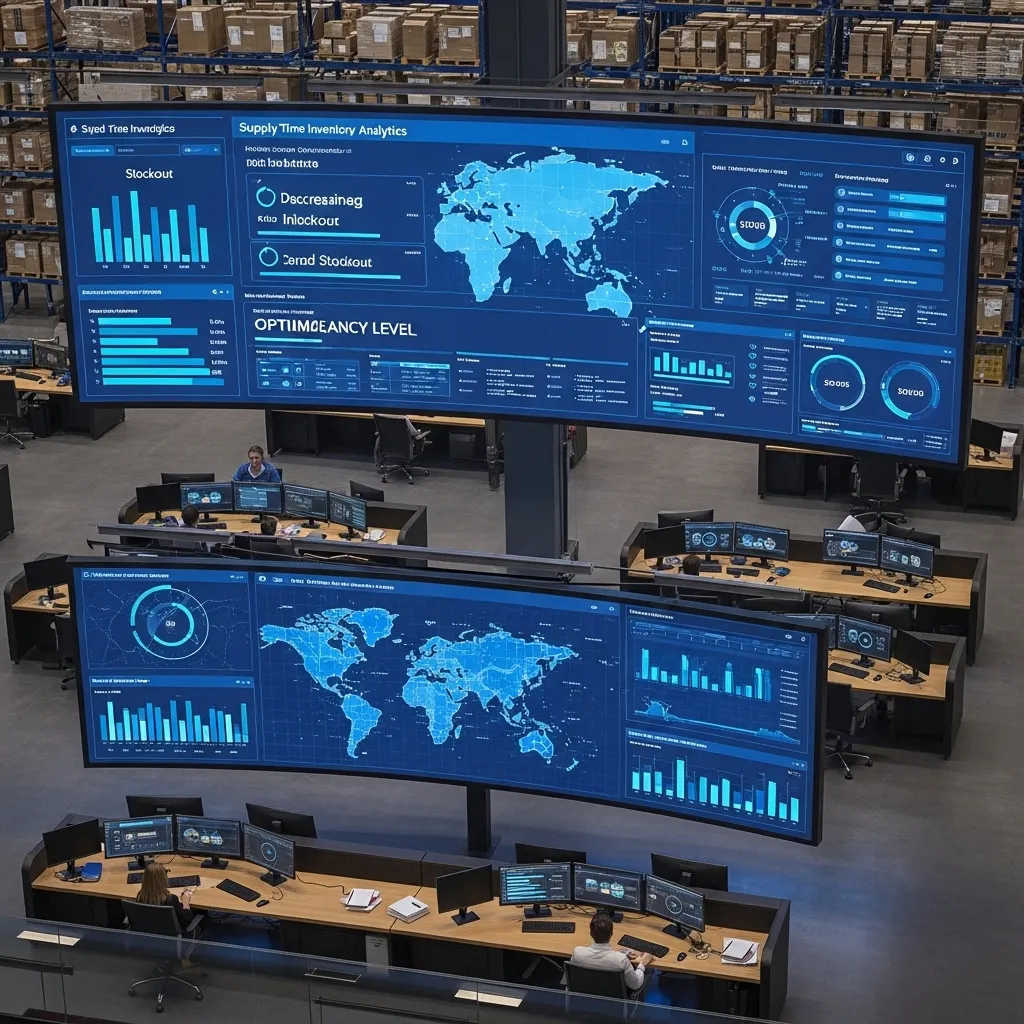
Inventory management is another application. Retail companies use agents that:
- Monitor inventory levels across locations
- Analyze sales patterns and forecast demand
- Automatically generate purchase orders
- Optimize stock allocation across distribution centers
- Flag potential stockouts or overstock situations
These systems require sophisticated integration with existing supply chain software, which has been the main implementation challenge. The agent needs real-time access to inventory, sales, supplier, and logistics data across multiple systems. Getting all those integrations working reliably took one company nine months—far longer than the actual agent development.
The ROI eventually justified the effort. Inventory carrying costs decreased by 11% through better stock optimization, while stockout incidents dropped by 15%. For a large retailer, those improvements translated to millions in annual value.
Supplier management is another emerging use case. Agents monitor supplier performance, track delivery times and quality metrics, identify potential supply disruptions, and even conduct initial supplier research and outreach for procurement teams.
Legal and Compliance: High-Stakes Applications
Legal departments are cautiously but increasingly implementing agentic AI for research, contract analysis, and compliance monitoring.
Contract review and analysis is proving effective:
Contract extraction: Agents can read contracts and extract key terms—pricing, renewal dates, termination clauses, liability provisions—into structured databases. This turns contracts from static documents into queryable data.
Comparison and analysis: Agents can compare contracts against standard templates, identify unusual or risky provisions, and flag items for attorney review.
Obligation tracking: Agents monitor contract obligations and deadlines, sending alerts when action is required—renewals, deliverables, notice periods.
A corporation with thousands of vendor contracts implemented an agent that extracted and tracked all renewal dates, notice requirements, and auto-renewal provisions. Previously, contracts sometimes renewed automatically because nobody noticed the renewal date, leading to unexpected expenses or being locked into unfavorable terms. The agent created a comprehensive contract calendar and sends alerts 90 days before any action is required.
Legal research is another application. Agents can:
- Search case law and regulations relevant to specific questions
- Summarize legal developments in areas of interest
- Track regulatory changes and assess applicability
- Compile research memos with citations
Law firms are using these tools to reduce junior associate time on research tasks, though attorney review of agent research is still standard practice. The research is usually accurate but occasionally misses relevant cases or mischaracterizes precedent in subtle ways that could be problematic if not caught.
Compliance monitoring agents track regulatory requirements, monitor business activities for potential compliance issues, and maintain documentation of compliance activities. Financial services firms use agents to monitor transactions for suspicious activity, regulatory reporting deadlines, and compliance with various regulations.
The critical factor in legal applications is treating agents as assistants to attorneys, not as attorney replacements. The agent does research and analysis; the attorney applies judgment, understands context, and takes responsibility for the work product.
Healthcare and Life Sciences: Promising but Heavily Regulated
Healthcare applications of agentic AI are emerging carefully due to regulatory constraints and the high stakes involved.
Administrative healthcare applications are advancing faster than clinical ones:
Prior authorization: Agents can compile medical records, identify relevant documentation supporting prior authorization requests, complete forms, and submit to insurers. This reduces the administrative burden on clinical staff.
Medical coding: Agents review clinical documentation and suggest appropriate diagnosis and procedure codes for billing. This is complex work requiring understanding of medical terminology and coding rules, but agents are approaching human-level accuracy.
Patient scheduling and coordination: Agents can manage appointment scheduling, send reminders, handle routine rescheduling, and coordinate care across multiple providers.
Clinical applications are more limited due to regulatory and liability concerns, but some are emerging:
Clinical documentation: Agents can generate clinical notes from recorded patient encounters, draft documentation for physician review, and ensure documentation includes all required elements.
Literature monitoring: Pharmaceutical and biotech companies use agents to monitor medical literature, clinical trial results, and regulatory developments relevant to their therapies or disease areas.
Care coordination: Some health systems are testing agents that help coordinate care for complex patients—tracking medications, monitoring lab results, scheduling follow-ups, and alerting care teams to potential issues.
The regulatory environment constrains what’s currently possible. Any AI system used in clinical decision-making faces FDA oversight. Most current applications focus on administrative tasks or decision support where a healthcare professional retains full authority and responsibility.
I spoke with a hospital system testing an agent for discharge planning. The agent reviews patient records, identifies post-discharge needs, coordinates with case managers about home health services, schedules follow-up appointments, and generates patient discharge instructions. Early results show reduced readmissions, likely because the agent ensures comprehensive discharge planning happens consistently. However, a nurse still reviews and approves every discharge plan—the agent assists but doesn’t autonomously make care decisions.

Real Estate and Property Management: Operational Efficiency
Property management companies are implementing agentic AI for tenant services and operations management.
Tenant support agents handle:
- Maintenance requests (triaging urgency, dispatching vendors, following up)
- Lease questions (answering questions about terms, policies, procedures)
- Payment issues (reminders, payment plan setup, documentation)
- Move-in/move-out coordination (scheduling, checklist management, documentation)
A property management company with 5,000 rental units implemented an agent that handles initial tenant requests. When a tenant reports a maintenance issue, the agent:
- Asks qualifying questions to understand the problem
- Assesses urgency based on the description
- Checks if the issue is covered under the lease
- Schedules an appropriate vendor if needed
- Follows up to ensure completion
- Closes the loop with the tenant
For routine issues—HVAC filters, minor repairs, scheduled maintenance—the entire process happens autonomously. Complex issues are escalated to property managers with complete documentation of what’s already been done.
Tenant satisfaction improved because response times dropped dramatically. Call volume to the property management office decreased by 60%, allowing staff to focus on higher-value activities like property improvements and tenant retention.
Real estate investment analysis is another application. Agents can:
- Search for properties matching investment criteria
- Compile property data (pricing, comparable sales, rental rates)
- Analyze financial projections
- Generate investment summaries
Investment firms use these tools to evaluate far more potential deals than manual analysis would allow, identifying promising opportunities that might otherwise be missed.
Education and Training: Personalization at Scale
Educational institutions and corporate training programs are implementing agentic AI for personalized learning support.
Corporate training applications include:
Personalized learning paths: Agents assess employee skills and learning needs, recommend relevant training content, schedule learning activities, and track progress.
On-demand learning support: Agents provide just-in-time answers to questions, guide employees through processes, and offer contextual help within work applications.
Skills gap analysis: Agents analyze role requirements, assess current employee capabilities, and identify training needs at individual and organizational levels.
A large professional services firm implemented an agent that creates personalized onboarding programs for new hires. Based on the person’s role, background, and learning pace, the agent:
- Selects relevant training modules
- Schedules orientation activities
- Connects new hires with mentors and colleagues
- Answers common questions
- Tracks progress and adjusts the plan as needed
New hire time-to-productivity decreased by about two weeks, and new employee satisfaction with onboarding increased significantly.
Educational institutions are testing agentic tutoring systems that:
- Assess student understanding through questioning
- Identify knowledge gaps
- Provide personalized explanations and examples
- Adapt difficulty based on student responses
- Generate practice problems
- Track progress and identify students needing additional support
These systems show promise for providing personalized support at scale, though they work best as supplements to human instruction rather than replacements.
The ethical considerations around AI in education are significant—issues of equity, privacy, and the risk of reducing learning to optimizable metrics. The implementations that feel most responsible are those where agents support teachers and students rather than attempting to replace human educators.

Key Implementation Lessons Across Use Cases
After working on agentic AI projects across these diverse applications, several patterns emerge about what makes implementations successful:
Start with clear ROI metrics: The successful projects had specific, measurable goals—reduce processing time by X%, increase conversion by Y%, save Z hours of labor. Vague goals like “improve efficiency” rarely lead to satisfactory outcomes.
Choose the right problems: Agentic AI works best for information-intensive, multi-step tasks with clear goals and verifiable outputs. It works poorly for tasks requiring genuine creativity, deep empathy, or subtle human judgment.
Plan for integration complexity: The hardest part is usually not the AI—it’s integrating with existing systems and data sources. Budget more time for this than you think you’ll need.
Build comprehensive monitoring: You need detailed logging and monitoring to understand what the agent is doing, catch errors, and improve performance. This infrastructure is critical but often underestimated.
Maintain human oversight: At least initially, have humans review agent outputs and decisions. Gradually increase autonomy as the system proves reliable, but maintain oversight for high-stakes actions.
Expect iteration: First implementations rarely work well. Plan for a tuning period where you’ll refine prompts, adjust decision logic, and improve integration. This is normal, not a sign of failure.
Consider the human side: How will employees react to agentic systems? The implementations with best adoption are those where agents clearly make workers’ lives easier rather than threatening their roles.
Regulatory and compliance: In regulated industries, engage compliance and legal teams early. Agentic AI that violates regulations isn’t worth deploying regardless of its technical capabilities.
Cost and ROI Realities
The financial justification for agentic AI varies considerably across use cases. Here’s what I’ve observed:
Simple cost displacement rarely justifies the investment. If you’re just trying to reduce headcount, agentic AI often doesn’t pencil out when you account for development costs, ongoing maintenance, and the human oversight that’s still required.
Where ROI becomes compelling:
Speed improvements: When agentic AI does in hours what took days, enabling faster decision-making, better customer service, or quicker time-to-market.
Scale: When agents allow you to do things at a scale impossible with human labor—monitoring thousands of sources, personalizing for millions of customers, analyzing countless scenarios.
Quality and consistency: When agents reduce errors, ensure consistent execution of processes, or catch issues humans miss.
Unlocking capacity: When agents free skilled workers from routine tasks to focus on higher-value work.
A realistic cost structure for a moderately complex agentic implementation:
- Development: $50,000-$200,000 (depending on complexity and team rates)
- AI API costs: $1,000-$10,000/month (highly variable based on usage)
- Infrastructure: $500-$5,000/month
- Maintenance and improvement: $5,000-$20,000/month
- Total first-year cost: $100,000-$400,000
For this to make sense, you need clear value creation of at least 2-3x the cost, ideally more. Some use cases easily clear this bar; others don’t.
The companies getting best ROI treat agentic AI as a capability to build, not just a vendor product to buy. They invest in the infrastructure, expertise, and processes to deploy multiple agents across various use cases, amortizing development costs across applications.
The Future: Where Business Applications Are Heading
Looking at the trajectory from late 2024 through early 2026 and projecting forward, several trends seem clear:
Industry-specific agents: We’re moving from general-purpose agents to specialized systems optimized for specific industries and use cases—healthcare agents, legal agents, financial agents—with deep domain knowledge and integrations.
Agent ecosystems: Rather than individual agents, we’re seeing platforms where multiple specialized agents collaborate on complex business processes.
Better reliability: Through improved models, better training, and more sophisticated error correction, agent reliability is steadily increasing toward levels where broader autonomous deployment becomes feasible.
Regulatory frameworks: Governments are beginning to establish guidelines for AI agents in business, particularly in regulated industries. This will both constrain and legitimize agent deployments.
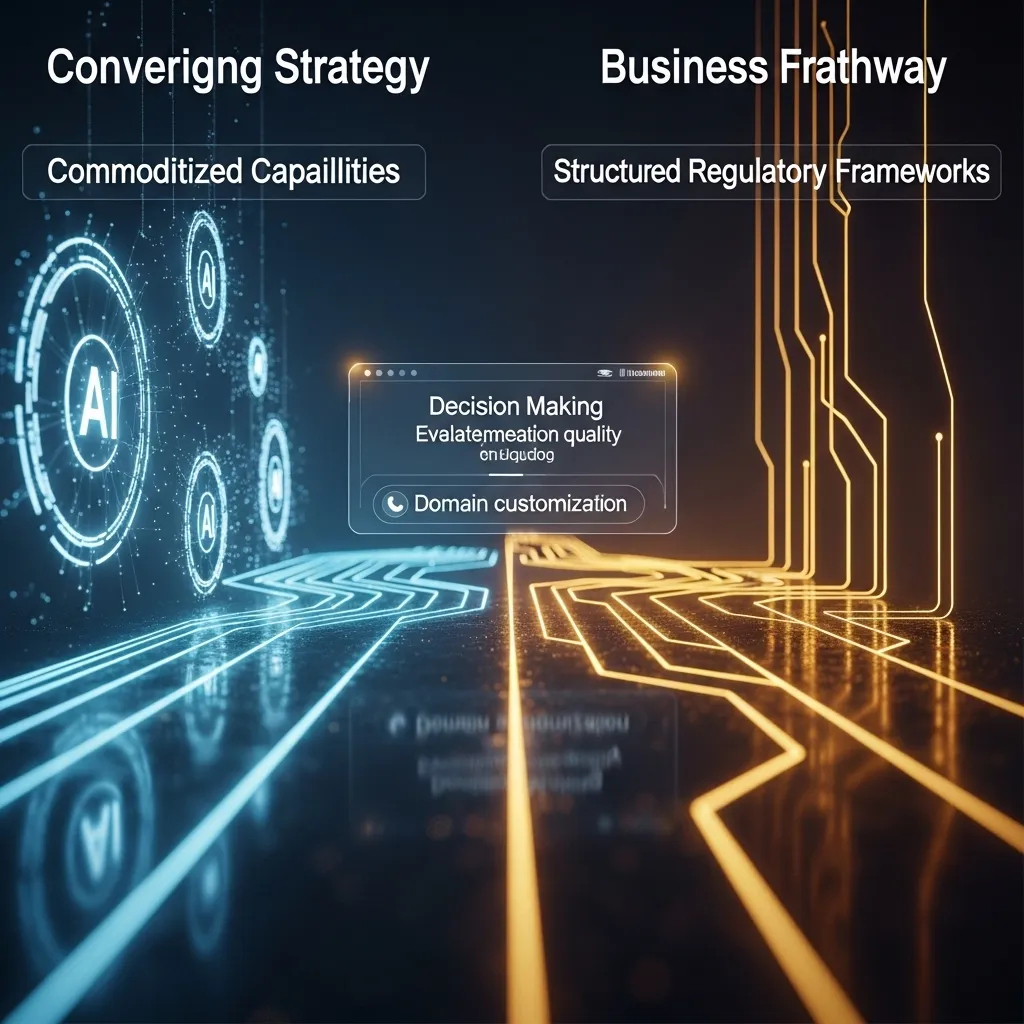
Commoditization of basic capabilities: Basic agentic features—research, summarization, routine automation—are becoming commoditized and accessible through standard platforms. Competitive advantage will come from implementation quality and domain-specific customization, not just having agents.
Making the Decision: Is Agentic AI Right for Your Business?
If you’re considering implementing agentic AI, here are the questions I’d ask:
Do you have processes that are information-intensive and multi-step? If most of your work is either simple single-step tasks or requires deep creative thinking, agentic AI might not be the right fit.
Can you clearly define success? If you can’t articulate specific, measurable goals, implementation will be difficult and ROI will be hard to justify.
Do you have the necessary data and systems? Agents need access to information and tools. If your data is trapped in disconnected systems or your processes aren’t well-defined, you’ll need to solve those problems first.
Can you dedicate resources to implementation and tuning? This isn’t a plug-and-play technology. It requires skilled people and time to implement well.
Is the potential value significant enough? A use case that might save $20,000 annually isn’t worth a $200,000 implementation project. The economics need to work.
Do you have executive support? Implementing agentic AI often requires cross-functional coordination, changes to processes, and patience during the tuning period. Without executive backing, these initiatives often stall.
The businesses succeeding with agentic AI are those treating it as a strategic capability, not a tactical tool. They’re investing in expertise, infrastructure, and organizational learning. They’re starting with high-value use cases, proving value, and expanding from there.
For businesses willing to make that investment, agentic AI is delivering genuine value across a growing range of applications. It’s not magic, and it’s not appropriate for everything, but for the right use cases, it’s proving to be one of the most impactful business technologies of the decade.
Frequently Asked Questions
What’s the typical ROI timeline for business agentic AI implementations?
In my experience, most agentic AI projects require 6-12 months to reach positive ROI when you account for development costs, tuning, and gradual scaling. Simple implementations in well-defined domains (like customer service for common inquiries) can show positive returns in 3-4 months. Complex applications involving multiple system integrations and novel workflows might take 12-18 months. The key is not expecting immediate returns—plan for an initial investment period, then measure ROI over a 2-3 year horizon. Projects with 18-month payback periods can still be highly valuable if the long-term benefits are substantial. Also, consider that ROI accelerates over time as you deploy learnings from the first implementation to additional use cases, amortizing platform costs across multiple applications.
How much technical expertise do businesses need in-house to implement agentic AI?
You need at least one person comfortable with programming (Python specifically), API integrations, and basic AI concepts. They don’t need to be AI researchers or machine learning experts—most agentic frameworks are accessible to solid software engineers who can learn the relevant concepts. However, for complex implementations, I’d recommend either hiring someone with specific AI/LLM experience or working with consultants for the initial deployment, then transitioning to in-house management. The ongoing maintenance and optimization is more about understanding your business processes and iterating on prompts and logic than deep technical AI work. That said, if you have zero technical capability in-house, you’ll need to either build it, hire it, or rely on vendors/partners for both implementation and ongoing management, which increases costs and reduces flexibility.
Which industries are seeing the fastest adoption of business agentic AI?
Based on what I’ve observed through 2025 and into 2026, technology companies and professional services firms have been the fastest adopters—they have the technical capability, tolerance for new tools, and information-intensive workflows where agents excel. Financial services is close behind, driven by both opportunity (high-value applications in research, analysis, and compliance) and competitive pressure. Healthcare is interested but moving slower due to regulatory constraints, focusing mainly on administrative applications. Manufacturing and logistics have been surprisingly active, particularly in supply chain optimization and quality management. Traditional industries like construction and agriculture are slowest to adopt, though that’s starting to change. The pattern I see is that adoption speed correlates with three factors: technical sophistication of the organization, information-intensity of the work, and competitive pressure to improve efficiency.
What are the biggest risks or downsides of implementing agentic AI in business?
The most common failure mode I’ve seen is implementation cost and complexity exceeding expectations—projects that were supposed to take three months take nine, and budgets double. This happens when businesses underestimate integration challenges or the tuning required to get reliable performance. Second is agents making consequential errors that create real business problems—incorrect information sent to customers, wrong financial calculations, inappropriate decisions. This is why human oversight for high-stakes actions remains critical. Third is employee resistance, particularly when implementation is handled poorly and workers feel threatened rather than supported. Privacy and security risks are real—agents often need access to sensitive data, creating exposure if not properly secured. Finally, there’s vendor dependence risk—building on proprietary platforms that could change pricing, capabilities, or availability. The mitigation is careful planning, realistic expectations, strong governance, comprehensive testing, and maintaining human oversight for anything consequential.
Can small businesses effectively use agentic AI, or is it only viable for large enterprises?
Small businesses can absolutely benefit from agentic AI, though the approach differs from enterprise implementations. Rather than custom development, small businesses typically use pre-built agent platforms for specific functions—customer service agents, scheduling assistants, or marketing automation. These have lower upfront costs (often subscription-based starting around $100-500/month) and require minimal technical expertise to deploy. The ROI calculation works differently—you’re not saving large teams’ time, but you might enable a founder to focus on strategy rather than administrative work, or allow a small customer service team to provide coverage that would otherwise require additional hires. I’ve seen small businesses get tremendous value from agents that handle routine customer inquiries, qualify leads, manage scheduling, or generate content drafts. The key is choosing well-supported platforms with good documentation rather than trying to build custom solutions, and starting with one specific use case where the value is clear rather than attempting broad transformation.