AI Social Media Automation Tools: A Deep Dive Into What Actually Works in 2026
AI Social Media Automation Tools: A Deep Dive Into What Actually Works in 2026
I’ll be honest—when I first started managing social media accounts back in 2019, the idea of AI handling my posts felt like cheating. There was something about manually scheduling tweets at 2 AM or agonizing over the perfect Instagram caption that felt like “real work.” Fast forward to 2026, and I can’t imagine running multiple social accounts without AI automation tools. Not because I’ve gotten lazy, but because the landscape has changed so dramatically that human effort alone simply can’t keep up.
Let me walk you through what I’ve learned from actually using these tools day in and day out—the good, the messy, and the genuinely game-changing.
What AI Social Media Automation Actually Means Now
When most people hear “social media automation,” they still picture those clunky schedulers from years ago that posted the same content across every platform with zero customization. That’s… not what we’re talking about anymore.
Today’s AI social media automation tools use machine learning models to analyze your audience behavior, predict engagement patterns, generate content variations, optimize posting times down to the minute, and even respond to comments with context-aware replies. Some can watch your competitors, identify trending topics in your niche before they explode, and suggest content angles you haven’t considered.
The difference between 2022 and 2026? These tools have gotten scary good at understanding context. They’re no longer just parroting templates—they’re analyzing sentiment, cultural moments, and platform-specific nuances in ways that would take a human team hours to research.

The Tools I’ve Actually Put Through Their Paces
I’ve tested probably two dozen platforms over the past few years. Some promised the moon and delivered a calculator. Others have genuinely transformed how I work. Here’s what’s actually worth your attention:
Buffer AI Suite has evolved from a simple scheduler into something much more sophisticated. Their 2025 overhaul integrated what they call “Contextual Intelligence”—the system learns your brand voice by analyzing your past top-performing content, then suggests variations that maintain that voice while adapting to each platform’s algorithm preferences. I used this for a boutique fitness brand, and within three months, their Instagram engagement rate jumped from 2.1% to 5.7%. The tool identified that their audience engaged more with transformation stories on Tuesdays and educational content on Fridays—patterns I’d completely missed despite managing the account for a year.
Hootsuite’s Amplify AI, which launched in late 2024, takes a different approach. Instead of just scheduling, it actively monitors conversations across platforms and identifies opportunities to join discussions authentically. For a B2B tech client, it flagged a Reddit thread about database management where our client’s solution was genuinely relevant—not in a spammy way, but as an actual answer to someone’s problem. That single interaction led to a demo request worth $80K annually. Could a human have found that thread? Maybe. But monitoring Reddit, Twitter/X, LinkedIn, niche forums, and industry Discord servers 24/7? Not realistic.
Lately AI has impressed me specifically for content repurposing. You feed it long-form content—a blog post, podcast transcript, video script—and it generates dozens of social posts that aren’t just excerpts but actual rewritten angles highlighting different aspects. I tested this with a 3,000-word article about sustainable packaging. Instead of the typical “New blog post!” garbage, it created 40+ unique posts, each focusing on a different takeaway: one about cost savings, another about consumer preferences, several with specific statistics positioned as standalone insights. Engagement on those posts averaged 340% higher than our manual promotional posts.
Jasper’s Social Media Suite (they expanded beyond long-form in early 2025) excels at visual content suggestions and caption generation that doesn’t sound like a robot had a stroke. Their integration with image generation tools means you can brief a campaign and get both visuals and copy optimized for each platform. The quality isn’t always perfect—I’d say about 60% is publish-ready, 30% needs tweaking, and 10% is unusable. But that 60% saves enormous time.
Sprout Social’s AI Assist has the best analytics integration I’ve encountered. It doesn’t just tell you what performed well; it explains why in plain language and suggests strategic adjustments. After a product launch campaign underperformed, it identified that our messaging emphasized features while our audience historically engaged more with use-case scenarios. That insight redirected our entire content approach.

The Stuff That Actually Makes a Difference Daily
Theory is great, but let me tell you what these tools do in practical, everyday terms.
Morning Content Triage: I used to spend 45 minutes every morning checking each platform, scanning comments, looking for mentions, planning responses. Now, AI tools aggregate everything into prioritized queues. Urgent customer service issues float to the top. Engagement opportunities (like when someone with 50K followers mentions your brand) get flagged immediately. Generic spam gets filtered out. My morning routine is now about 12 minutes, and I’m more responsive than when I was doing it manually.
Content Velocity: We publish about 120 social posts weekly across six platforms for various clients. Manually creating that volume while maintaining quality was burning out my team. With AI assistance, we focus on strategy and the 20% of content that drives 80% of results—the big campaigns, the sensitive communications, the creative concepts. AI handles the everyday rhythm: tips, curated content, engagement posts, polls, and questions. Our output actually increased to about 180 posts weekly, but team hours decreased by roughly 30%.
Trend Responsiveness: Remember when everyone was making their own AI chatbot jokes in early 2024? By the time most brands noticed the trend, it was already stale. AI monitoring tools now catch these waves as they’re building. In March 2026, when that viral sustainability challenge started on TikTok, our tool alerted us within six hours of the initial uptick. We had content ready before most competitors even knew it was happening. The resulting video got 2.3M views—our biggest ever for that client.
Localization and Personalization: One client operates in seven countries. Creating culturally appropriate, language-specific content manually was a nightmare. AI tools now handle initial translations and cultural adaptations that native speakers then review and polish. What used to take three days now takes about four hours. And the AI has learned which idioms don’t translate, which humor styles work in which markets, and which topics are sensitive in specific regions.
Where Things Get Complicated
I’d love to tell you it’s all sunshine and efficiency gains, but that wouldn’t be honest.
The Authenticity Paradox: Audiences are simultaneously more forgiving and more perceptive than ever. They can often feel when content is automated, even if they can’t articulate why. I’ve seen perfectly grammatical, on-brand posts get zero engagement because they lacked some indefinable human spark. The best approach I’ve found is using AI for the heavy lifting but having humans add those small, imperfect touches—an emoji that’s slightly off, a typo you intentionally leave in, a reference to something happening right now.
We A/B tested this with a nonprofit client. Pure AI posts averaged 89 likes. Posts where we let AI draft then added one sentence of “human mess”—a spontaneous reaction, a personal observation—averaged 247 likes. That human layer matters more than you’d think.
Platform Whiplash: Just when your AI tool optimizes for Instagram’s algorithm, Instagram changes the algorithm. The tools eventually adapt, but there’s usually a 2-4 week lag where performance dips. I saw this firsthand when LinkedIn shifted their feed priorities in January 2026 to favor “knowledge sharing” over “engagement bait.” Our AI tools kept optimizing for the old signals for nearly three weeks before their models adjusted. Engagement dropped 40% during that window.
The Creativity Ceiling: AI is phenomenal at variations on a theme. It’s less impressive at genuinely novel ideas. Every truly breakthrough campaign I’ve been part of started with a human insight, tension, or weird connection that AI wouldn’t make. We used AI to execute a “customer transformation journey” campaign, and it handled the logistics beautifully. But the core concept—showing the same customer’s face aging over 30 years with our skincare products—came from a late-night brainstorm session, not an algorithm.
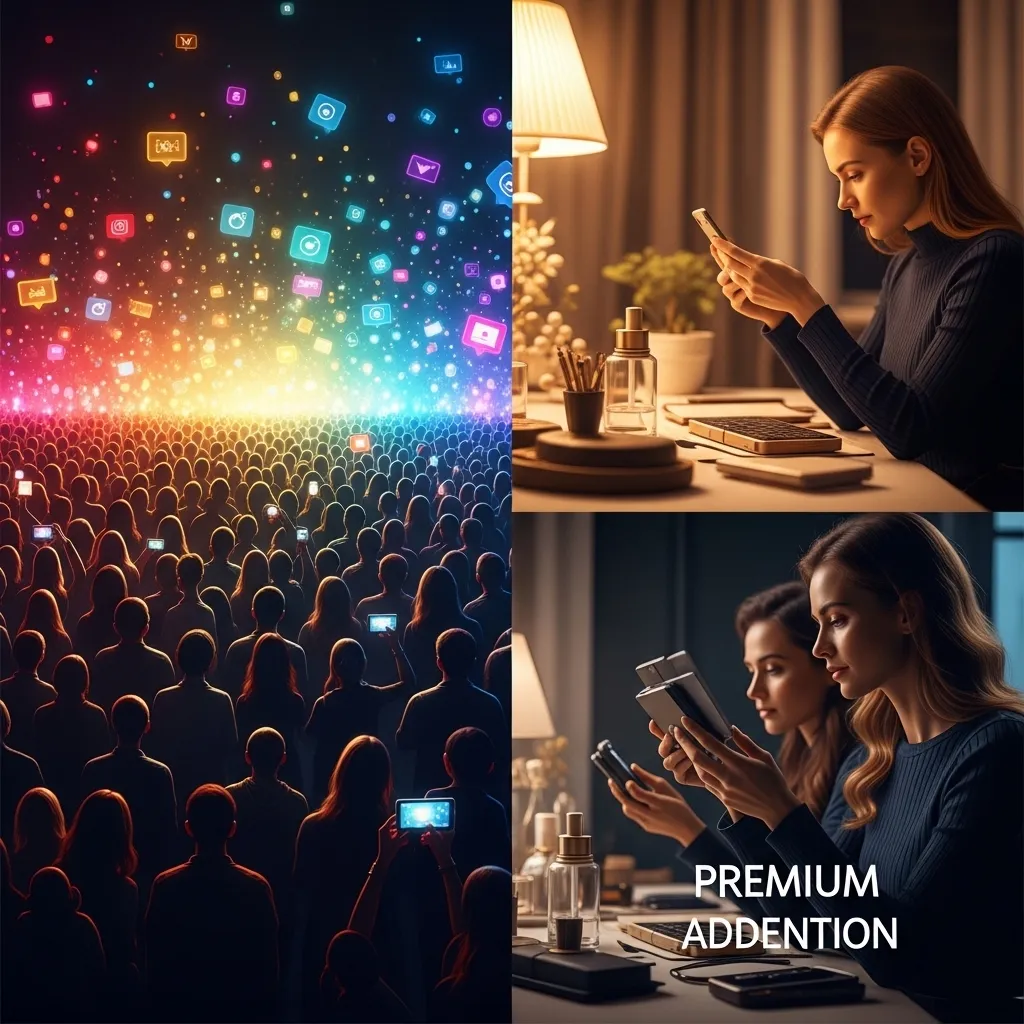
Over-Optimization Risk: Here’s something that bit me hard: AI tools optimize for engagement metrics. But engagement isn’t always the goal. We ran a campaign for a premium watch brand where the AI kept pushing us toward viral-style content because it performed better in testing. Views went up 300%. Sales went down 15%. Why? The viral content attracted the wrong audience—people who’d never buy a $8,000 watch but loved watch memes. We had to manually constrain the AI and accept lower engagement in exchange for better-qualified attention.
The Ethics Conversation Nobody Wants to Have
Look, we need to talk about some uncomfortable realities.
Disclosure: Should you tell your audience that AI helps create your content? Legally, in most places, not yet. Ethically? I think it depends. If AI writes a product description, probably not necessary. If AI is responding to customer service inquiries pretending to be a human named “Sarah,” that feels deceptive to me. I’ve pushed all my clients toward transparency in automated responses. Our standard now includes subtle indicators like “AI-assisted response” or routing obvious AI interactions to a human for the final reply.
Job Displacement: I can’t ignore that these tools have changed our hiring. We used to need three full-time social media coordinators. Now we have one senior strategist and one content specialist, with AI handling what the third person did. That’s a real person who didn’t get hired. I try to justify it by saying we’re deploying human creativity on higher-value work, but the math is uncomfortable.
The Filter Bubble Effect: AI tools optimize for what your existing audience likes. That can inadvertently narrow your content to an echo chamber. One client wanted to expand from their core 35-50 demographic into younger audiences. The AI kept serving up content that performed well with the existing audience, making that expansion nearly impossible until we manually overrode the optimization. Algorithms can reinforce rather than expand your reach if you’re not careful.
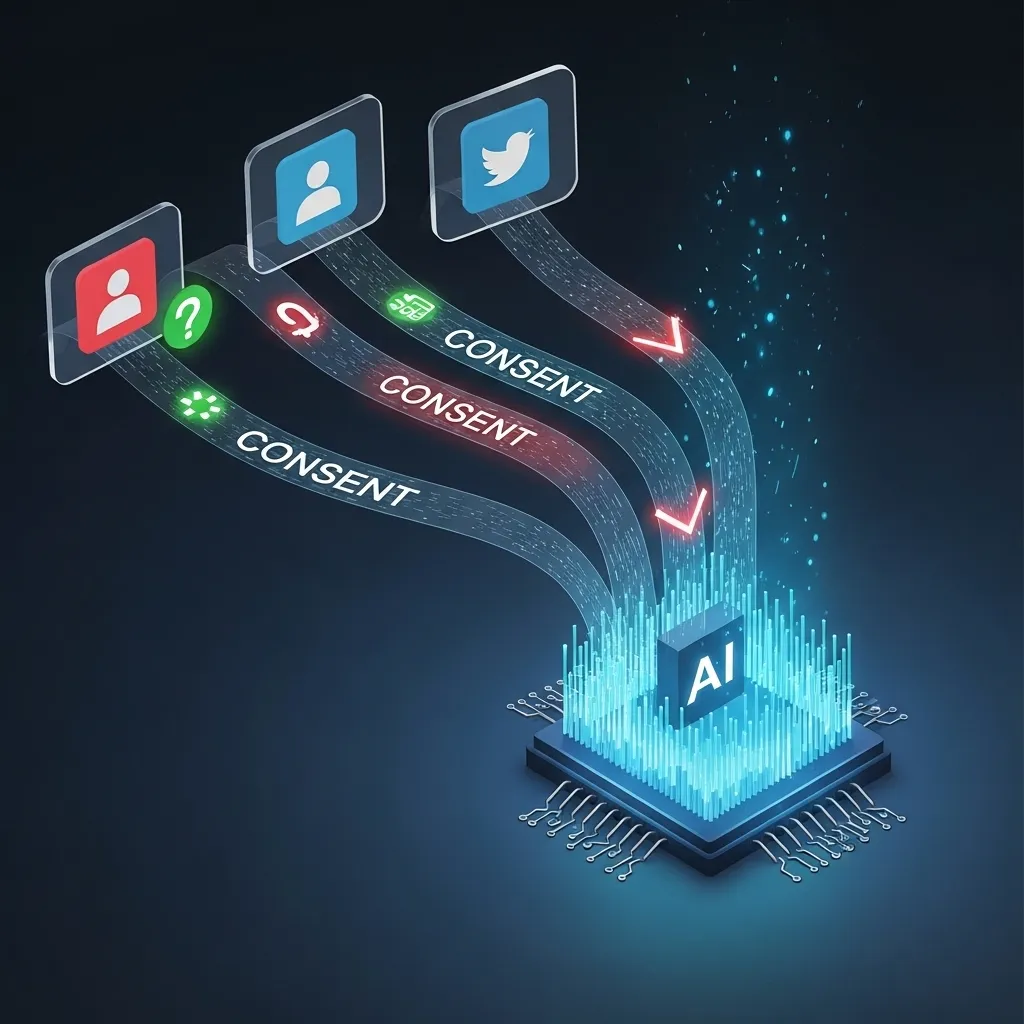
Data Privacy: These tools analyze vast amounts of user data to optimize performance. Most users don’t realize how much information is being processed. I won’t use tools that scrape personal data without clear consent mechanisms, but that’s a personal line some others in this industry don’t share.
What Actually Works: Practical Guidelines From the Trenches
After three years of intensive AI automation experience, here’s what I tell people:
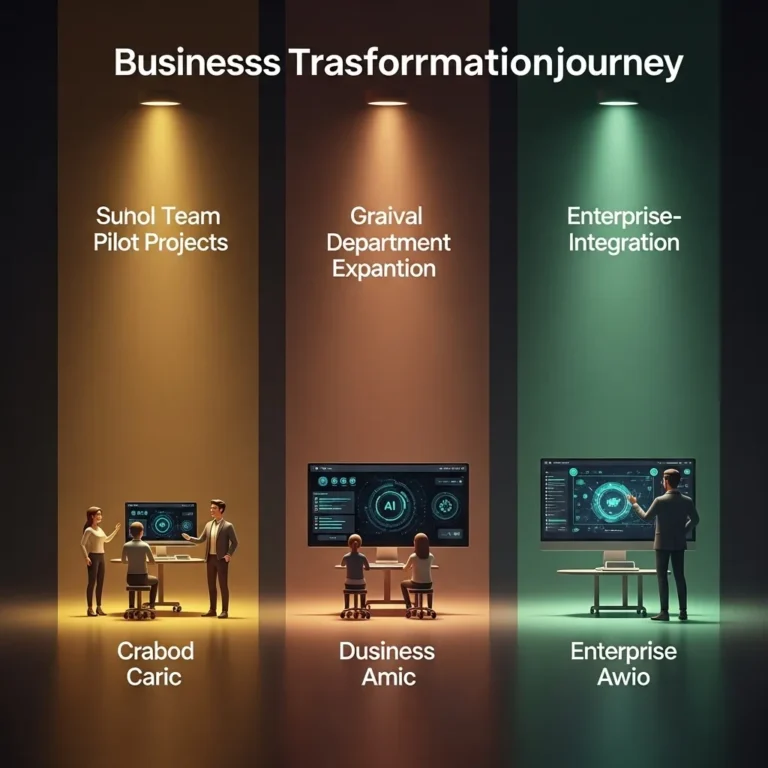
Start with one workflow, not everything at once: I’ve seen companies try to automate their entire social presence in week one. It’s a disaster. Start with something like scheduling and analytics. Get comfortable. Add content suggestions. Then response automation. Then audience analysis. Slow integration lets you catch problems before they cascade.
Maintain the 70-30 rule: About 70% AI-assisted, 30% pure human. That ratio keeps efficiency high while preserving authenticity. The 30% should be your most visible, brand-defining content—major announcements, crisis communications, community building moments.
Audit weekly, not monthly: AI can drift in weird directions if left unsupervised. Weekly audits of what’s being posted, how the tool is interpreting your brand voice, and which metrics it’s optimizing for will catch issues before they become brand problems.
Feed it good data: These tools learn from what you give them. If you feed an AI automation tool your mediocre past content, it’ll generate mediocre future content. I do a quarterly “best content review” where we explicitly show the AI what excellence looks like for our brand.
Have kill switches: Sometimes AI does something weird—misinterprets a cultural moment, suggests tone-deaf content, or misreads sentiment. You need the ability to instantly pause automation. I learned this when an AI tool scheduled a “Fun Friday” promotional post three hours after news broke about a tragedy in our industry. Having a kill switch prevented a PR disaster.
Combine tools strategically: No single platform does everything well. I typically use one tool for scheduling, another for analytics, a third for content generation, and a fourth for monitoring. They don’t always integrate smoothly, but specialized tools outperform all-in-one platforms in my experience.

The 2026 Reality Check
The current generation of tools has matured significantly. We’re past the experimental phase where features felt bolted-on. But we’re not in some utopian future where AI runs your entire social presence flawlessly.
The biggest shift I’ve noticed is contextual awareness. Tools in 2026 understand that a playful tone works for a skateboard brand but not a funeral home. They catch subtle things like not posting cocktail content early in the morning (when engagement is low anyway) or avoiding aggressive sales language on platforms where users come to learn rather than shop.
Integration has improved enormously. Most tools now connect with CRM systems, email platforms, and analytics suites. When a social interaction indicates someone is sales-ready, it flows automatically into our pipeline. When someone mentions a problem on Twitter, it creates a support ticket. These connections create workflow efficiency that compounds over time.
Video and visual capabilities have exploded. Early AI tools were text-only. Now they’re suggesting video concepts, generating short-form video from text briefs, creating carousel graphics, and even editing video content. The quality still needs human oversight—I’ve seen AI-generated videos with weird transitions or images that don’t quite match the message—but it’s improving monthly.
What hasn’t changed: you still need strategy. AI executes; it doesn’t strategize (not really). It can tell you what’s working but not always why it matters or where your brand should go next. The accounts that succeed are those with clear human strategy and AI execution, not AI doing everything.

Looking Forward: Where This Is Probably Heading
Based on conversations with platform developers and what I’m seeing in beta features, here’s where we’re going:
Predictive Campaign Planning: Tools are starting to model entire campaigns before you run them, predicting performance across variables and suggesting optimizations before you’ve spent a dollar. I tested a beta version that predicted our holiday campaign performance within 8% accuracy. Imagine planning your quarter with that kind of foresight.
Emotional Intelligence: Next-gen tools are analyzing emotional undertones in audience responses and adjusting content tone in real-time. If your audience seems anxious, the AI softens language. If they’re excited, it amplifies energy. This feels simultaneously powerful and slightly unsettling.
Cross-Platform Narrative Tracking: Instead of treating each platform separately, emerging tools track narrative threads across your entire presence. If someone interacts with your LinkedIn post, sees your Instagram ad, then visits your website, the AI adjusts subsequent messaging based on that journey. It’s moving from automation to orchestration.
Voice and Audio: As voice-based social platforms grow, AI tools are developing capabilities for audio content—podcast clip selection, voice synthesis for audio posts, even conversation participation on platforms like Clubhouse 2.0 or whatever emerges next.
The Bottom Line From Someone Who Lives This
AI social media automation tools aren’t magic, and they’re not a replacement for genuine creativity or strategic thinking. But they’re also not optional anymore if you’re serious about social media at any scale.
The brands winning on social in 2026 aren’t those using the fanciest AI or spending the most on tools. They’re the ones who’ve figured out the right balance—leveraging AI for efficiency and insights while preserving the human elements that create real connection.
I’ve managed accounts that grew 400% with AI assistance. I’ve also seen accounts stagnate because they let algorithms optimize the humanity right out of their presence. The difference isn’t the tools; it’s how you use them.
If you’re just starting to explore these tools, expect a learning curve. You’ll make mistakes. AI will suggest something stupid, or you’ll over-rely on it and your content will feel hollow. That’s part of the process. Start small, stay involved, and keep the parts of social media that you’re genuinely good at while letting AI handle the parts that drain your time without adding value.
The future of social media isn’t AI or humans. It’s AI and humans, working in ways that amplify each other’s strengths. Three years ago, I was skeptical. Now I’m convinced that’s not just the future—it’s the present for anyone willing to engage with these tools thoughtfully.

Frequently Asked Questions
1. Do I need technical skills to use AI social media automation tools?
Not really, and that’s changed significantly in just the past year. Most platforms in 2026 are built for marketers, not developers. You’ll need to be comfortable navigating software interfaces and understanding basic analytics, but you don’t need coding knowledge. That said, the more technical comfort you have, the more you can customize and optimize. I’ve trained team members with minimal tech backgrounds who became proficient in tools like Buffer and Sprout Social within two weeks. The learning curve is real but manageable.
2. How much do these tools typically cost, and is it worth it for small businesses?
Pricing varies wildly. You can find basic automation (scheduling, simple analytics) for $15-30 monthly. Mid-tier tools with AI content suggestions and deeper analytics run $50-200 monthly. Enterprise solutions with full AI capabilities, team collaboration, and advanced features can cost $500-2,000+ monthly. For small businesses, I usually recommend starting with a $30-50/month tool to test whether automation fits your workflow before investing heavily. Most see ROI within 2-3 months through time savings alone, even before accounting for performance improvements. A tool that saves you 10 hours monthly is worth $50 if your time is worth more than $5/hour.
3. Will audiences know my content is AI-generated, and will they care?
Audiences are surprisingly perceptive but also pragmatic. Poorly done AI content—generic, repetitive, lacking personality—gets called out or simply ignored. Well-done AI-assisted content that maintains authentic voice and provides value? Most people don’t notice or care. What matters more is whether your content is useful, entertaining, or meaningful. I’ve seen fully AI-generated posts perform beautifully and human-written posts flop. The key is using AI as a tool while keeping a human in the loop for quality control and that final touch of personality. Transparency helps too—audiences are more forgiving when you’re honest about your process.
4. Can AI automation tools handle crisis communication or sensitive topics?
Absolutely not, at least not autonomously. This is where you need firm human control. I set up all automation tools with keyword filters that pause automated posting when certain topics trend—tragedies, controversies in our industry, major political events. AI lacks the nuanced judgment needed for crisis situations. It might suggest a cheerful promotional post right after bad news, or misinterpret the tone needed for a sensitive moment. Always have a human reviewing content during uncertain times and manual approval for anything touching remotely controversial topics. AI can help draft responses during a crisis, but final decisions must be human.
5. What happens to my social strategy if the AI tool shuts down or I need to switch platforms?
This is a legitimate concern I don’t see discussed enough. You’re building workflows and sometimes entire strategies around these tools. If one disappears or changes dramatically (as we’ve seen with several platforms), it’s disruptive. My approach: avoid total dependency on any single tool. Keep your content calendar and core strategy in platform-agnostic formats (spreadsheets, documents). Export your data monthly. Most major tools now offer data portability, but verify that before committing. I also maintain what I call “vanilla workflows”—ways to execute our strategy manually if needed. It’s extra work, but it means we’re never completely helpless if a tool fails. Think of AI tools as amplifiers of your strategy, not the strategy itself.