AI Tools for Research: A Practitioner’s Guide from the Frontlines
AI Tools for Research: A Practitioner’s Guide from the Frontlines
The moment I realized AI had fundamentally changed research was in late 2023, when I needed to understand a complex technical topic for a client project—something about blockchain interoperability protocols. Pre-AI, this would’ve meant days of reading whitepapers I barely understood, watching conference talks at 1.5x speed, and maybe hiring a specialist consultant. Instead, I spent two hours in conversation with an AI, asking progressively more detailed questions, getting explanations at exactly my level of understanding, then diving into primary sources armed with enough context to actually comprehend them.
That project got done in a third of the time I’d budgeted. I’ve been hooked on AI research tools ever since.
But I’ve also learned the hard way that AI research assistance is a minefield of potential problems. I’ve published information that turned out to be hallucinated. I’ve wasted hours chasing down “sources” that don’t exist. I’ve had AI confidently explain things that were completely wrong. And I’ve had to develop systems, habits, and verification processes to make AI research reliable rather than just fast.
I now use AI for research almost daily—academic literature reviews, competitive analysis, market research, fact-checking, exploring new domains, and synthesizing information from disparate sources. After three years of intensive use, I have strong opinions about what works, what’s dangerous, and how to actually leverage these tools without compromising research integrity.
The Research Landscape in 2026: What’s Changed
The AI research tool ecosystem has matured considerably from the early chaos. We’ve moved from “AI can answer questions” to specialized tools designed specifically for different research contexts.
Current AI research capabilities fall into a few categories:
Conversational research assistants (ChatGPT, Claude, Gemini) that explain concepts, answer questions, and help you understand complex topics.
Search-enhanced AI (Perplexity, Bing AI, Google’s AI search features) that combines traditional search with AI synthesis and actually cites sources.
Academic research tools (Consensus, Elicit, Scite, ChatGPT with Scholar integration) designed specifically for scientific literature.
Specialized research platforms for patent searches, legal research, market intelligence, etc.
Document analysis tools that extract insights from PDFs, reports, and other long-form content.
The biggest shift I’ve seen is the move toward citation and verification. Early AI research was essentially a black box—you got answers but no way to verify them. Now, the better tools show their work.

Where AI Research Tools Actually Excel
Let me be specific about where I get genuine research value from AI, with real examples from my work.
Exploratory Research: Learning New Domains Quickly
This is AI’s superpower for research. When I need to understand something new, AI compresses the learning curve dramatically.
Real example from last month: I was researching the European Union’s Digital Markets Act for a client. I’m not a regulatory expert, and the official documentation is hundreds of pages of dense legal language.
I started with Perplexity AI (my go-to for research because it cites sources): “Explain the EU Digital Markets Act—what it does, who it affects, and key compliance requirements for tech companies operating in Europe.”
Got back a clear summary with links to official EU sources, analysis from law firms, and news coverage. This gave me the framework I needed. Then I asked follow-up questions:
- “What counts as a ‘gatekeeper’ under the DMA?”
- “What are the specific obligations for companies designated as gatekeepers?”
- “What enforcement mechanisms exist if companies don’t comply?”
Within 30 minutes, I had enough understanding to know what questions to ask actual lawyers and which sections of the regulation mattered most for my client. Reading the regulation cold would’ve taken hours just to orient myself.
Why this works: AI excels at taking complex information and presenting it at your current level of understanding. You can adjust the depth as you go.
Literature Review: Finding Relevant Research Fast
Academic research is one area where specialized AI tools have made massive strides.
I recently needed to research the effectiveness of different employee retention strategies for a consulting project. Instead of spending days on Google Scholar, I used Consensus (an AI tool specifically for academic research).
Searched: “What strategies are most effective for employee retention?”
What I got:
- Synthesis of findings across 50+ peer-reviewed studies
- Specific statistics and effect sizes
- Indication of consensus (“7 out of 10 papers agree that…”)
- Direct links to the actual papers
- Ability to filter by publication date, study type, etc.
This compressed what would’ve been 3-4 days of manual literature review into about 2 hours—and the quality was arguably better because I could see patterns across more papers than I could’ve reasonably read manually.
Tools I use for academic research:
Consensus ($8.99/month): Best for getting the overall state of research on a question. Shows you what the preponderance of evidence suggests.
Elicit (free for basic, $10/month for premium): Excellent for extracting specific information across papers. You can ask things like “what sample sizes did these studies use?” and it pulls that data from multiple papers.
Scite ($20/month): Shows how papers have been cited—whether they’ve been supported, contradicted, or just mentioned. This helps assess reliability.
ChatGPT with web browsing/Scholar integration: Good for general academic questions when you don’t need deep literature review.
Competitive and Market Research: Synthesis at Scale
I do a fair amount of competitive analysis and market research. AI has changed how this works.
Traditional approach: Manually visit competitor websites, read their content, check their social media, look at review sites, read industry reports. Takes forever, and you’re drowning in information.
AI-enhanced approach: I still do all that research, but I feed the information to AI for synthesis and pattern recognition.
Recent example: I was analyzing the competitive landscape for a SaaS company. I collected information on 15 competitors—their positioning, pricing, features, target customers, messaging.
I fed this to Claude (better with longer context) and asked:
- “What are the main positioning clusters among these competitors?”
- “What customer segments appear underserved?”
- “What features are table-stakes versus differentiators?”
- “How does our client’s positioning compare?”
The AI identified patterns I hadn’t noticed—like that most competitors focused on either enterprise or small business, with almost nobody targeting mid-market. That became a strategic recommendation.
The key: AI didn’t do the research. I did. But AI helped me make sense of more information than I could’ve reasonably processed manually.
Fact-Checking and Verification: A Double-Edged Sword
This is tricky. AI can help verify facts, but it can also confidently state false information.
How I use AI for fact-checking:
When I encounter a claim I want to verify, I’ll use Perplexity or Bing AI (both cite sources) rather than ChatGPT or Claude (which don’t, in their standard versions).
Example claim I needed to verify: “Remote workers are 13% more productive than office workers.”
Asked Perplexity: “Is there research showing remote workers are more productive than office workers? What do the studies actually find?”
Got back: Multiple sources with different findings—some showing productivity increases, some showing decreases, most showing “it depends on the role and individual.” Learned that the “13%” stat comes from a specific 2013 Stanford study but other research shows more mixed results.
This gave me the nuance to avoid oversimplifying in my writing.
Critical rule: For any fact that matters, I verify AI’s answer through primary sources. AI points me in the right direction, but I check the actual studies, articles, or data before citing anything.
Document Analysis: Extracting Insights from Long Reports
I read a lot of long PDFs—industry reports, research papers, white papers, corporate documents. AI has made this dramatically more efficient.
My workflow:
Upload a 50-page market research report to ChatGPT or Claude. Then I ask:
- “Summarize the key findings in bullet points”
- “What methodology did they use?”
- “What are the limitations or caveats?”
- “What data points are most relevant to [my specific question]?”
Last week I had a 80-page McKinsey report on digital transformation. Rather than reading the entire thing, I had AI summarize it and identify the sections most relevant to my client’s situation. Then I read those sections in full.
Time saving: What would’ve been a 90-minute full read became a 15-minute AI summary + 30 minutes of focused reading on relevant sections.
Limitation: AI sometimes misses nuance or context. For anything critical, I still read the full source. But for initial assessment or finding relevant sections, it’s invaluable.
Interview and Source Preparation: Better Questions
Before I interview a subject matter expert or do stakeholder research, I use AI to prepare better questions.
I’ll describe the topic, what I already know, and what I’m trying to learn. Then ask: “What questions should I ask to get useful insights?”
The AI suggests questions I wouldn’t have thought of—often technical questions that help me sound more knowledgeable and get better information from my interviews.
This isn’t AI doing research—it’s AI helping me be better at human research methods.
The AI Research Tools I Actually Use (2026 Stack)
I’ve tried dozens of tools. Here’s what survived in my regular workflow:
Primary Research Tools
Perplexity AI ($20/month for Pro)
- My most-used research tool
- Combines search with AI synthesis
- Actually cites sources (this is critical)
- “Pro” version uses more powerful AI models
- Great for general research questions
Why I like it: It’s like having a research assistant who reads the top 20 search results and synthesizes them for you, with footnotes.
Claude Pro ($20/month)
- Best for analyzing long documents
- Handles up to about 150,000 words of context (roughly a 300-page book)
- Great for comparative analysis across multiple sources
- More nuanced than ChatGPT for complex topics
When I use it: Analyzing reports, comparing multiple sources, anything requiring deep document understanding.
ChatGPT Plus ($20/month)
- Faster than Claude for quick questions
- Web browsing capability for recent information
- Wide range of plugins and integrations
- DALL-E integration for visual research
When I use it: Quick fact-checking, general questions, image generation for research visualization.
Academic Research Tools
Consensus ($8.99/month)
- Specifically for peer-reviewed research
- Shows patterns across studies
- Indicates level of scientific agreement
- Links to full papers
Best for: Literature reviews, understanding scientific consensus, finding academic sources.
Scite ($20/month for premium)
- Shows how papers have been cited
- Indicates whether findings have been supported or contradicted
- “Smart citations” that extract the context of citations
Best for: Evaluating reliability of research, understanding how scientific consensus has evolved.
Elicit ($10/month)
- Extracts specific information across multiple papers
- Good for systematic reviews
- Helps identify patterns in methodology or findings
Best for: Detailed literature analysis, extracting specific data points across studies.
Specialized Tools
Bing AI (free, or included with Microsoft 365)
- Built into Bing search
- Decent source citation
- Integrated with Microsoft ecosystem
When I use it: When I’m already in Microsoft tools, or want a free option with source citation.
Google’s AI search features (gradually rolling out)
- Integrated into regular Google search
- AI summaries of search results
- Still evolving but increasingly useful
When I use it: Regular searching when I want AI synthesis but don’t need Perplexity’s depth.
What I Tried and Abandoned
You.com: Early AI search engine. Perplexity works better for my needs.
ChatPDF: Dedicated PDF analysis tool. ChatGPT and Claude handle this well enough now.
Various academic specific tools: There are many, but Consensus and Scite cover most of my needs.
Total monthly spend on AI research tools: About $70-90 depending on whether I’m using all the academic tools that month. Given that I estimate I save 10-15 hours per week on research, the ROI is absurd.

What Absolutely Doesn’t Work (Expensive Lessons)
I’ve wasted time and embarrassed myself with AI research. Here’s what to avoid:
Trusting AI for Specific Facts Without Verification
The mistake: I was writing about renewable energy and asked ChatGPT for current solar panel efficiency rates. It gave me specific numbers: “Modern solar panels average 18-22% efficiency, with the best commercial panels reaching 24%.”
I cited this. Turns out the numbers were slightly off—good commercial panels are now routinely hitting 22-23%, with the best reaching 26-27%. Not wildly wrong, but wrong enough to make me look uninformed to people who actually know the field.
The lesson: AI is great for understanding concepts and getting in the ballpark. For specific statistics, dates, or facts you’re going to cite, verify through primary sources.
Using AI for Current Events Research
The problem: Most AI models have training data cutoffs. Even with web browsing, they can miss recent developments or get timeline wrong.
I was researching a company’s recent pivot strategy. AI confidently explained their direction based on outdated information. The company had actually changed course again three weeks prior. I looked foolish in the client meeting until someone corrected me.
The lesson: For anything time-sensitive or rapidly evolving, use traditional search and news sources. AI can help synthesize, but verify currency of information.
Accepting AI-Provided “Sources” Without Checking
The catastrophe: I asked ChatGPT for research about workplace culture. It referenced what seemed like a perfect study: “Johnson et al. (2019) in the Journal of Organizational Behavior found that…”
Except that paper doesn’t exist. AI hallucinated a plausible-sounding citation.
I almost included it in a report. Fortunately, I have a habit of checking sources before citing them. But I’ve seen others publish hallucinated citations, which destroys credibility.
The lesson: Every single source an AI provides must be verified to actually exist before you cite it. No exceptions.
Using AI for Specialized Domain Research Without Expert Verification
I needed to research some medical information. AI gave me explanations that sounded plausible and were mostly correct but had subtle technical inaccuracies that a medical professional spotted immediately.
For specialized domains—medicine, law, advanced science, engineering—AI can provide helpful overviews but should never be your only source. Expert verification is essential.
Treating AI Research as Complete Research
Early on, I’d do all my research through AI conversations. This was lazy and produced shallow work.
AI should enhance human research, not replace it. The best research I do involves:
- AI for initial orientation and understanding
- Traditional methods for finding primary sources
- AI for synthesizing and finding patterns
- Human analysis for insights and judgment

Building a Reliable AI Research Workflow
After many mistakes, here’s the system I use now for AI-assisted research that’s both fast and reliable:
Phase 1: Exploration and Orientation (AI-Heavy)
When starting research on a new topic:
Step 1: Conversational AI session (Perplexity or ChatGPT) to understand the basics, key concepts, main debates, and terminology.
Step 2: Ask AI for suggested search terms, key papers/sources I should read, and the framework for understanding the topic.
Step 3: Have AI identify what I don’t know yet—blind spots in my current understanding.
Time investment: 20-40 minutes. This replaces what used to be 2-3 hours of flailing around trying to get oriented.
Phase 2: Deep Research (AI-Assisted Traditional Methods)
Step 1: Use traditional search, databases, academic tools to find primary sources. AI has pointed me in the right direction, now I’m doing real research.
Step 2: For academic topics, use Consensus or Scite to find relevant papers and understand the state of research.
Step 3: Read primary sources. Actually read them, don’t just ask AI to summarize.
Step 4: For long documents, use AI to extract relevant sections, then read those sections in full.
Time investment: Varies widely by project, but AI probably saves 30-40% here by helping me find relevant sources faster and extract key information efficiently.
Phase 3: Synthesis and Analysis (AI as Assistant)
Step 1: Feed AI my collected information and ask it to identify patterns, contradictions, or gaps.
Step 2: Have AI help organize information into frameworks or categories.
Step 3: Use AI as a sounding board for my interpretations—ask “what am I missing?” or “what’s a counterargument to this interpretation?”
Step 4: Do the actual analysis and synthesis myself. AI helps me think, but I do the thinking.
Time investment: AI probably saves 20-30% here, mostly by helping organize information and spot patterns.
Phase 4: Verification (Human-Heavy)
Step 1: Verify every fact I’m planning to cite. Check primary sources for statistics, quotes, or specific claims.
Step 2: For academic research, verify that papers AI referenced actually exist and say what AI claims they say.
Step 3: For time-sensitive information, check publication dates and verify nothing has changed since.
Step 4: Run key findings past subject matter experts if available.
Time investment: This adds time back, but it’s essential. Maybe 20-30 minutes for typical research projects, more for high-stakes work.
The Result
Overall, AI-assisted research is about 40-50% faster than my old pure-manual approach, and the quality is actually better because AI helps me process more information and identify patterns I’d miss.
But this only works because I’ve built verification and expert oversight into the process. Without that, AI research is fast but unreliable.
Advanced AI Research Techniques
Once you’re comfortable with basic AI research, here are more sophisticated approaches I use:
Comparative Analysis
Feed AI multiple sources with different perspectives and ask it to compare them.
Example: I collected five different analyst reports on the future of electric vehicles. Fed them all to Claude and asked:
“What do these sources agree on? Where do they disagree? What assumptions drive their different conclusions?”
This revealed that optimistic projections assumed rapid charging infrastructure buildout while pessimistic ones questioned whether that would happen fast enough.
This kind of cross-source analysis would take hours manually.
Temporal Analysis
For topics that evolve over time, I’ll ask AI to analyze how thinking has changed.
Example: “How has scientific thinking about intermittent fasting evolved from 2015 to 2025? What did early research suggest, and what have more recent studies found?”
AI can identify shifts in consensus over time, though you need to verify with actual papers.
Hypothesis Generation
Before diving deep into research, I’ll use AI to generate hypotheses.
“Based on what we know about remote work adoption and commercial real estate, what should we expect to see in office building valuations over the next 5 years? What factors would accelerate or slow that trend?”
AI generates plausible hypotheses that I then research to validate or refute. This gives structure to open-ended research questions.
Research Gap Identification
After surveying existing research, I ask AI: “Based on these studies, what questions remain unanswered? What should researchers investigate next?”
This helps identify novel angles or underexplored areas.
Bias and Limitation Analysis
I’ll feed AI a research paper or article and ask: “What are the methodological limitations? What biases might affect the conclusions? What alternative explanations could account for the findings?”
AI is surprisingly good at this critical analysis, helping me avoid taking research at face value.
Domain-Specific Research Applications
Different types of research benefit from AI in different ways:
Academic Research
Best AI tools: Consensus, Scite, Elicit, ChatGPT with Scholar integration
What works:
- Literature reviews and finding relevant papers
- Understanding complex papers outside your subfield
- Identifying research gaps
- Extracting specific information across multiple papers
What doesn’t:
- Novel research questions (AI can’t generate truly original research)
- Evaluating cutting-edge research (may not be in training data)
- Replacing careful reading of key papers
Critical rule: Always verify papers exist and actually make the claims AI says they do. Citation hallucination is still a problem.
Market Research
Best AI tools: Perplexity, ChatGPT, Claude, general AI assistants
What works:
- Synthesizing industry reports
- Competitive analysis and positioning mapping
- Identifying market trends from multiple sources
- Customer research analysis (feeding AI interview transcripts or survey responses)
What doesn’t:
- Primary market data (you still need surveys, interviews, etc.)
- Proprietary competitor information
- Anything requiring domain expertise to interpret correctly
Business Research
Best AI tools: Perplexity, company-specific AI tools (like Bloomberg’s or Reuters’)
What works:
- Company background research
- Industry analysis
- Financial report analysis
- Strategic trend identification
What doesn’t:
- Insider information or anything not publicly available
- Real-time market data
- Nuanced interpretation of financial statements (needs expert review)
Historical Research
Best AI tools: ChatGPT, Claude, Perplexity
What works:
- Understanding historical context and timelines
- Identifying primary sources to investigate
- Comparing different historical interpretations
What doesn’t:
- Primary source research (AI can’t access archives)
- Detailed historiographical analysis
- Anything requiring assessment of source credibility (needs expert judgment)
Scientific and Technical Research
Best AI tools: Consensus, Scite, ChatGPT, Claude
What works:
- Understanding complex scientific concepts
- Literature review across disciplines
- Identifying consensus vs. contested findings
- Explaining technical concepts in accessible language
What doesn’t:
- Cutting-edge research beyond training data
- Highly specialized technical details (high error rate)
- Research requiring lab work or empirical observation
The Ethics and Epistemology of AI Research
This is important: AI changes not just how we research but what research means and who gets to do it.
Access and Democratization
AI research tools democratize access to information in ways that are genuinely exciting. You don’t need institutional access to expensive databases or years of training to understand complex topics. A motivated person with ChatGPT can learn things that would’ve required elite education access previously.
But this also means people without training in research methods, source evaluation, or domain expertise can produce research-looking content that’s superficial or wrong. The barriers to entry are lower, but so are the quality controls.
Source Attribution and Intellectual Labor
When AI synthesizes information from multiple sources, whose work is it? The researchers who did original studies? The AI company? You, for asking the questions?
I try to be generous with attribution. If AI pointed me to sources that shaped my thinking, I cite those sources, not just “ChatGPT told me.” The intellectual labor that matters is the original research, not the AI that helped me find it.
Verification Responsibility
Using AI for research puts more burden on you to verify information. You can’t blame AI if you publish something false—you’re responsible for what you cite and claim.
This requires stronger information literacy skills than traditional research, not weaker ones. You need to evaluate sources, spot hallucinations, and verify facts. AI makes bad research easier, but good research requires more skill.
The Black Box Problem
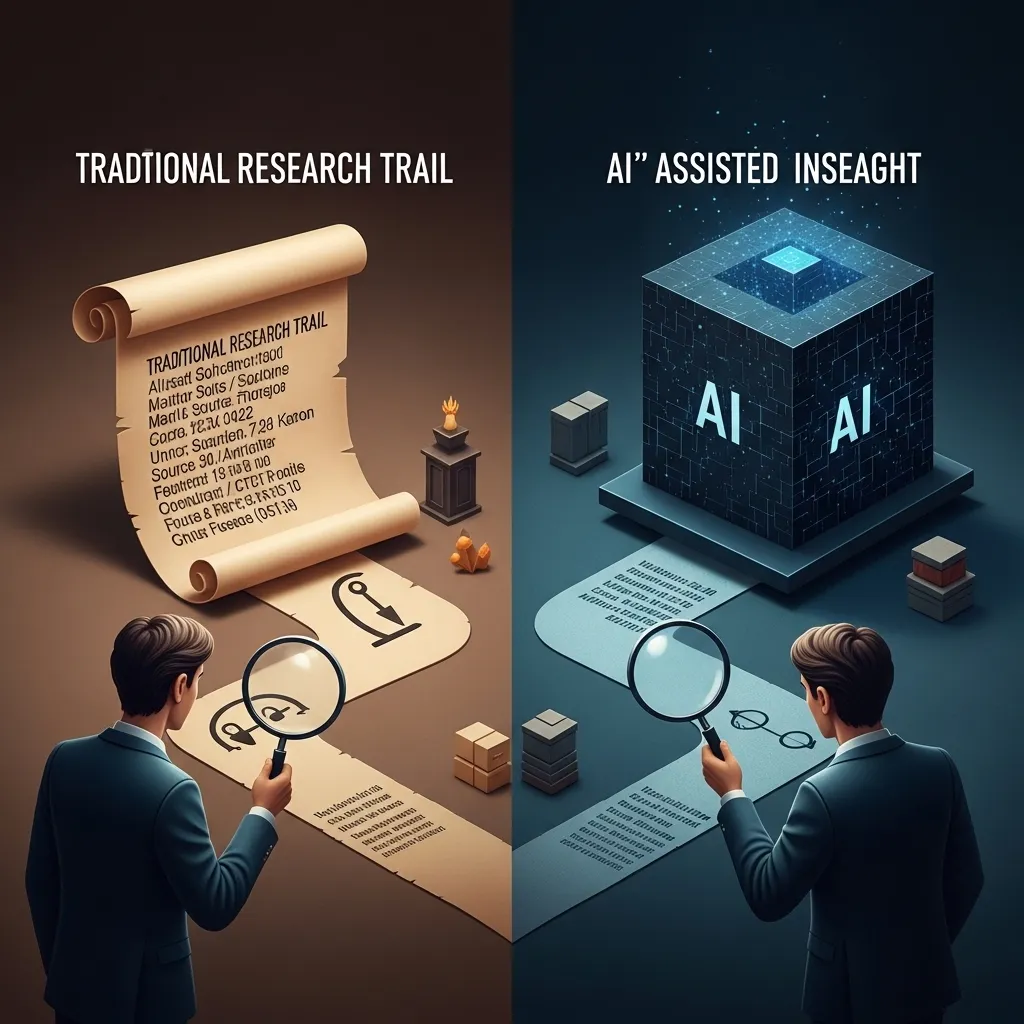
Traditional research has clear provenance—you can trace claims back to sources. AI research sometimes involves understanding that emerged from AI conversation but can’t be traced to specific sources.
When this happens, I treat it as a hypothesis to verify rather than a fact to cite. If I can’t find confirmation from reliable sources, I don’t claim it.
Common Mistakes I See Others Make
Having taught research methods and watched colleagues adopt AI, here are the most common mistakes:
Over-reliance on single AI conversation: People ask one question, get an answer, and treat it as definitive. Always triangulate—ask multiple AIs, check traditional sources, verify with experts.
Not checking if sources exist: The number of people who cite AI-provided sources without verifying they exist is terrifying. Always check.
Using AI for current events: AI’s training data has cutoffs. For anything recent, you need traditional news sources and searches.
Treating AI synthesis as analysis: AI can synthesize information, but it can’t do the critical analysis that creates original insights. That’s still human work.
Ignoring domain expertise: AI gives you breadth but not depth. For specialized topics, you still need expert consultation.
No verification step: People skip verification to save time, defeating the entire point of research.
Asking vague questions: “Tell me about climate change” gets you generic information. Specific questions get useful answers.
Looking Ahead: AI Research Tools 2026-2027
The trajectory I’m seeing suggests several developments:
Real-time information: Current models have training cutoffs, but we’re moving toward AI with live web access as standard. Perplexity already does this; others will follow.
Better source attribution: Citation and source linking will become standard across all AI research tools, not just specialized ones.
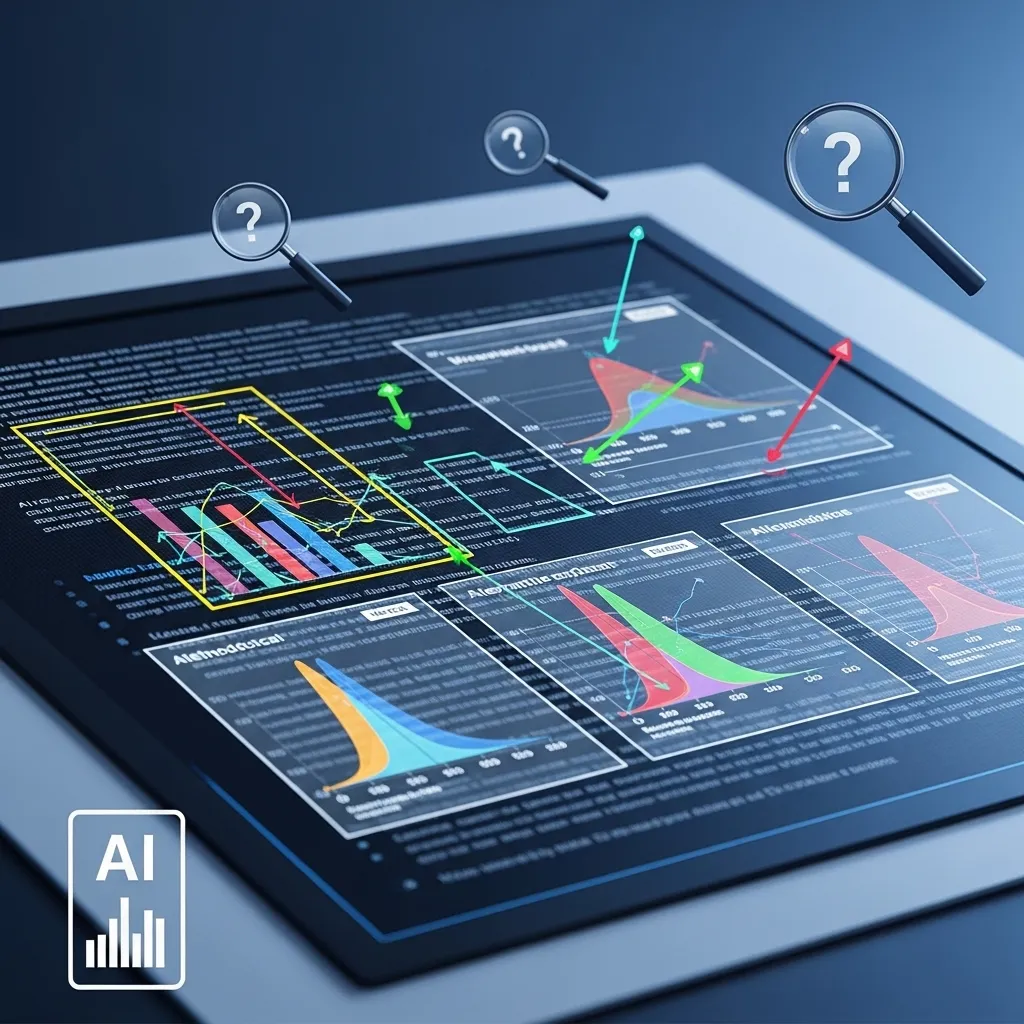
Multimodal research: AI that can analyze not just text but images, videos, audio, and data visualizations together. Imagine asking “what does this graph show?” and getting accurate analysis.
Specialized research agents: Instead of you asking questions, AI that can execute research plans—”research this topic and compile a report”—with better reliability than current tools.
Integration with traditional databases: Academic databases, industry reports, and proprietary research integrating AI interfaces. This is already happening but will accelerate.
Improved accuracy: As models improve and verification mechanisms get better, hallucination rates should decrease. Should.
Custom research assistants: AI trained on your specific domain or previous research, providing more relevant assistance.
The fundamental challenge—verification and accuracy—will remain. AI will get better, but research will always require human judgment.

Practical Recommendations for Different Researcher Types
If you’re an academic researcher:
Start with: Consensus and Scite for literature review, ChatGPT or Claude for understanding papers outside your subfield
Be careful of: Citation hallucination, outdated information, oversimplification of complex findings
Best practice: Use AI for initial literature survey, but read key papers in full. Always verify citations.
If you’re a business professional:
Start with: Perplexity for general research, ChatGPT for document analysis
Be careful of: Confidential information (don’t feed it to AI), outdated market data, superficial analysis
Best practice: Use AI for efficiency but verify facts before presenting to clients or leadership
If you’re a student:
Start with: ChatGPT or Claude for understanding complex concepts, Consensus for finding academic sources
Be careful of: Academic integrity policies (many schools have specific rules about AI), plagiarism, over-reliance on AI explanations
Best practice: Use AI to understand material, but do your own analysis and writing. Check your school’s AI policies.
If you’re a journalist:
Start with: Perplexity for background research, traditional AI for understanding complex topics
Be careful of: Factual errors, fake sources, quotes or statistics that can’t be verified
Best practice: AI for background and understanding, but all facts verified through primary sources. Never cite AI directly.
If you’re a curious generalist:
Start with: Free versions of ChatGPT or Claude, Perplexity free tier
Be careful of: Taking everything at face value, not distinguishing between facts and AI speculation
Best practice: Enjoy the learning, but verify anything you’re going to repeat or rely on

My Honest Assessment: Are AI Research Tools Worth It?
After three years of intensive use, my answer is an emphatic yes—but with massive caveats.
AI has made me a better, faster researcher. I can cover more ground, understand complex topics more quickly, and find relevant sources more efficiently. I’m more productive and the quality of my research has actually improved because I can process more information.
But AI has also created new failure modes. I’ve published errors that came from trusting AI too much. I’ve wasted time chasing hallucinated sources. I’ve had to develop entirely new skills around verification and source evaluation.
The researchers who thrive with AI are those who:
- Use it to augment traditional research methods, not replace them
- Verify everything important before citing it
- Understand AI’s limitations and don’t trust it blindly
- Maintain strong information literacy and critical thinking skills
- Know when to use AI and when to do things manually
The researchers who struggle are those who:
- Treat AI as a replacement for actual research
- Don’t verify AI-provided information
- Lack the domain knowledge to spot errors
- Use AI to shortcut understanding rather than enhance it
For me, AI research tools are now indispensable. I couldn’t imagine going back to pure manual research methods. But they’re tools that require skill, judgment, and constant vigilance.
Start experimenting today, but keep your skepticism and verification habits strong. The future of research is AI-augmented, but it’s still fundamentally human.
Frequently Asked Questions
1. Can I trust AI-generated research findings and citations?
No—not without verification. This is the single most important thing to understand about AI research tools. AI can and does hallucinate sources, misattribute findings, and confidently state incorrect information. I’ve had ChatGPT cite papers that don’t exist, attribute quotes to people who never said them, and provide statistics that are simply wrong. Always verify every citation, fact, or specific claim before you cite it or rely on it. Use AI to point you toward information and help you understand topics, but verify through primary sources before trusting anything important. Tools like Perplexity, Consensus, and Scite that actually link to real sources are more reliable than pure conversational AI, but even then, check that the source says what AI claims it says. Think of AI research assistance as an efficient but unreliable research assistant—great at finding leads, terrible if given blind trust.
2. What’s the best AI tool for academic research and literature reviews?
For academic research specifically, I recommend starting with Consensus ($8.99/month) or its free tier. It’s built specifically for peer-reviewed research and shows you patterns across studies rather than cherry-picking individual papers. Scite ($20/month) is excellent for evaluating how papers have been cited and whether their findings have been supported or contradicted by later research. Elicit is good for extracting specific information across multiple papers. For general academic understanding, ChatGPT Plus or Claude Pro work well for explaining complex papers or concepts, but they don’t specialize in academic search. The key is using the right tool for the task: specialized academic AI for literature review and finding papers, general AI for understanding and synthesis. Always verify that papers actually exist and say what AI claims—citation hallucination remains a problem even with academic-specific tools. And remember: AI should accelerate your literature review, not replace actually reading key papers in your field.
3. How do I avoid publishing AI hallucinations or false information?
Build verification into your workflow as a mandatory step, not an optional one. Here’s my system: First, never cite a source AI provides without checking that it exists and actually says what AI claims. Second, verify all specific facts—statistics, dates, quotes, technical claims—through primary sources before including them. Third, for anything important, triangulate: check the information across multiple sources, not just what one AI tells you. Fourth, use AI tools that cite sources (like Perplexity or Consensus) rather than just conversational AI, so you can check their work. Fifth, run findings past subject matter experts when possible—they’ll catch errors you might miss. Sixth, treat AI research as hypothesis-generating rather than fact-establishing. AI points you toward information; you verify it’s true. The researchers who get burned are those who skip verification to save time. The verification step is not optional—it’s what makes AI research reliable instead of just fast. Budget time for it in your research process.
4. Are AI research tools worth paying for, or are free versions sufficient?
This depends on how much research you do and what kind. For occasional research or learning, free versions of ChatGPT, Claude, and Perplexity are absolutely sufficient—you can do real, valuable research with free tools. The paid versions ($20/month typically) offer faster responses, better models, longer context windows, and priority access, which matters if you’re doing research daily or professionally. For academic research specifically, Consensus and Scite have free tiers that are genuinely useful, but paid versions unlock more searches and advanced features. My recommendation: Start free and upgrade only when you hit limitations that frustrate you. I pay for ChatGPT Plus, Claude Pro, Perplexity Pro, and occasionally Consensus because I use them daily for professional work and the time savings justify the cost many times over. But if you’re a student or doing research occasionally, free versions will serve you well. The quality of your research depends more on your process and verification habits than on whether you have premium AI subscriptions.
5. How should I cite AI tools in research papers or professional work?
This is still evolving, and different institutions/publications have different standards, so check specific requirements for your context. My general approach: Don’t cite AI as a primary source for facts or findings—cite the actual research, reports, or data that AI helped you find. If AI helped you understand a concept or generate hypotheses but didn’t provide specific information you’re citing, you may not need to cite it at all (just like you wouldn’t cite Google for helping you find papers). If you did use AI in a significant way—for data analysis, literature synthesis, or content generation—consider including a methods note explaining how AI was used. Some academic journals now have specific AI disclosure requirements, so check guidelines. For business or professional contexts, I typically don’t cite AI tools directly but do maintain transparency about my research methods if asked. The key principle: give credit to the source of the information (the researchers, writers, or data providers), not just the tool that helped you find it. When in doubt, err toward more transparency rather than less—research integrity matters more than anything else.